What Daily Oatmeal Actually Does for Your Body
There is something quietly comforting about a warm bowl of oatmeal in the morning. It is simple, inexpensive, and easy to make your own with just a…

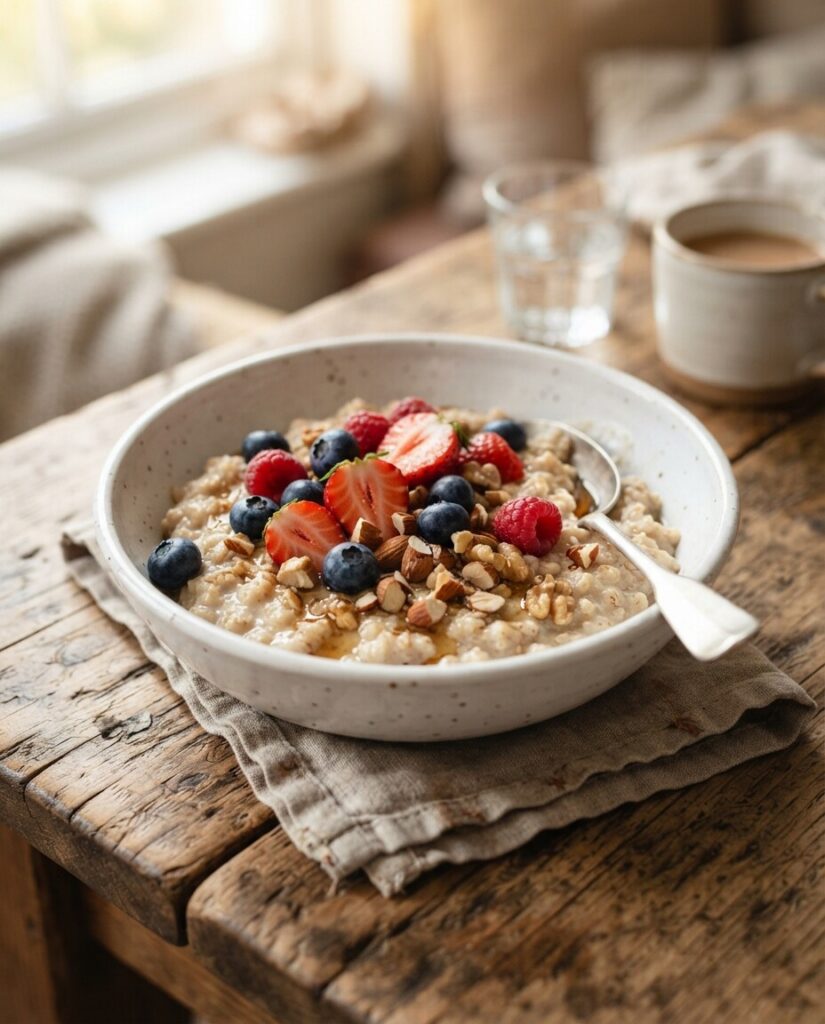
I’ve made the same bowl of oatmeal most weekday mornings for years, not because I read something impressive about beta-glucan, but because it’s ten minutes, one pot, and it holds me until lunch. The practical case and the nutrition case turn out to line up. Oats are cheap, easy to dress up with whatever’s in the fridge, and they’ve earned a real reputation as a solid way to start the day, which is part of why this humble breakfast keeps showing up on so many tables. Here’s what’s actually going on in the bowl.
Jump to section
For more context, see: The Sunday Table: Why Slow Meals Still Matter.
What’s Actually in the Bowl
Oats are a whole grain, and most of their reputation comes down to fiber, specifically a soluble type called beta-glucan. Add in slow-releasing carbohydrates, a little plant protein, and minerals like manganese, magnesium, and iron, and you get a breakfast that’s genuinely filling. Not the kind that just feels virtuous, but the kind that keeps you out of the snack drawer an hour later.
Where the Fiber Actually Pulls Weight
Cholesterol
The soluble fiber in oats is one of the more studied fibers out there, and as part of a balanced diet, it may help support cholesterol levels that are already in a normal range. That’s the reason a lot of people specifically reach for oats over, say, toast.
Blood sugar and energy
Because oats digest slowly, they tend to avoid the spike-and-crash pattern that comes with a sugary breakfast. That usually means steadier energy through the morning and fewer cravings around mid-morning.
Digestion
The fiber adds bulk, which supports regular, comfortable digestion. Staying full longer also tends to make portions easier to manage across the day. Not a rule. Just a pattern worth noticing.
How I Actually Make a Bowl Worth Eating
- Rolled or steel-cut oats, for more texture and fiber than the instant packets.
- Cooked in water, milk, or a plant drink until it turns creamy, not gluey.
- Skip the sugary flavor packets and sweeten with real fruit instead. It’s genuinely better, not just better-for-you.
- A spoon of nuts or seeds for fat and crunch. Plain oatmeal is a texture crime.
Toppings Worth Keeping in Rotation
- Sliced banana and a pinch of cinnamon. My go-to, and I haven’t gotten tired of it yet.
- Fresh berries and a light drizzle of honey
- Chopped apple, walnuts, and a dash of nutmeg
- Nut butter and a sprinkle of chia seeds, if you want it to hold you longer
What Oatmeal Isn’t
Oatmeal is food, not medicine. It’s a solid part of a balanced routine, but it won’t undo the rest of your diet, and it’s not a weight-loss shortcut. I wish it were. If you’re managing a specific health condition or watching your blood sugar closely, talk to your doctor or a dietitian about what actually fits your situation.
A Couple of Honest Questions
Is plain instant oatmeal as good as rolled? Basically, yes. It’s the flavored packets that sneak in the sugar. Buy plain and sweeten it yourself.
Will it help me lose weight? It can help you feel full, which makes mindful eating easier, but no single food does the work on its own.
Disclaimer: This article is for general information only and is not medical advice. Consult a qualified healthcare professional for guidance specific to your needs.