Guava Leaf Tea: Benefits, Brewing, and Cautions
Guava is loved for its sweet fruit, but in many parts of Latin America, Asia, and Africa the leaves have their own long history. Steeped into a warm…

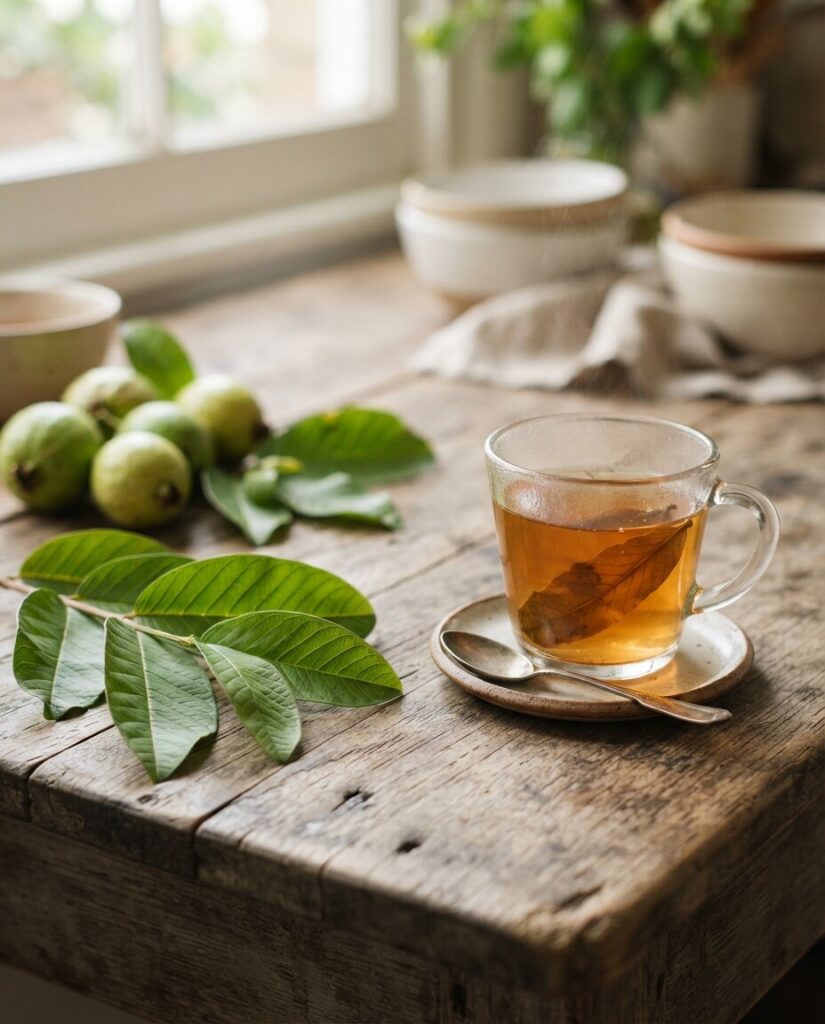
My neighbor’s guava tree drops more fruit than her family can eat, and one August she handed me a paper bag of leaves along with the guavas and told me to simmer them. That’s guava leaf tea (Psidium guajava) in a nutshell — a step past the fruit most people already know, into a leaf that’s been steeped in kitchens across Latin America, Asia, and Africa for a long history. Researchers have gotten curious about it too.
Jump to section
What’s actually in the leaf
Guava leaves carry flavonoids, polyphenols, tannins, and quercetin, plus a decent dose of antioxidants — the substances that help cells cope with everyday oxidative wear. Scientists have looked at how these compounds might relate to digestion, metabolism, and heart health, though most of that work is early — cell studies and small trials, not decades of proof.
Where the interest comes from, and where it stops
Three claims come up constantly. Worth being honest about each.
Antioxidants. Yes, it has them, same as most herbal teas. A diet built around antioxidant-rich plants tends to track with healthy aging — but that’s about the whole pattern, not one cup.
Blood sugar. A handful of small studies have tested whether guava leaf extract affects blood sugar after meals. Some show a modest effect. None of it is a reason to skip or change a diabetes medication.
Cholesterol and the heart. Same story — early, small, interesting, not proof. If you actually want to move the needle on cholesterol, more vegetables, more fiber, and regular movement still do the heavy lifting.
Digestion. Traditionally sipped for an unsettled stomach. Plenty of people just like it as a caffeine-free evening drink, no digestive agenda required.
What it isn’t: a diabetes treatment, a cholesterol drug, or a cure for anything. No herbal tea is. Treat it as a pleasant cup that sits alongside good habits, not instead of them.
What it tastes like
Mild, green, a little earthy, with the same gentle astringency as a light black tea, minus the caffeine. A slice of ginger warms it up, a stick of cinnamon makes it cozier, and lemon brightens the whole cup. Plain is good too — that’s most of why it’s stuck around in so many kitchens.
How to make it
You need:
- 5 to 7 fresh or dried guava leaves
- About 4 cups (1 liter) water
- Optional: fresh ginger, a cinnamon stick, or a squeeze of lemon
- Rinse fresh leaves well under running water.
- Bring the water to a boil.
- Add the leaves and whatever extras you’re using.
- Lower the heat and let it simmer 10 to 15 minutes.
- Turn off the heat and let it sit a few more minutes.
- Strain and drink warm, or chill it over ice.
One to two cups a day is the usual amount people settle on. Drinking more doesn’t buy you more — there’s no evidence for that, so there’s no reason to overdo it.
Who should check with a doctor first
Guava leaf tea is generally well tolerated, but talk to your healthcare provider before making it a regular habit if you:
- Have diabetes or take blood-sugar-lowering medication
- Take blood pressure medication
- Are pregnant or breastfeeding
- Have a chronic kidney or liver condition
Herbal teas can interact with medications in ways that aren’t obvious, so a quick conversation with a professional is the safest first move.
Fresh or dried?
Either works fine. Just wash fresh leaves thoroughly before they go in the pot — my neighbor’s tree grows right next to the sidewalk, so hers get a good rinse whether they need it or not.
This article is for general information only and is not medical advice. Speak with a qualified healthcare professional before trying new remedies, especially if you have a health condition or take medication.
Wellness note: This article is for general information only and is not medical advice or a substitute for professional diagnosis or treatment. Natural foods and ingredients can cause reactions or interact with medications. Consult a qualified healthcare professional before making changes — especially if you are pregnant, take medication, or have a health condition. Seek prompt medical care for severe, worsening, or persistent symptoms.