Is Eating a Banana at Night a Good Idea?
Reaching for a banana before bed is one of those gentle habits that feels good and does no harm for most people. It won't switch off a racing mind or fix…

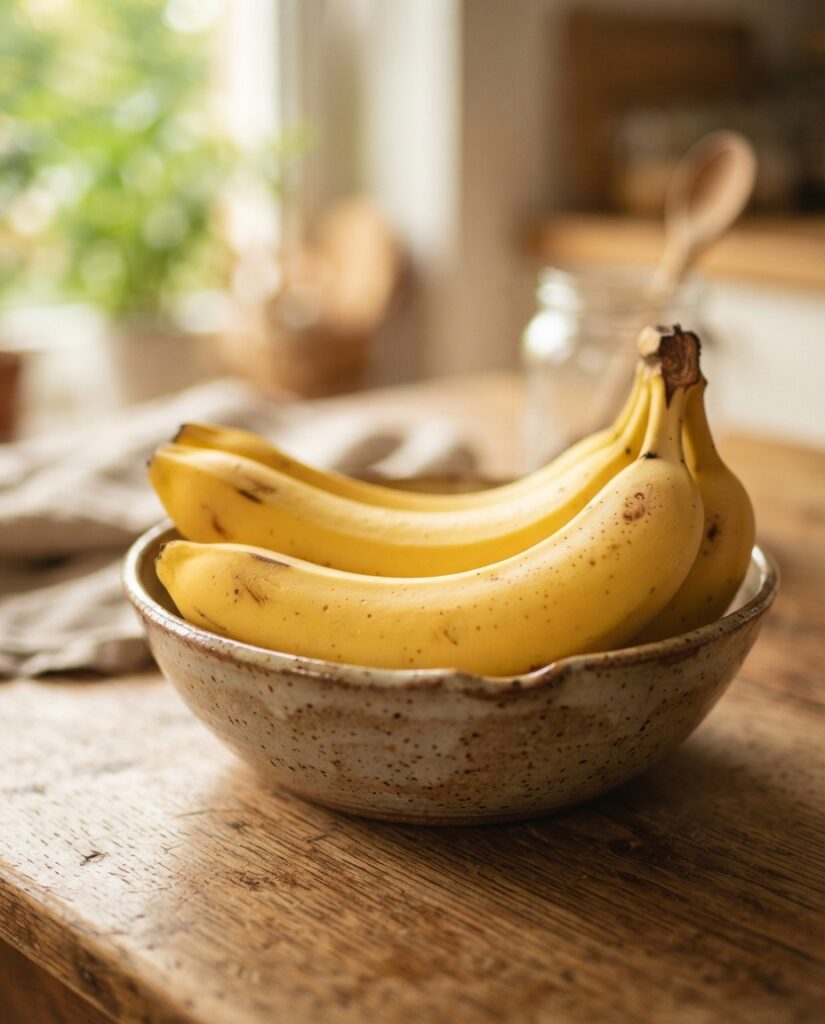
I keep a banana on the counter for nights exactly like this: hungry enough to open the fridge three times, not hungry enough to want to cook anything. It won’t switch off a racing mind or fix a real sleep disorder, but as a light, easy snack it fits nicely into a calm evening routine. Here’s what a banana actually offers at night, and who might want to time it differently.
Jump to section
What’s actually in a bedtime banana
Bananas bring a modest mix of nutrients loosely tied to relaxation and sleep: magnesium and potassium, two minerals involved in muscle and nerve function, plus a small amount of tryptophan, an amino acid your body uses to make serotonin and melatonin. There are also easy-to-digest carbohydrates, which help tryptophan reach the brain a bit more readily.
Keep your expectations modest, though. The amounts in one banana are gentle, not medicinal. No single food reliably delivers sleep, and the research connecting food to sleep is still thin. Think of a banana as a supporting player in a wind-down, not a sleeping pill.
Why it can still help you settle
Part of the benefit is just practical. A banana needs no prep, is easy on the stomach, and beats chips, sweets, or a heavy dessert as a late-night choice by a mile. If you tend to go to bed slightly hungry, that low hum of hunger can be distracting enough on its own, and a light snack can quiet it. The steady carbs can also soften the blood-sugar dips that leave some people restless or waking at 3am. For a lot of people, the ritual itself, a quiet snack, a glass of water, dimmer lights, tells the body the day is winding down.
Who might want to eat it earlier
Bananas are gentle, but a few people do better shifting the timing or portion:
- Acid reflux or heartburn: lying down soon after any snack can make symptoms worse. Eating your banana an hour or two before bed, rather than right before lying flat, usually helps.
- Blood sugar management: a banana still has natural sugar in it. If you’re watching glucose, go smaller, or pair it with a little protein; a spoon of yogurt or nut butter steadies the response nicely.
- Overall calories: a banana is healthy, not free. If you’re counting, it’s part of the day’s total, not an extra.
Keeping it simple
If a banana before bed appeals to you, don’t overthink it: one medium banana, a little before you lie down, alongside whatever calms you down. I’ve had it plain, with yogurt, with a sprinkle of cinnamon. Skip it if you’re not hungry. No need to force it.
What actually moves the needle on sleep is bigger than any one food: consistent sleep and wake times, fewer screens late at night, less caffeine in the afternoon, a dark and comfortable room. A banana can be a pleasant piece of that, not a substitute for it. If you regularly struggle to fall or stay asleep, that’s worth a conversation with your doctor, not another midnight snack.
This article is for general information only and is not medical advice. If you have a health condition, take medication, or have concerns, please consult a qualified healthcare professional. See our medical disclaimer.