Guava Nutrition: What This Sweet Fruit Really Offers
Few fruits pack as much fragrance into one bite as a ripe guava. Sweet, faintly floral, and soft enough to eat straight from your hand, it has quietly…

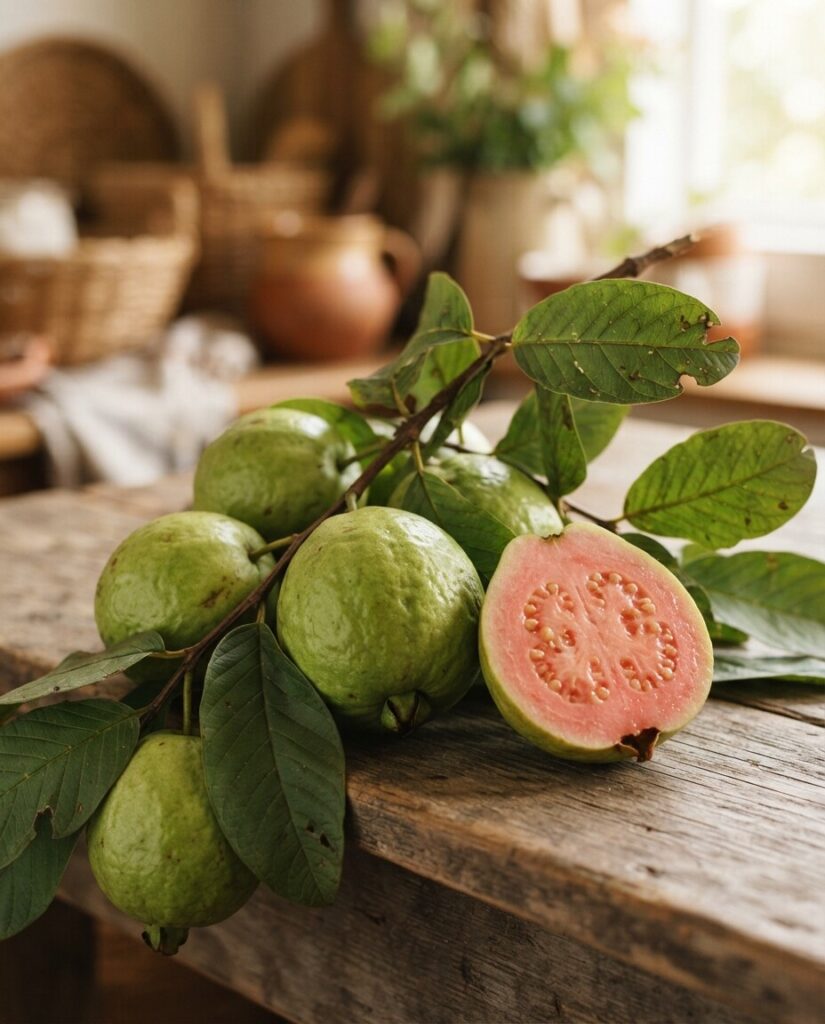
I didn’t grow up eating guava, so the first time I cut one open at a farmers market stall, the smell caught me off guard, something between pear and strawberry, but muskier. That fragrance is basically the fruit‘s calling card, and it’s a big part of why guava has fans well outside the places it grows.
Jump to section
Here’s what it actually offers, without the hype.
Small Fruit, Surprisingly Loaded
Guava punches above its size. One fruit is a genuine vitamin C standout, often more than you’d get from a similarly sized orange. It also brings fiber, a little vitamin A, folate, potassium, and small amounts of several B vitamins, all for not many calories.
- Vitamin C: everyday antioxidant support
- Fiber: adds real bulk to a snack
- Potassium: the same mineral you’d get from a banana or leafy greens
- Vitamin A, folate, and B vitamins: smaller amounts, still useful
The Fiber Matters More Than It Sounds
Because you eat the flesh, and often the edible skin and seeds, a single guava contributes a meaningful chunk toward a day’s fiber. Fiber slows digestion down, in a good way: it adds bulk and can make a light snack actually hold you over. I stay fuller after guava than after, say, a handful of grapes, and the fiber is probably why.
If you’re adding more fiber generally, do it gradually and drink enough water alongside it. The usual advice, and it’s usual because it’s true.
What the Research Actually Shows
Guava, and guava leaf preparations especially, get a fair amount of scientific curiosity. Some small studies have looked at whether compounds in the fruit and leaves might support healthy blood sugar after meals, or healthy blood pressure as part of a broader lifestyle. Those results are early, mixed, and mostly from small trials, nowhere near proof of a treatment effect.
I want to be straightforward about that: guava is a nourishing food, not medicine. It doesn’t treat, cure, or replace care for any condition. If you’re managing blood sugar, blood pressure, or another health concern, keep following your healthcare provider’s guidance. Guava is one pleasant part of a balanced diet, nothing more.
How I Actually Eat It
Sliced, with a little lime and salt, standing at the counter, that covers most of it. Beyond that:
- Blended into a smoothie with banana and a splash of milk or water
- Diced over yogurt or oatmeal
- Tossed into a fruit salad for the scent as much as the flavor
- Rinsed guava leaves steeped into a mild, earthy tea
A ripe one gives slightly when you press it and smells sweet right at the stem end. If yours is firm, give it a few days on the counter.
Picking and Keeping One
Go for fruit that’s fragrant and yields to gentle pressure, the way a ripe pear or peach does. Skip anything with deep bruises, soft brown spots, or a fermented smell, that one’s past its best. Once ripe, eat it within a day or two, or refrigerate to buy a few more days. Firm, underripe guava can sit at room temperature until it softens and the kitchen starts to smell like it. Peeled chunks freeze well for smoothies later.
A Few Questions I Get
Can you eat the skin and seeds? Yes, wash the fruit well first, and both are fine for most people. The skin actually carries extra fiber.
Is guava high in sugar? It has natural sugars, like any fruit, but the fiber balances that out. Eaten whole rather than juiced, it fits comfortably into most eating patterns.
Fresh, frozen, or canned? Fresh and frozen keep the most character. Canned guava in heavy syrup adds a lot of sugar, so check the label or pick fruit packed in juice or water.
This article is for general information only and is not medical advice. Talk with a qualified healthcare professional before making significant dietary changes, especially if you have a health condition or take medication.
Wellness note: This article is for general information only and is not medical advice or a substitute for professional diagnosis or treatment. Natural foods and ingredients can cause reactions or interact with medications. Consult a qualified healthcare professional before making changes — especially if you are pregnant, take medication, or have a health condition. Seek prompt medical care for severe, worsening, or persistent symptoms.