Brown, Black, and Red Rice: A Simple Guide
You finish a bowl of rice and feel that familiar heaviness settle in. Rice is a staple in kitchens around the world, and there is nothing wrong with it…

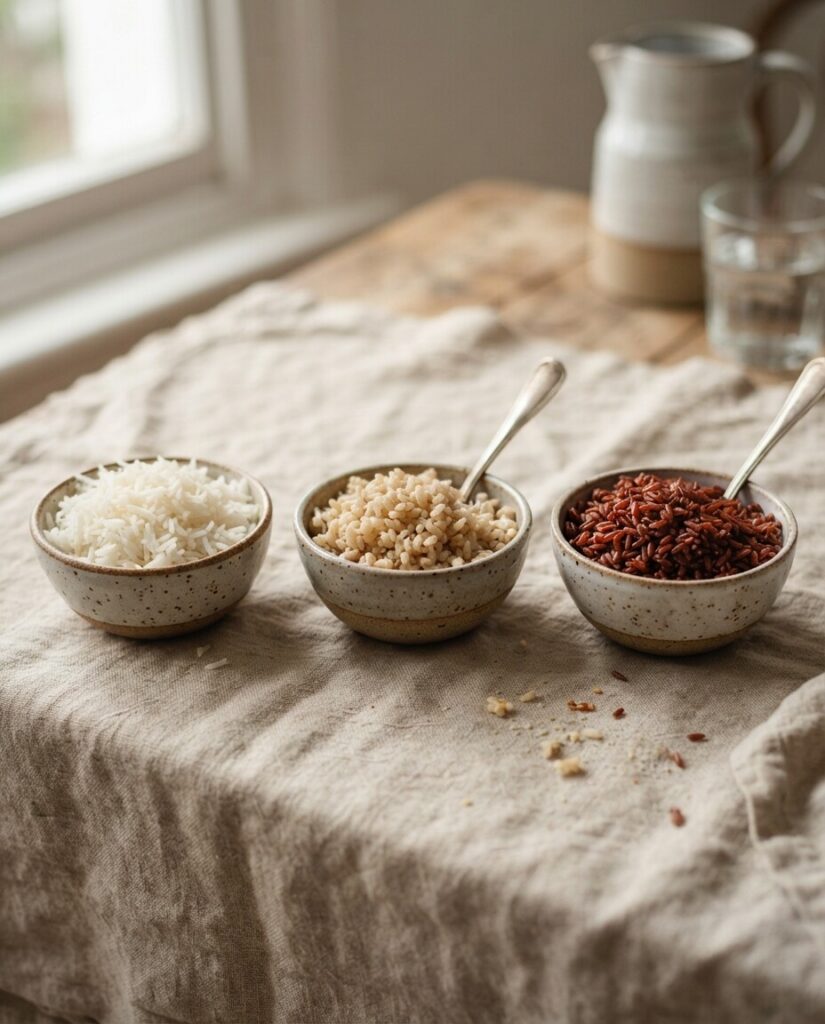
White rice isn’t the enemy. It’s just the only rice most of us ever buy, out of habit more than anything else.
Jump to section
I grew up eating it plain, every night, no questions asked. It wasn’t until I tried black rice at a friend’s house, a deep, almost purple-black pot of it, that I realized rice comes in more than one personality. Brown, black, and red rice each bring something a little different to the table, and rotating between them is one of the easiest variety upgrades in the kitchen.
Brown rice: the everyday fiber option
Brown rice gets skipped a lot because it takes longer to cook and has more chew to it. That outer bran layer is exactly what makes it useful, though. Unlike polished white rice, it keeps its natural fiber and minerals intact.
Diets higher in fiber tend to go with smoother digestion and steadier energy between meals. Fiber also helps you feel full, which makes it a little easier not to overeat.
If you’re switching over, start easy: mix half brown and half white rice at first, soak the grains before cooking to soften the texture, and serve it with plenty of vegetables. That half-and-half mix is honestly how I got my own household to stop complaining about the switch.
Black rice: color that means something
Black rice, sometimes called “forbidden rice,” gets its deep color from anthocyanins, the same antioxidant family found in blueberries. Researchers are still studying how these compounds help the body manage everyday oxidative stress.
What sold me on it, honestly, is the flavor. It’s pleasantly nutty, almost toasted-tasting even before you cook it, and it works in more dishes than you’d expect. Blend it with white rice for a milder taste, use it in soups or a warm porridge, or pair it with beans for a fuller plate.
Red rice: the quiet option
Red rice doesn’t get much attention, but it earns its place. It carries natural plant compounds along with minerals like magnesium and iron, which contribute to ordinary, everyday body function.
The point isn’t to treat it like a miracle grain. It’s simply another wholesome option that adds variety, and a bit more nutrition than plain white rice. Cook it like brown rice but give it a little extra time, season with herbs instead of reaching for more salt, and pair it with a lean protein like fish or tofu.
How they stack up
| Type | Fiber | Notable for | Good for |
|---|---|---|---|
| White rice | Low | Quick, mild energy | Easy digestion |
| Brown rice | High | Fiber and minerals | Everyday meals |
| Black rice | Medium | Antioxidants | Variety |
| Red rice | Medium | Minerals | Gentle balance |
White rice isn’t “bad.” It’s just worth remembering that leaning on it alone gives your body less than a mix would.
Cooking and storing whole-grain rice
Whole-grain rice behaves a little differently in the kitchen than white rice does, and a few habits make it easier: rinse the grains first to remove surface starch, use a touch more water and a longer simmer, and let the pot rest, covered, for about ten minutes so the grains finish softening. Cooking a bigger batch and refrigerating portions to reheat through the week saves a lot of weeknight effort.
One safety note that actually matters: cooked rice should cool quickly and go in the fridge, not sit out at room temperature for hours, since standing rice lets bacteria grow. Reheat it until steaming hot, and try not to reheat the same portion more than once.
Small changes that add up
Consistency beats perfection here. Try replacing about a quarter of your usual white rice with brown, work black or red rice into a meal once or twice a week, drink enough water to support digestion, and go easier on very salty sauces. Notice how you feel afterward — that tells you more than any article will.
Frequently Asked Questions
Is white rice bad for older adults?
Not at all. It’s easy to digest and gives quick energy, just with less fiber and fewer minerals than the whole-grain options.
How often should I eat brown or black rice?
A few times a week is reasonable. Start slowly and adjust to your own digestion and comfort.
Can changing rice alone improve my health?
It helps, but it’s one piece of a bigger picture. Hydration, balanced meals, and regular movement all matter too.
Disclaimer
This article is for general information only and does not replace professional medical advice. Speak with a qualified healthcare provider about your personal dietary needs, particularly if you manage blood sugar or another health condition.