Rice Water for Tender Skin and a Mild Upset Stomach
Rice water is a gentle folk remedy for irritated skin and a bland fluid to sip during mild stomach upset. Here is what the evidence says and how to stay safe.

A quick note: this is a traditional home remedy shared for general interest — not medical advice. See our medical disclaimer, and please see a doctor for severe, worsening, or persistent symptoms.
Jump to section
Rice water is just the cloudy water left over from soaking or cooking rice — I used to pour it straight down the drain until my grandmother caught me doing it and told me I was wasting the good part. Two old, very different uses have followed that cloudy liquid across a lot of cultures: a rinse for tender skin and hair, and a bland, settling drink for a mild stomach upset. Neither is dramatic. That’s kind of the point.
Why anyone bothers with it
Rice water carries a bit of starch, plus rice itself contains inositol and trace minerals. On skin, the old thinking is that the starch settles into a thin, soft film that calms irritation and helps skin hold onto moisture. As a drink, it’s mostly easy carbohydrate and fluid — the same basic logic behind rice-based rehydration during a stomach bug.
What actually holds up
For skin, there’s something real here, though modest. Rice starch has a long history in baths for itchy, irritated skin, and a few small studies on rice-derived preparations suggest they may support the skin barrier and take some of the sting out of mild eczema. Call it a gentle, soothing rinse people genuinely like — not a treatment for a skin disease.
For the stomach, I’ll be blunt: what actually helps during a bout of diarrhea or a mild upset is staying hydrated, full stop. Plain rehydration does the real work. Rice water is a pleasant, bland way to get some fluid and easy carbohydrate in, and rice-based oral rehydration does have real medical backing, but it’s the fluid, and when it’s needed, proper oral rehydration salts, doing the job. Not anything magic about the rice. Sip it because it’s easy to get down, not because it’s treating the illness underneath.
How to make it
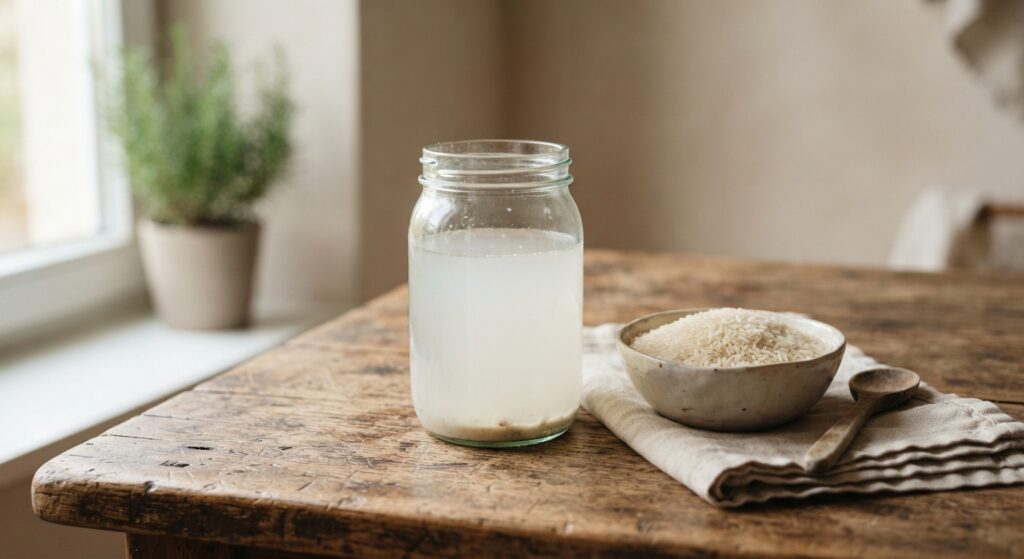
Soak about 2 cups of uncooked white rice in 4 cups of water for around 30 minutes, then strain off the cloudy liquid. (The water left over from boiling rice works too, once it’s cooled.)
For skin: use the strained, cooled water as a gentle wash, or soak a soft cloth in it and lay it on as a light compress. Let your skin air-dry or rinse with plain water after.
For sipping: let it cool to a comfortable temperature and drink it slowly, in small amounts. Some people add a tiny pinch of salt, but if you’re losing a lot of fluid, a proper oral rehydration solution is the better choice, not a DIY version.
A few cautions
Patch-test it on skin first, and stop if you see redness or itching. Make it fresh and keep it in the fridge — it’s a starchy liquid, it spoils, and if it smells off, toss it.
As a drink, it’s a comfort measure, not a replacement for real rehydration when things are serious. That matters most for the people who dehydrate fastest — get medical care for a young child or an older adult with ongoing vomiting or diarrhea, and for anyone showing real dehydration signs: very dark or scant urine, dizziness, a dry mouth, sunken eyes, unusual drowsiness. See a doctor too for diarrhea lasting more than a couple of days, a high fever, severe abdominal pain, or any blood in the stool.
Where it fits
Rice water is a humble, cheap tradition with two gentle jobs: a soothing rinse for tender skin, and something bland to sip while a stomach settles. Keep your expectations modest, keep it fresh, and remember hydration is what actually counts — persistent or severe symptoms, especially for the very young and the elderly, mean it’s time to call a doctor.
This article is for general educational purposes only and is not medical advice. Traditional remedies are not a substitute for professional care. If your symptoms are severe, persistent, or getting worse, please consult a qualified healthcare provider.
Health disclaimer: This article describes a traditional folk remedy for general information only. It is not medical advice and is not a substitute for professional diagnosis or treatment. Some remedies can cause irritation, allergic reactions, or interact with medications. Consult a qualified healthcare professional before trying any remedy, patch-test anything applied to skin, and seek prompt medical care for severe, worsening, or persistent symptoms. See our full Medical Disclaimer.