Depression-Era Dinners: Hearty Meals From Hard Times
Discover 13 real Depression-era dinners — from Hoover stew to creamed chipped beef on toast — the humble, resourceful meals that kept hard-times families fed.

When the paychecks stopped coming and the pantry had to last, dinner in the 1930s wasn’t about impressing anyone — it was about filling stomachs with whatever was on hand, stretched as far as it would go. Cooks turned stale bread, soup bones, and a few cents’ worth of dried beans into meals that carried families through the hardest years of the twentieth century. There was no extra trip to the store if something ran out, and often no meat at all, just cleverness, a hot stove, and the determination to make something out of almost nothing.
Jump to section
I’ve cooked my way through most of the dishes on this list over the years, partly out of curiosity and partly because they’re just good, honest food. None of them are fancy, and nobody pretended they were. But they were built to satisfy a hungry family on a Tuesday night, and a surprising number of them still taste like home today. Here are the dishes that got families through the Great Depression, one modest plate at a time.
Hoover Stew
Named half-mockingly after the president many blamed for the crash, this one-pot supper combined a package of hot dogs — sliced thin so a few would go around the whole table — with elbow macaroni, canned tomatoes, and whatever corn or beans happened to be in the cupboard. It simmered down into a thick, tomatoey stew that fed a large family off just a handful of cheap ingredients. Leftovers reheated well the next day, which mattered just as much as the first serving did.
Creamed Chipped Beef on Toast
Dried, salted beef kept for months without refrigeration and cost very little, so cooks shaved it paper-thin and simmered it in a simple flour-and-milk gravy to spoon over toast. Soldiers and civilians both nicknamed it “SOS,” and while the joke wasn’t flattering, the dish was salty, filling, and made a small amount of meat go a long way. Because the sauce is milk-based, any extra should go straight into the icebox and be reheated gently rather than left sitting on the counter.
Poor Man’s Meatloaf
When ground beef was scarce or dear, cooks bulked it out with rolled oats, crushed crackers, or day-old bread soaked in milk, sometimes using half the meat a normal recipe would call for. A brushing of ketchup or a spoonful of tomato gravy over the top hid the stretch and gave the loaf a little shine as it baked. Sliced cold the next day, it made a fine sandwich and stretched the meal even further.
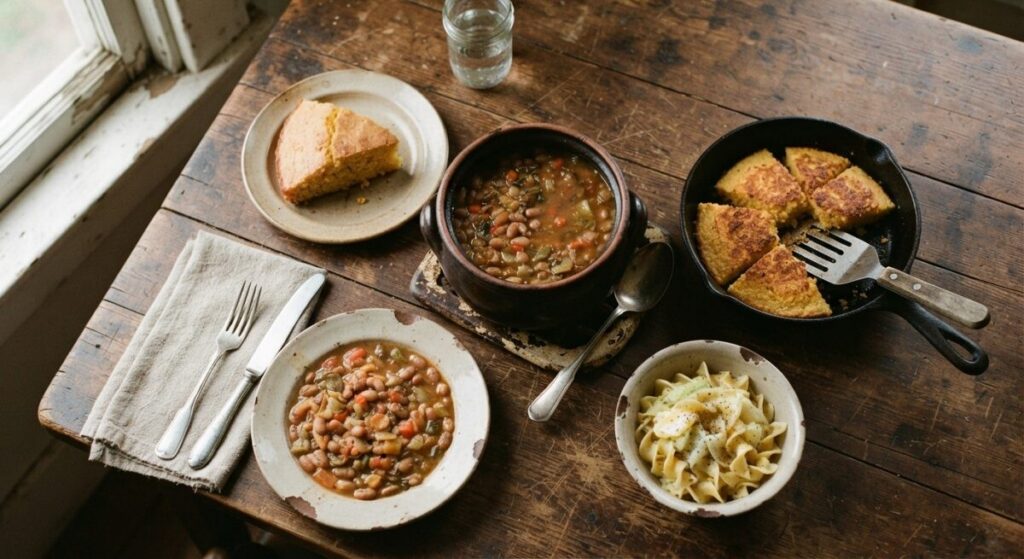
Beans and Cornbread
A pot of dried beans simmered all day with a ham bone or a spoonful of bacon drippings for flavor, alongside a pan of cornbread baking in the oven, made a dinner that cost pennies and filled the whole house with a good smell. It needed no special equipment and no trip to the butcher. It was humble, it was repeated often, and it remained one of the most reliable meals a Depression-era kitchen could put on the table.
Chow Mein Sandwich
An unlikely regional favorite, especially in New England mill towns, this dish ladled a thick, gravy-like mix of celery, onions, and bean sprouts — with or without a scrap of meat — over a plain hamburger bun. It was a clever way to make a cheap Chinese-American restaurant staple stretch into a full family dinner at home. In a few pockets of the country, it never really went out of fashion.
Milk Toast
On the leanest nights, dinner might be nothing more than toasted bread set in a shallow bowl and covered in warm, lightly sweetened milk, with a small pat of butter melting on top if there was any to spare. It sounds almost too simple to count as a real meal, but it was soft, warm, and quietly comforting, and it used only what was already sitting in the kitchen.
Creamed Peas on Toast
Similar in spirit to creamed chipped beef, this version simmered canned or dried peas in a simple white sauce and spooned the whole thing over toasted bread, turning one small can of vegetables into something that felt like a proper dinner. A little black pepper and a spoonful of leftover ham, when there was any, made it feel like a genuine treat rather than a shortage meal.
Fried Cornmeal Mush
Cornmeal cooked slowly into a thick porridge, poured into a loaf pan, and chilled overnight could be sliced the next day and fried in a little fat until the outside turned golden and crisp. Served with molasses, a splash of gravy, or a fried egg when eggs were available, it turned a few cents’ worth of cornmeal into two meals instead of one.
Liver and Onions
Organ meats were some of the cheapest cuts a butcher sold, and liver, smothered in slow-cooked onions and a spoonful of pan gravy, became a regular weeknight dinner for families who couldn’t afford steaks or roasts. It was inexpensive and genuinely nourishing, and cooked properly — a quick sear, plenty of onions — it was good eating rather than a meal to be endured.
Cabbage and Noodles (Haluski)
Brought to American kitchens by Eastern European immigrant families, this dish fried shredded cabbage in bacon drippings until it turned soft and faintly sweet, then tossed it with buttered egg noodles. It needed almost no meat at all to taste rich and satisfying, and one head of cabbage went a remarkably long way toward feeding a hungry table.
Tomato Gravy and Biscuits
Canned or home-preserved tomatoes, simmered with a little flour, bacon drippings, and a pinch of sugar to soften the acidity, made a rosy gravy that turned a pan of biscuits into supper. It was already a Southern staple before the Depression, but the hard years made it a nightly habit in many households rather than an occasional side dish.
Vegetable Soup With a Ham Bone
Nothing from a ham dinner went to waste — the bone went straight into a pot of water with whatever vegetables were left in the garden or the root cellar, simmered for hours until the broth turned rich and faintly smoky. Cooks added barley or broken noodles to make it heartier, and the same pot often fed a family for two or three nights running.
Poor Man’s Casserole
Sliced potatoes layered with a can of tomatoes or a thin white sauce and whatever bit of ground meat or bacon was on hand, baked slowly until the potatoes turned tender, made a one-dish dinner that needed only a wooden spoon and a low oven. It was endlessly adaptable to whatever the icebox held that week, which was exactly the point.
Looking back at these dinners, what stands out to me isn’t how little families had — it’s how much they managed to do with it. There’s a real lesson in a pot of beans simmered all day or a can of tomatoes turned into gravy: good cooking has never really depended on abundance, only on care and a willingness to make do. Try one of these this week, and you’ll understand exactly why so many of them never really left American kitchens.
Some of the best meals were never about what was missing from the table, but about who gathered around it anyway.