Who May Want to Limit Cabbage (and Why)
Cabbage is one of the most underrated vegetables around: inexpensive, filling, and packed with vitamin C, vitamin K, and fiber. For the vast majority of…

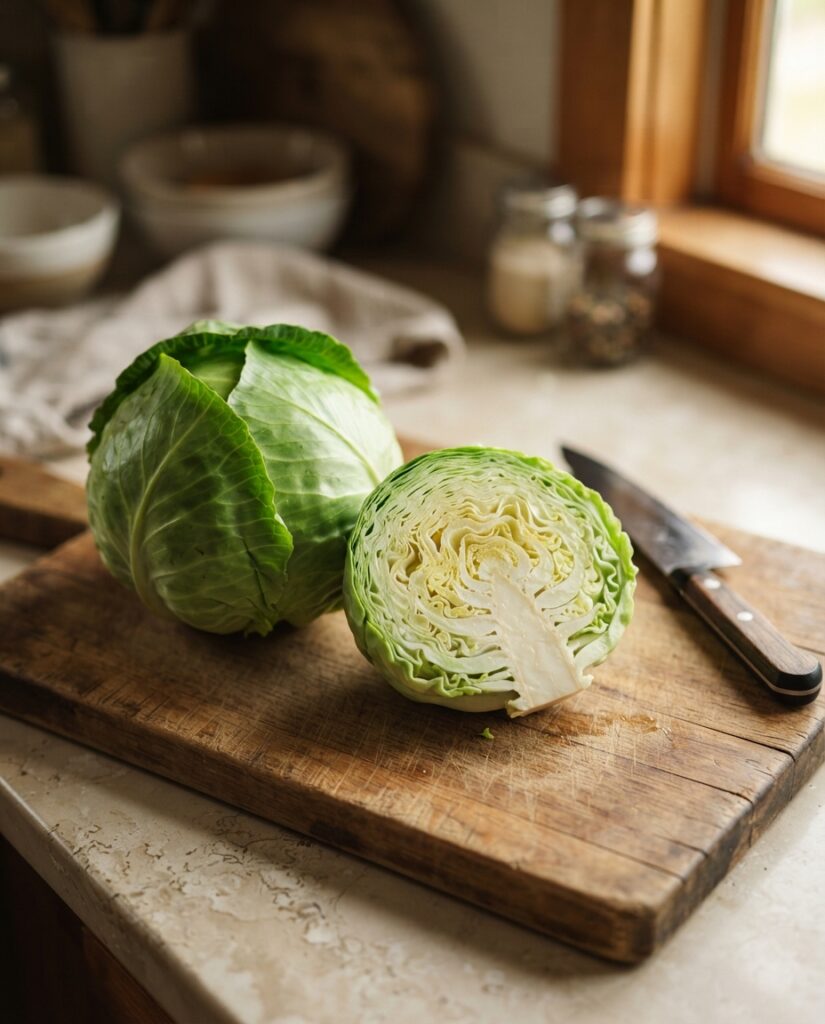
Cabbage doesn’t get much love, and I’m not sure why. It’s cheap, it keeps in the crisper for two weeks without wilting on you, and shredded raw into a slaw it has a crunch that lettuce can only dream about. For most people it’s simply a good vegetable to eat more of. A few groups have real reasons to go easier on it, though, and that’s worth knowing, not worrying about.
Jump to section
What cabbage actually brings to the table
As a cruciferous vegetable, cabbage gives you a lot for very few calories. The fiber supports digestion and keeps you full longer than you’d expect from something so light, the vitamin C supports your immune system, and vitamin K matters for blood clotting and bone health. Ferment it into sauerkraut or kimchi and you get gut-friendly bacteria on top of all that. I throw it into soup, a quick pan-fry with garlic, or just eat it raw with vinegar and salt. There’s no wrong way in.
Who might want to ease up
A handful of situations call for a little more thought:
- Certain thyroid conditions: cabbage contains natural compounds called goitrogens, which in very large amounts of raw cruciferous vegetables may interfere with thyroid function. For most people this changes nothing, and cooking cuts the effect further, but if you have an existing thyroid condition, it’s worth keeping raw portions reasonable and mentioning it to your doctor.
- Gas, bloating, or IBS: cabbage is rich in fiber and in certain fermentable carbohydrates (FODMAPs) that can cause bloating in sensitive people. Cooking it well and building up portions slowly usually helps.
- Anyone on blood thinners like warfarin: cabbage is high in vitamin K, which affects how these medications work. You don’t need to avoid it. You need to keep your intake consistent week to week, and talk to the prescribing doctor about where it fits.
- A sensitive or recovering digestive system: after a stomach illness or certain procedures, a big raw serving can be a lot to ask of your gut. Gentle, cooked portions are easier while things settle.
Making it easier on your gut
If cabbage sometimes disagrees with you, a few small changes go a long way. Cooking it, steamed, sauteed, roasted, whatever you’ve got the pan for, softens the fiber and tames the goitrogens, which makes it gentler on digestion. Start with a smaller portion than you think you want and build up from there; your gut adjusts faster than you’d expect. Chew it properly, pair it with foods you already digest easily, and if fermented cabbage sits well with you, it’s a good way in too, though I know plenty of people who find it too much at first, and that’s fine.
None of this is a reason to avoid cabbage. It’s nutritious and safe for most people, full stop. The point is just that a few groups, some thyroid conditions, sensitive digestion or IBS, anyone on vitamin-K-sensitive blood thinners, do better with a bit of moderation or a quick check-in with their doctor or pharmacist. Everyone else: eat it freely.
This article is for general information only and is not medical advice. If you have a health condition, take medication, or have concerns, please consult a qualified healthcare professional. See our medical disclaimer.