Old-Fashioned Corn Fritters, Crispy and Golden
Make old-fashioned corn fritters the Depression-era way: crispy, golden, and built from simple pantry staples like corn, flour, and eggs in one skillet.

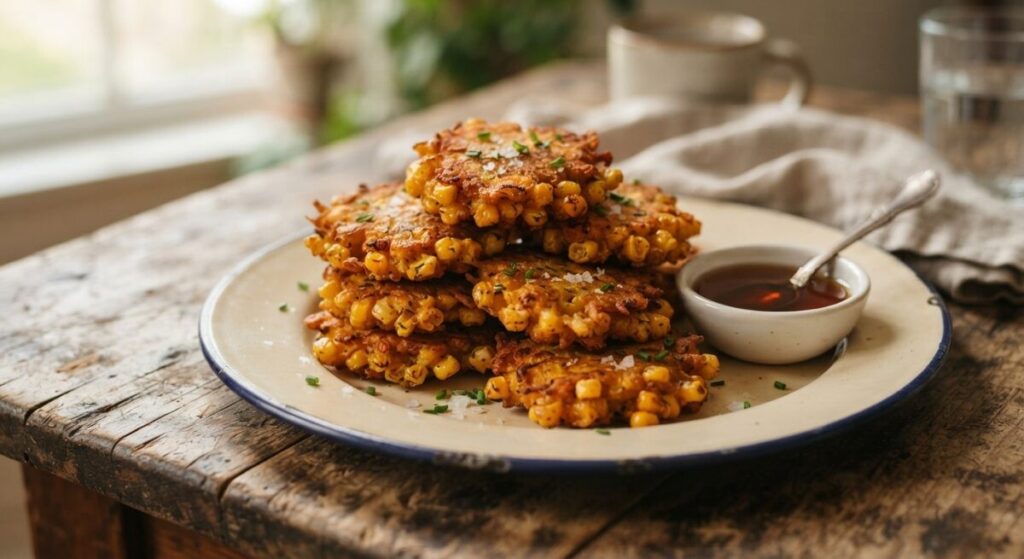
There’s a particular sound in late summer kitchens when the corn comes in heavy — the scrape of a knife down an ear, milky kernels tumbling into a bowl, and behind it the quiet arithmetic of a family figuring out how many suppers a bushel could stretch into. Corn fritters were part of that arithmetic. A little flour, an egg from the henhouse, and whatever corn was on hand turned into a plate of golden cakes that could carry a meal when meat was nowhere to be found, sizzling in a skillet that had likely fried a hundred other economical suppers before it.
Jump to section
During the Depression, corn was one of the few crops a family could count on even when cash was scarce — grown in a kitchen garden, put up in jars, or bought cheap by the sack from a neighbor with a surplus. Fritters made that abundance go even further, turning a cup or two of corn into a dish that felt like a treat rather than a stopgap. I fry mine crisp at the edges and tender in the middle, and they show up next to eggs at breakfast at my house just as often as they land beside greens at supper.
The Story Behind It
Corn fritters have roots that reach back well before the 1930s, but it was during the hard years that they became a fixture of the everyday table rather than an occasional treat. Corn was cheap, easy to grow even on a small plot, and simple to preserve by canning or drying, which meant a family could have the makings of fritters on hand in every season, not just when the ears were fresh off the stalk. A skillet, a little fat, and a batter built from flour and egg turned that reliable vegetable into something that felt indulgent, crisp on the outside and soft within. Farm cooks passed the method down by watching rather than writing, adjusting the batter by feel until it was thick enough to hold together and thin enough to fry through, and the dish became one of those quiet staples that fed a family through lean months without ever feeling like a sacrifice.
Ingredients
- 1 1/2 cups corn kernels, fresh, canned, or thawed from frozen
- 1 cup all-purpose flour
- 1 tablespoon sugar
- 1 1/2 teaspoons baking powder
- 1/2 teaspoon salt
- 1/4 teaspoon black pepper
- 2 large eggs, beaten
- 1/3 cup milk
- Vegetable oil or bacon grease, for frying
How I Make It
- In a large bowl, whisk together the flour, sugar, baking powder, salt, and pepper.
- In a separate bowl, beat the eggs with the milk, then stir in the corn kernels.
- Pour the wet ingredients into the dry ingredients and stir just until combined into a thick batter; do not overmix.
- Heat about 1/4 inch of oil or bacon grease in a heavy skillet over medium heat.
- Drop the batter into the hot fat by the heaping spoonful, flattening slightly, and fry for 2 to 3 minutes per side until deep golden brown.
- Transfer to a plate lined with paper towels to drain, and serve warm.
Tips, Swaps & Notes
Canned corn, well drained, or frozen corn thawed and patted dry both work beautifully when fresh ears aren’t in season, which is exactly how many Depression-era cooks made this dish through the winter — and honestly how I make it most of the year too. A pinch of cayenne or a spoonful of diced onion dresses the batter up for a savory side, while a touch more sugar and a warm drizzle of honey or syrup turns the same fritters into something close to dessert. Keep the oil at a steady medium heat rather than letting it scorch — I’ve rushed this before and ended up with fritters that were dark outside and gummy in the middle, so don’t crowd the pan or crank the heat to save time. Leftovers keep well in the refrigerator for a few days and crisp back up nicely in a dry skillet or oven rather than the microwave.
Why It Still Matters
Corn fritters remain one of the simplest lessons in vintage cooking: a cheap, plentiful vegetable and a handful of pantry staples can make something that feels special. They ask for almost nothing and give back a plateful of crisp, golden comfort, which is likely why they never really left Southern and Midwestern tables even as fancier sides came and went. Making a batch today is a small, tasty way to understand how earlier generations ate well without spending much at all.
A hot fritter off the skillet, however plain the pantry, has always tasted like plenty.
Old-Fashioned Corn Fritters, Crispy and Golden
Ingredients
- 2 cups fresh, frozen (thawed), or well-drained canned corn kernels
- 1 cup all-purpose flour
- 1 tablespoon sugar
- 1 1/2 teaspoons baking powder
- 1/2 teaspoon salt
- 1/4 teaspoon black pepper
- 2 large eggs, beaten
- 1/3 cup milk
- Vegetable oil, for frying
Instructions
- In a large bowl, whisk together the flour, sugar, baking powder, salt, and pepper.
- In a separate bowl, whisk the eggs and milk together, then stir into the dry ingredients until just combined.
- Fold in the corn kernels until evenly distributed; the batter should be thick enough to hold its shape when dropped from a spoon.
- Heat about 1/2 inch of vegetable oil in a heavy skillet over medium heat.
- Drop the batter by heaping tablespoonfuls into the hot oil, flattening slightly, and fry in batches without crowding the pan.
- Cook 2 to 3 minutes per side, until deep golden brown and cooked through.
- Drain on paper towels and serve hot, plain or with syrup.