Hearty Bean Soup with Smoked Meat
Thick, comforting bean soup with smoked meat: how to cook the beans truly tender, why the smoked pork carries the pot, dried vs tinned, and make-ahead tips.

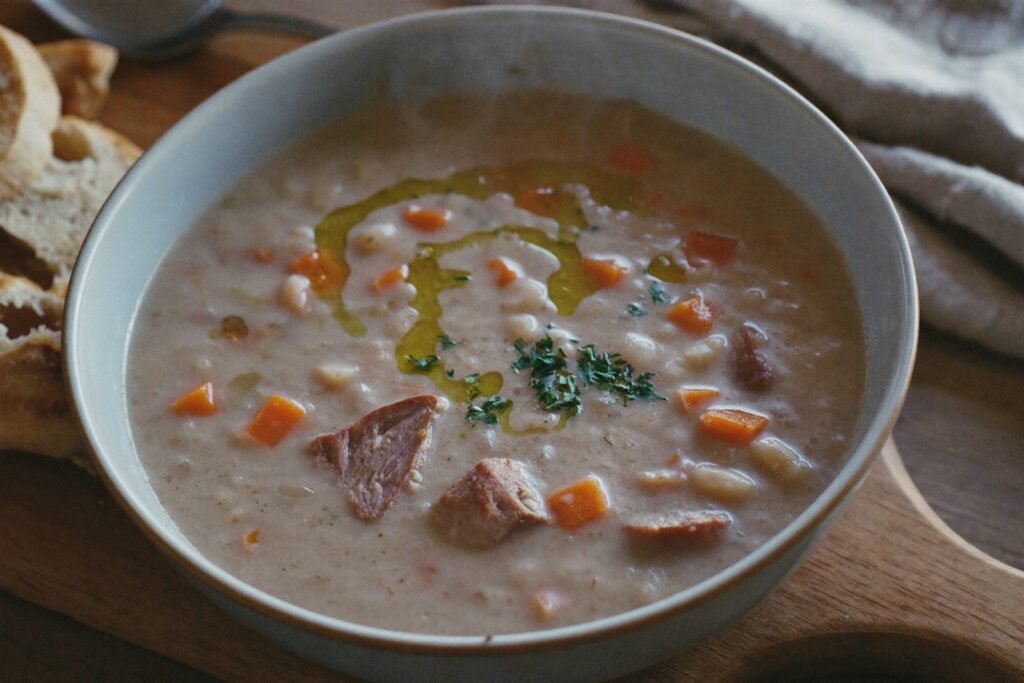
For a long time I thought the beans were the point of this soup. Then one January I ran out of smoked meat and made it anyway, telling myself good beans and the right vegetables would carry it. They didn’t. What came out was pleasant and completely forgettable: warm, beige, the kind of thing you finish without ever really tasting. That pot taught me what bean soup with smoked meat actually is. The beans give it body. The smoked meat gives it a reason to exist.
Jump to section
- Why a pot of bean soup works
- Getting the beans truly tender
- Why the smoked meat carries the whole pot
- Dried beans or tinned?
- Building flavor and finishing bright
- Common mistakes, and how to fix them
- Variations worth trying
- What to serve alongside
- Make-ahead and storage
- Bean soup FAQ
- Hearty Bean Soup with Smoked Meat
Why a pot of bean soup works
This is a soup built on two slow changes in one pot. The beans go from hard little stones to something creamy enough to thicken the broth on their own, no flour or cream required. Meanwhile the smoked meat gives up its salt, fat, and woodsmoke into the water, seasoning everything from the inside out. Onion, carrot, and celery round off the sharp corners, tomato and paprika add depth, and a splash of vinegar at the end lifts it all so it doesn’t sit heavy. Get the timing right and the pot more or less seasons itself.
Getting the beans truly tender
This is the part people rush, and it decides everything. A properly cooked white or borlotti bean should collapse to a smooth, almost buttery paste when you press it against the pot with a spoon. Anything short of that (a firm, mealy center) and the soup tastes underdone no matter how good the broth is.
Soak dried beans overnight in plenty of cold water; they’ll roughly double in size, so the insides cook through at the same rate as the skins. Short on time, boil them two minutes, then leave them off the heat, covered, for an hour. Then cook them gently: a hard boil throws the skins off and leaves the middles chalky, so keep it to a lazy simmer with just a few bubbles breaking the surface. Depending on how old the beans are, that’s one to two hours.
The salt and acid question
Here’s the mistake I made for years: I’d tip the tomato in early, with the beans, thinking it would deepen the flavor. It just left them stubborn. Old lore blames salt for toughening beans, but acid is the real culprit. I’ve had a pot stay crunchy for an extra hour because the tomato went in too soon. Salt the water lightly once the beans start to soften, and hold the tomato and vinegar back until they’re already tender.
Why the smoked meat carries the whole pot
A smoked ham hock, smoked sausage, or plain smoked bacon all do the same essential job in slightly different ways. As it simmers, the meat renders its fat into the broth and, with a hock, slowly releases the collagen from around the bone that gives the soup its silky, coating body. Just as important is the salt and smoke, spreading through every bean. That’s why the smoked meat goes in at the very beginning, with the beans, not at the end: it needs the full simmer to hand over what it’s got.
A hock is my favorite: an hour and a half in, the meat pulls away from the bone in tender shreds, and I lift it out, strip off the skin and bone, and stir the meat back through. Smoked sausage is the quick route: sliced and simmered, it flavors the pot in half the time. Bacon sits in between; render it first with the vegetables and both fat and smoke go straight into the base.
Dried beans or tinned?
Dried beans give you the better soup, and it isn’t close. Cooked from dry in the same pot as the smoked meat, they drink up that flavor as they soften, and the starchy cooking water becomes the backbone of the broth. Tinned beans are already cooked, so they stay firmer and taste more of themselves than of the pot. Still, they’re a good weeknight shortcut: build the broth first by simmering the smoked meat and vegetables for 30 to 40 minutes, then add the drained, rinsed beans for the last 15 minutes, just long enough to take on the broth without turning to mush.
Building flavor and finishing bright
Cook the sweet paprika and tomato paste with the softened onion, carrot, and celery for a minute before they join the pot. That quick heat blooms the paprika and takes off its raw edge. The finish matters just as much: right before serving, mash a ladleful of beans against the side of the pot to thicken the broth, then stir in the vinegar and a handful of parsley or dill off the heat. That last bright, sour note is the difference between a soup that tastes finished and one that tastes flat.
Common mistakes, and how to fix them
- Beans still hard after hours: usually acid added too early, or old beans. Hold the tomato and vinegar until the beans are soft; a bag that’s sat a year will take longer.
- Soup tastes flat or thin: the smoked meat didn’t get enough time, or it’s missing the acid. Simmer the meat from the start, and don’t skip the vinegar at the end.
- Broth too watery: you didn’t mash any beans. Crush a ladleful against the pot to release their starch, or blend a cupful and stir it back in.
- Too salty: smoked meat brings its own salt. Season lightly through the cook and adjust only at the end, once you know what the meat has given.
- Beans burst with skins everywhere: the heat was too high. Keep it to a bare simmer, never a rolling boil.
Variations worth trying
The pot takes well to changes. Swap white beans for borlotti, pinto, or a mix. Smoked paprika in place of some of the sweet gives a deeper edge if your meat is mild, and a parmesan rind dropped in with the beans adds a savory backbone. For a thicker, stew-like result, blend half the soup and leave the rest chunky. If you like heat, a pinch of chili does no harm, and a diced potato or two added partway through makes it heartier still.
What to serve alongside
This soup wants bread and not much else: a thick slice of crusty white or dark rye to drag through the bowl. A sharp raw onion or a few pickles cut through the richness, and a plain green salad with a sharp vinaigrette rounds it into a meal. I almost always put the vinegar bottle on the table too, since some of us like an extra splash in the bowl.
Make-ahead and storage
Like most bean dishes, this is better the next day, and it isn’t subtle about it. Overnight in the fridge the beans keep drinking up the broth, the smoke settles through the pot, and the whole thing thickens into something richer than the night before. It keeps three to four days; if it over-thickens, loosen it with a splash of water or stock as you reheat. It freezes well for a couple of months too: cool completely, freeze in portions, and thaw in the fridge before warming gently. A fresh squeeze of vinegar and a little parsley after reheating wakes it right back up.
Bean soup FAQ
Do I have to soak the beans first?
It helps a lot. Soaking lets the beans cook evenly and faster, so the insides turn creamy just as the skins soften. If you forget, use the quick-soak method (boil two minutes, then rest an hour off the heat) or just cook unsoaked beans longer, topping up the water as needed.
Why are my beans still tough after cooking so long?
Usually acid added too early, or beans that are simply old. Tomato and vinegar both slow softening, so keep them back until the beans are tender. And dried beans don’t last forever: a bag that’s been in the cupboard a year or more can stay stubborn no matter how long you simmer.
Can I make this without a ham hock?
Absolutely. Smoked sausage or smoked bacon both carry the pot well and cook faster than a hock. The one thing to keep is the smoke: that’s what makes this soup what it is. For a meatless version, lean on smoked paprika and a parmesan rind, and finish with a little extra oil for richness.
Hearty Bean Soup with Smoked Meat
Ingredients
- 400 g (about 2 cups) dried white or borlotti beans, soaked overnight; or 3 x 400 g (14 oz) tins, drained
- 1 smoked ham hock (about 700 g / 1 1/2 lb), or 250 g (9 oz) smoked sausage, or 200 g (7 oz) smoked bacon
- 2 onions, finely chopped
- 2 carrots, diced
- 2 celery stalks, diced
- 3 garlic cloves, minced
- 1 tbsp sweet paprika
- 2 tbsp tomato paste, or 1 x 400 g (14 oz) tin chopped tomatoes
- 2 bay leaves
- 1 to 2 tbsp red wine vinegar, to finish
- A handful of fresh parsley or dill, chopped
- 2 tbsp oil (or a little fat), for the vegetables
- Salt and pepper, to taste
Instructions
- Soak the dried beans overnight in plenty of cold water; they'll roughly double in size. Short on time, cover them with water, boil for 2 minutes, then leave them off the heat with the lid on for 1 hour.
- Drain the beans, put them in a large pot with the smoked meat and bay leaves, and cover with fresh cold water by a couple of inches. Bring to a gentle simmer and cook, part-covered, for about 1 hour, skimming off any foam that rises.
- Meanwhile, soften the onions, carrots, and celery in the oil until sweet and translucent, then stir in the garlic, paprika, and tomato paste and cook for a minute, until the paprika smells fragrant.
- Once the beans are starting to soften, stir the vegetables into the pot and season lightly with salt. Keep simmering gently until the beans are completely tender and creamy, about another 45 to 60 minutes.
- Lift out the ham hock, discard the skin and bone, shred the meat, and stir it back into the pot. (If you used sausage or bacon, simply leave it in.)
- Mash a ladleful of beans against the side of the pot and stir it back in to thicken the broth, then taste and adjust the salt and pepper.
- Off the heat, stir in the vinegar and the chopped parsley or dill. Let the pot rest 10 minutes before serving, loosening with a little water if it has thickened too far.