How to Store Cooked Food Safely
Learn to store cooked food safely: cool leftovers within two hours, use shallow airtight containers, follow fridge and freezer timings, and reheat right.

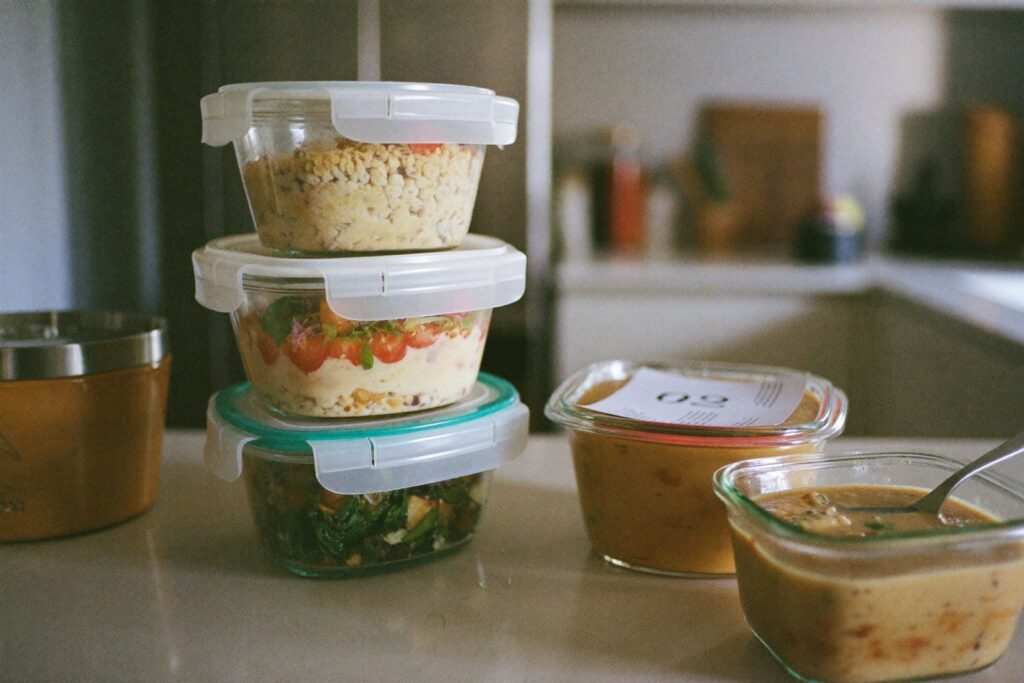
More food gets thrown out after it’s cooked than before it’s cooked. I’ve done it myself: a pot of stew forgotten on the counter till it turned, a container pushed to the back of the fridge and rediscovered days later as a small science project, rice reheated one time too many because I didn’t want to admit it was done. Storing cooked food well comes down to speed, temperature, and a few honest labels. Get those right and your leftovers stay safe and stay worth eating.
Jump to section
Understand the danger zone
Bacteria multiply fastest between 40°F and 140°F (4°C to 60°C). Food-safety guidance calls this the danger zone, and the whole point of good storage is moving food through it quickly instead of letting it linger. A dish that drifts slowly from steaming to room temperature spends far too long in that range, and that slow drift is where most trouble starts.
The rule most home kitchens live by: get cooked food into the fridge within two hours of it coming off the heat. On a hot day, anything above roughly 90°F (32°C) (think a summer kitchen with no air conditioning), cut that to one hour. This isn’t fussiness. It’s the single habit that does the most to keep leftovers safe.
Cool it down fast
Sliding a large, hot pot straight into the fridge sounds efficient, but it backfires. The center stays warm for hours and heats everything around it. I learned that one with a fridge full of lukewarm milk, after I buried a stockpot of soup in there without thinking. Help the warmth escape first:
- Divide into shallow containers. Depth is the enemy of fast cooling. Spread food no more than about two inches (5 cm) deep so heat has less distance to travel.
- Give soups and stews an ice bath. Set the pot in a sink of cold water and ice and stir every few minutes. A big pot can reach a safe temperature in 20 to 30 minutes this way.
- Portion before chilling, not after. Smaller amounts cool faster and reheat more evenly later.
- Vent the steam, then seal. Cover once the fiercest heat has passed so you aren’t trapping warmth or dripping condensation back onto the food.
Cooked rice deserves a special note. It can carry a bacterium (Bacillus cereus) whose spores survive cooking, so cool rice quickly, ideally within an hour, and never leave a pot of it out overnight.
Store it right: containers, labels, and rotation
Airtight containers earn their small cost. They keep food from drying out, stop it absorbing the smell of last night’s onions, and make stacking sane. Glass doesn’t stain or hold odors and goes straight from fridge to oven; sturdy plastic is lighter and cheaper. Either one works.
The habit that saves the most food is the dullest: label with the date. A strip of tape and a marker turns “how long has this been in here?” into a simple fact. Then keep older items at the front so they get eaten first, the same first-in, first-out rotation grocery stores rely on.
Set your fridge at or below 40°F (4°C) and your freezer at 0°F (-18°C). A cheap fridge thermometer settles a lot of guesswork; plenty of home fridges run warmer than the dial claims. Mine did, for years, before I checked.
How long cooked food actually keeps
These are sensible, widely accepted timings for food that was cooled and refrigerated promptly. Treat them as guidelines, not guarantees. How the food was handled matters as much as the number of days on the clock.
- Cooked meat and poultry: 3 to 4 days
- Soups and stews: 3 to 4 days
- Cooked fish and seafood: about 3 days
- Cooked rice and pasta: 3 to 5 days
- Cooked vegetables: 3 to 5 days
- Gravy and thin sauces: 1 to 2 days
- Hard-boiled eggs in the shell: up to 1 week
When to freeze instead
If you know you won’t finish something in time, freeze it while it’s still fresh, not on day three when it’s already on its way out. Most cooked dishes hold their quality in the freezer for 2 to 3 months before texture and flavor (not necessarily safety) start to slide. Soups, stews, cooked beans, braises, and baked goods freeze beautifully; dishes heavy on potatoes, cream, or crisp textures fare worst. Freeze in portions you’ll actually use, leave a little headspace for expansion, and label with the dish and the date. Thaw in the fridge overnight rather than on the counter, and don’t refreeze something that has fully thawed.
Reheat once, and reheat it thoroughly
Reheating is where good intentions often come undone. Two rules cover almost every situation:
- Heat it all the way through. Aim for steaming hot throughout, 165°F (74°C) if you’re checking with a thermometer. Stir soups and stir-fries so there are no cold pockets, and if you’re using a microwave, pause halfway to stir, then let it stand a minute.
- Only reheat what you’ll eat. Take out one portion and warm that, leaving the rest cold in the fridge. Every cool-and-reheat cycle costs flavor and hands bacteria another window, so reheating the same dish over and over is the habit to break.
When in doubt, throw it out
Your senses are a useful backstop, though not a perfect one. An off or sour smell, a slippery or sticky film, fuzzy spots, or a swollen, “lifted” lid on a container all mean the food goes in the bin, no tasting to double-check. I still remember the smell of a container of chili I left one day too long. It’s not a smell you forget, and it’s not one you need to confirm twice. The catch is that plenty of spoilage is invisible, which is exactly why the date label and the timings above matter. If you can’t remember when you made something, or it’s clearly past its window, don’t gamble. A wasted portion is a minor annoyance; a foodborne illness is not.
Use all of this as practical home guidance and adapt it to your own ingredients and kitchen. It isn’t medical advice. When something feels wrong, trust that instinct over any chart.
Frequently asked questions
How long can cooked food safely sit out?
No more than two hours at room temperature, or one hour if the room is hot (above about 90°F / 32°C). Past that, it has spent too long in the danger zone to count on, even if it looks and smells fine.
Can I put hot food straight into the fridge?
A small container, yes. A large, deep pot, no. It cools too slowly in the middle and warms its neighbors. Divide it into shallow containers or give it an ice bath first, then refrigerate once the worst of the heat has passed.
Is it safe to reheat leftovers more than once?
Best not to. Reheat only the portion you plan to eat, and only once. Repeated cooling and reheating is where both quality and safety quietly break down.