Cabbage Leaf Wraps: A Folk Remedy With Real Evidence
Cabbage leaf wraps are a folk remedy with real clinical evidence for engorgement and knee pain. How to use them, what studies show, and key safety notes.

A quick note: this is a traditional home remedy shared for general interest — not medical advice. See our medical disclaimer, and please see a doctor for severe, worsening, or persistent symptoms.
Jump to section
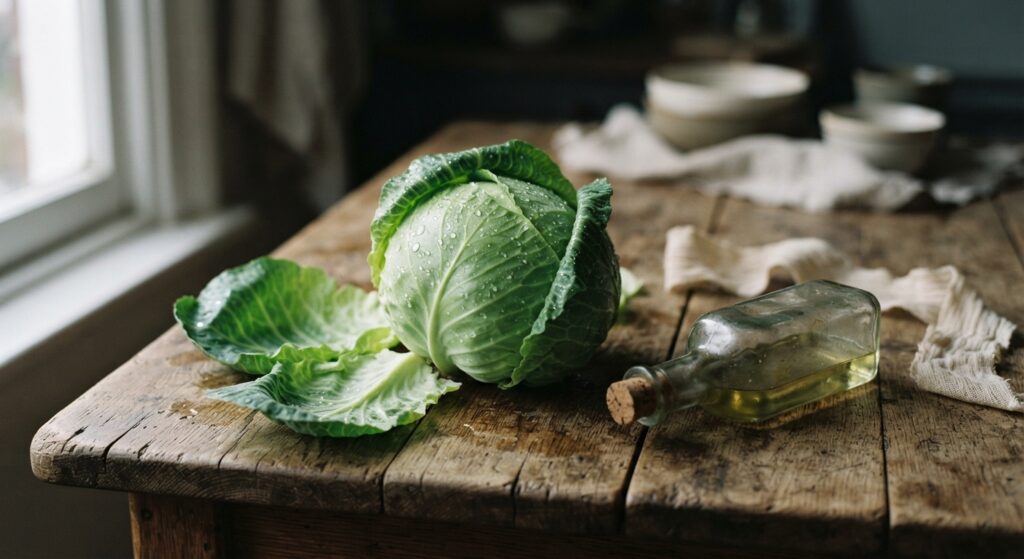
My mother kept a head of cabbage in the crisper for exactly one reason that had nothing to do with dinner: sore knees. She’d peel off a leaf, roll a wine bottle over it until it went limp and a little shiny, and press it against whatever joint was complaining that week. I thought it was one of her odder habits until I found out cabbage leaf wraps are one of the few folk remedies that have actually been tested in real clinical trials, and the results hold up better than you’d expect from something this silly-looking.
What’s actually in the leaf
Cabbage leaves contain glucosinolates like sinigrin, compounds with genuine anti-inflammatory properties. But honestly, half the trick is just the shape and the cold. A leaf is pliable enough to cup a knee or a breast, it holds moisture against the skin, and once you’ve bruised it, it starts releasing what’s inside. Strip away the folklore and you’re left with a contoured cold compress, and cold, on its own, is a well-established way to take the edge off swelling.
What the studies found
This is the part that surprised me. Cabbage leaf wraps have actually been studied for three specific things, and the results are modest but real:
- Breast engorgement. In breastfeeding women, chilled cabbage leaves have been tested against the painful fullness of engorgement, and several trials found the relief comparable to a plain cold compress, which tells you cooling is doing a lot of the work.
- Knee osteoarthritis. Trials on cabbage wraps for arthritic knees reported pain reductions over several weeks, in some cases in the same range as a topical anti-inflammatory gel.
- Minor sprains and swelling. Cabbage has also been used on swollen, sprained joints, where cooling and light compression plausibly account for most of the effect.
None of these are large trials, and none can fully untangle the leaf’s chemistry from the simple effect of cold on skin. But it’s meaningfully more evidence than most kitchen remedies get, and plenty of people report real, if modest, relief.
How to actually do it
- Chill a whole head of cabbage, then peel off the big outer leaves.
- Rinse a leaf, lay it flat, and roll a bottle firmly over it until the ribs bruise and soften.
- Wrap it against the sore spot and hold it there with a light bandage or a snug top for up to two hours.
- Swap in a fresh leaf and repeat once or twice a day while the swelling or discomfort lasts.
Where to be careful
If you’re breastfeeding and using this for engorgement, keep it short and infrequent. Chilled cabbage applied too often can actually reduce your milk supply. That’s useful if you’re weaning, a problem if you’re trying to keep feeding going, so mention it to your midwife or lactation consultant and let them guide the timing. Stop if the skin gets irritated, skip it over broken skin, and patch-test first if you have sensitive skin or a cabbage allergy. And some things are past what any wrap can help with: a fever, spreading redness or warmth, a hard tender lump with flu-like symptoms while breastfeeding (possible mastitis), or joint pain that’s severe, worsening, or followed a real injury all need a doctor, not another leaf.
I still keep a cabbage in the fridge. It won’t fix an arthritic knee and it’s not a substitute for actual care, but for engorgement, a mildly swollen joint, or a minor sprain, it’s cheap, it’s gentle, and unusually for this shelf of remedies, it’s got real evidence behind it. Just use a light touch if you’re nursing.
This article is for general educational purposes only and is not medical advice. Traditional remedies are not a substitute for professional care. If your symptoms are severe, persistent, or getting worse, please consult a qualified healthcare provider.
Health disclaimer: This article describes a traditional folk remedy for general information only. It is not medical advice and is not a substitute for professional diagnosis or treatment. Some remedies can cause irritation, allergic reactions, or interact with medications. Consult a qualified healthcare professional before trying any remedy, patch-test anything applied to skin, and seek prompt medical care for severe, worsening, or persistent symptoms. See our full Medical Disclaimer.