A Simple Overnight Skincare Routine
There is a certain moment — often first thing in the morning — when the mirror feels less kind than usual. Skin looks a little dull, fine lines seem more…

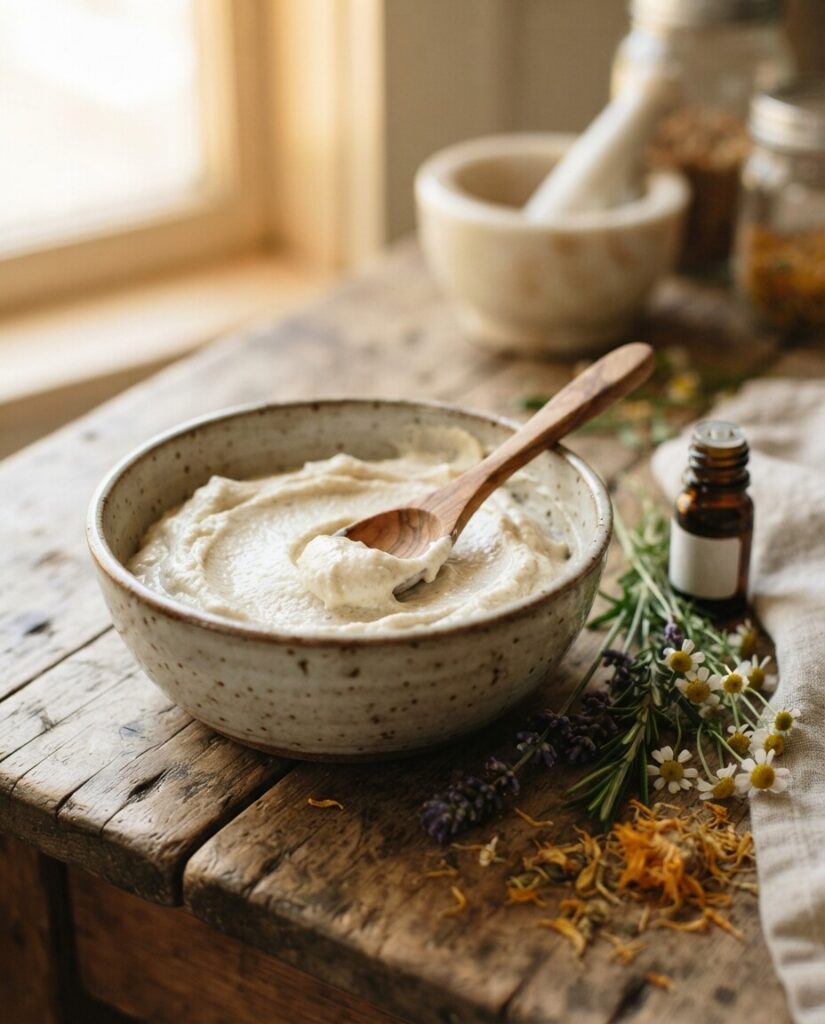
Baking soda paste for the face keeps turning up on my feed, this is the third time this month, so instead of scrolling past again I actually looked into what it does to skin overnight. Short version: it makes skin feel smooth for about a day, and that feeling is not the same thing as an improvement.
Jump to section
Why It Feels Like It’s Working
Baking soda is cheap, it’s already in your kitchen, and it mixes into a paste in ten seconds. That alone explains why it keeps resurfacing online. Rub it on and skin genuinely does feel cleaner and smoother right after — I won’t argue with that part. The problem is what that smoothness actually is.
What Skin Is Doing While You Sleep
Overnight is when skin does its repair work: cells turn over, moisture rebalances, and the barrier that keeps water in and irritants out gets rebuilt. Whatever you put on your face before bed is either helping that process or getting in its way for the next several hours.
Baking soda is quite alkaline, and healthy skin sits slightly on the acidic side. Put a strongly alkaline paste on your face overnight and you’re pushing that balance the wrong direction. The “smooth” feeling the next morning is often just the outer layer of skin being stripped and slightly dried out, not improved. I tried it myself out of curiosity a while back, and the tightness I woke up with was the giveaway — that’s not what a gentle treatment feels like. Used repeatedly, some people end up with skin that’s drier, more reactive, or flaky in patches.
About the “Wrinkles Gone by Morning” Claims
If a spoonful of pantry powder actually erased wrinkles overnight, it wouldn’t be circulating in comment sections, it would be in every dermatologist’s routine. Fine lines come from hydration levels, collagen, sun exposure, and years of habits, not from one ingredient applied once. Nothing changes that in a single night, and anything claiming to should make you more skeptical, not less.
What I Actually Do at Night
- Wash with lukewarm water and a mild cleanser, nothing that leaves skin feeling tight.
- A light serum or moisturizer while skin is still a little damp.
- A richer cream on top when skin feels dry or the weather’s turned.
- Sunscreen every morning, which does more for how skin looks over time than anything applied at night.
If you like exfoliating, once or twice a week with something actually formulated for the face beats scrubbing with baking soda every time.
When to Back Off
Skin gets thinner and more reactive with age, so harsh ingredients show their downside faster than they used to. Stinging, redness, unusual dryness, or flaking after trying something new isn’t a sign to push through it. It’s a sign to stop and go gentler — persistent irritation is skin asking for less, not more.
FAQ
Is baking soda ever okay on the face?
Some people try it once out of curiosity without issue, but regular use of something this alkaline is a hard sell for facial skin, especially if it’s mature or sensitive.
Why does skin feel smooth right after?
That’s mostly surface exfoliation and mild dryness talking, not a real improvement underneath.
What actually helps fine lines more reliably?
Consistent hydration, daily sunscreen, and a gentle routine you’ll actually stick with, over months, not overnight.
This article is for general information only and is not a substitute for professional advice. If you have specific skin concerns, consider speaking with a qualified dermatologist or healthcare provider.