Strong Thyme Tea: A Traditional Cough Comfort
Strong thyme tea is a traditional comfort for coughs, and thymol gives it real backing. How to brew a proper concentrate, what the evidence shows, and safety.

A quick note: this is a traditional home remedy shared for general interest — not medical advice. See our medical disclaimer, and please see a doctor for severe, worsening, or persistent symptoms.
Jump to section
Thyme is the herb I trust most when a cough won’t quit, out of everything on the herb shelf. That’s not just sentiment. Thymol, its main compound, is the same aromatic molecule found in some antiseptic mouthwashes and cough drops, and it’s a big part of why a strong cup of thyme tea has been a Mediterranean cold-season staple for a very long time.
What’s really in the cup
Thymol and a related compound, carvacrol, have well-documented antimicrobial and anti-inflammatory activity in lab studies. Thyme is also among the few kitchen herbs officially recognized within European herbal-medicine tradition for easing coughs and the irritation of an upper-airway cold, not treated as pure folklore. Steeped into hot tea, its warm oils travel straight to the throat, and a lot of people find that calms a tickle and makes an unproductive cough feel looser.
Lab dish versus actual throat
It’s worth being honest about the gap here. Watching thymol slow microbes on a lab plate is not the same as watching a cup of tea clear a chest infection, and the human evidence, while genuinely encouraging for symptom relief, is thinner than herb marketing usually implies. My honest read: thyme tea is a legitimate, traditionally supported comfort for the coughs and scratchiness of an ordinary cold. It won’t substitute for antibiotics when a bacterial infection actually needs them, and it won’t resolve a serious chest illness by itself. A good chunk of the relief also comes from something almost embarrassingly simple — warm fluid and steam — which soothe and hydrate irritated airways all on their own.
Don’t make it weak
The common mistake is a thin, pale cup that barely tastes of anything. Thyme’s helpful oils are volatile, so a weak brew lets most of them drift off in the steam. A real concentrate needs to be covered while it steeps:
- Add a generous two tablespoons of dried thyme, or a small handful of fresh sprigs, to about eight ounces of just-boiled water.
- Cover the cup right away with a saucer or lid so the oils stay in the liquid instead of escaping into the air.
- Let it steep, covered, for ten to fifteen minutes, then strain well.
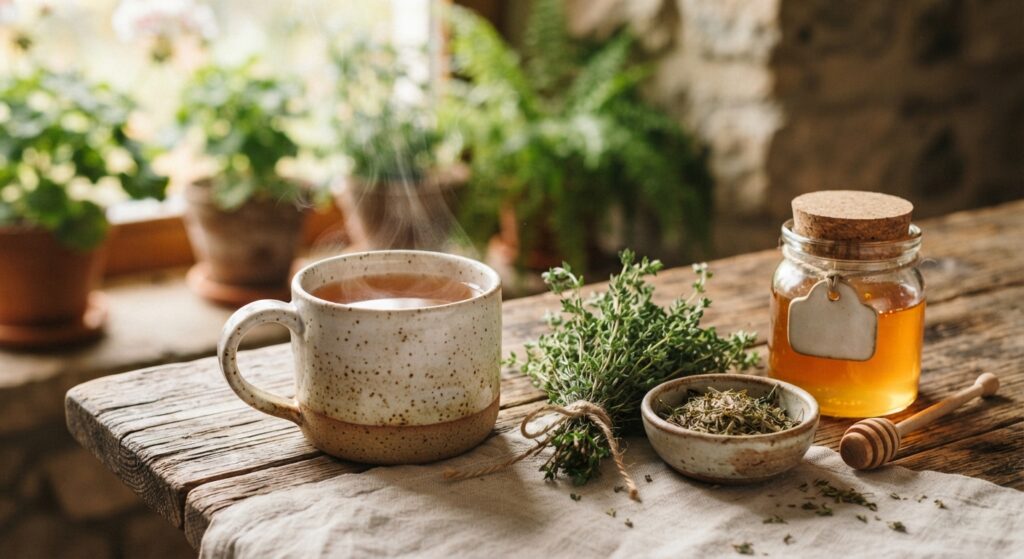
- Drink it warm, sweetened with honey if you like, up to three times a day while symptoms last. Never give honey to a baby under one year old.
When to skip it or call a doctor instead
Thyme as food is very safe, but a concentrated tea is stronger, so a few cautions apply. Avoid medicinal amounts during pregnancy, and keep concentrated thyme tea away from very young children unless a clinician says otherwise. If you’re allergic to plants in the mint family or know you’re sensitive to thyme, be cautious, and check with a pharmacist if you’re on regular medication. Stop steeping and see a doctor if a cough lasts more than about three weeks, brings up blood or discolored phlegm, or comes with a high fever, chest pain, wheezing, or shortness of breath.
Strong thyme tea earns its spot on the shelf more than most folk remedies do. There’s a real compound behind the reputation. I keep it as backup to rest and fluids, not a replacement for either, and I let the warning signs above send me to an actual doctor instead of the kettle.
This article is for general educational purposes only and is not medical advice. Traditional remedies are not a substitute for professional care. If your symptoms are severe, persistent, or getting worse, please consult a qualified healthcare provider.
Health disclaimer: This article describes a traditional folk remedy for general information only. It is not medical advice and is not a substitute for professional diagnosis or treatment. Some remedies can cause irritation, allergic reactions, or interact with medications. Consult a qualified healthcare professional before trying any remedy, patch-test anything applied to skin, and seek prompt medical care for severe, worsening, or persistent symptoms. See our full Medical Disclaimer.
Strong Thyme Tea: A Traditional Cough Comfort
Ingredients
- 2 tsp dried thyme (or 3-4 fresh sprigs)
- 1 cup boiling water
- honey and lemon to taste (optional)
Instructions
- Place the thyme in a mug or small teapot.
- Pour the boiling water over it and cover.
- Steep for 5 to 10 minutes.
- Strain, then stir in honey and lemon if you like.