The Bread-and-Milk Poultice for a Minor Boil
The bread and milk poultice is a folk remedy for a minor boil. Learn why moist warmth helps, why you should never squeeze a boil, and when to see a doctor.

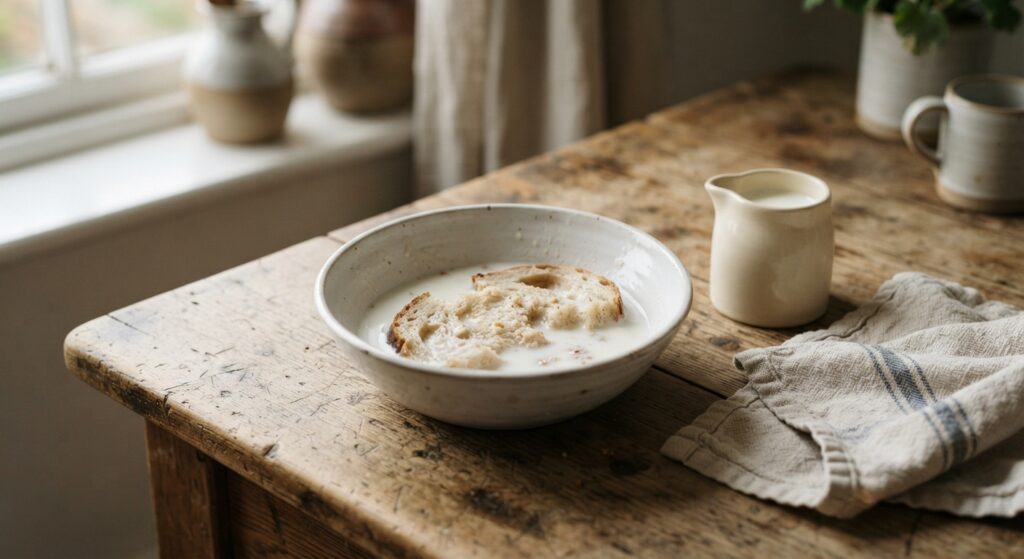
My grandmother kept a chipped bowl just for this: a torn heel of bread, a splash of warm milk, pressed against whatever small, angry spot needed calming down that week. It’s about as humble a remedy as I know. Bread and milk have shown up in kitchens for a very long time, from old European households to plenty of American farm kitchens, long before antiseptic cream sat on every drugstore shelf. I still reach for it sometimes, mostly out of habit, and it’s worth being honest about what it actually does and doesn’t do.
The idea behind it
What it’s really doing is delivering steady, moist warmth to one small spot for a while. Warm milk soaks into the bread, and the soft, soggy bread holds that heat and moisture against the skin much longer than a damp cloth would, which cools off in minutes. The traditional idea is to soften the skin over a small boil so the body’s own process of bringing it to a head can do its work, or to soften the skin around a splinter so it can work its own way out.
What the evidence actually says
The part that actually does something in this remedy is the moist heat itself, not the bread or the milk. Applying warmth to a minor boil is a genuinely recognized home measure. Moist heat increases blood flow to the area and can help a small boil come to a head and drain on its own, which lines up with standard advice for an uncomplicated boil. A clean, warm, damp cloth used as a warm compress does the same job and is more hygienic, so you don’t strictly need the bread at all. The bread-and-milk version just happens to hold its warmth for longer, which is probably why it stuck around for so many generations. There’s no real evidence that bread or milk pulls infection out through any special property of their own, and since both can carry bacteria, cleanliness matters more than the ingredients do. Use it for the moist heat it provides, and don’t hesitate to reach for a plain warm compress instead if that’s simpler.
How it is traditionally used
Tear a slice of bread into a small, clean bowl and pour warm, never hot, milk over it until it’s soft and fully soaked. Let it cool to a temperature that’s comfortable and safe against skin, then lay the warm poultice over the boil or tender spot, cover it with a clean cloth, and leave it in place for a short while. When it cools, swap in a fresh batch, and always start with clean bread and milk rather than reusing the old. One rule matters more than any other here: never squeeze, pop, or try to lance a boil yourself. That can push the infection deeper and spread it. Let a boil open and drain on its own timeline, and keep the area clean if and when it does.