How to Keep Fresh Herbs Alive for Weeks
Stop tossing wilted herbs. Simple storage tricks — by herb type — keep parsley, basil, and rosemary fresh for one to three weeks instead of a few days.

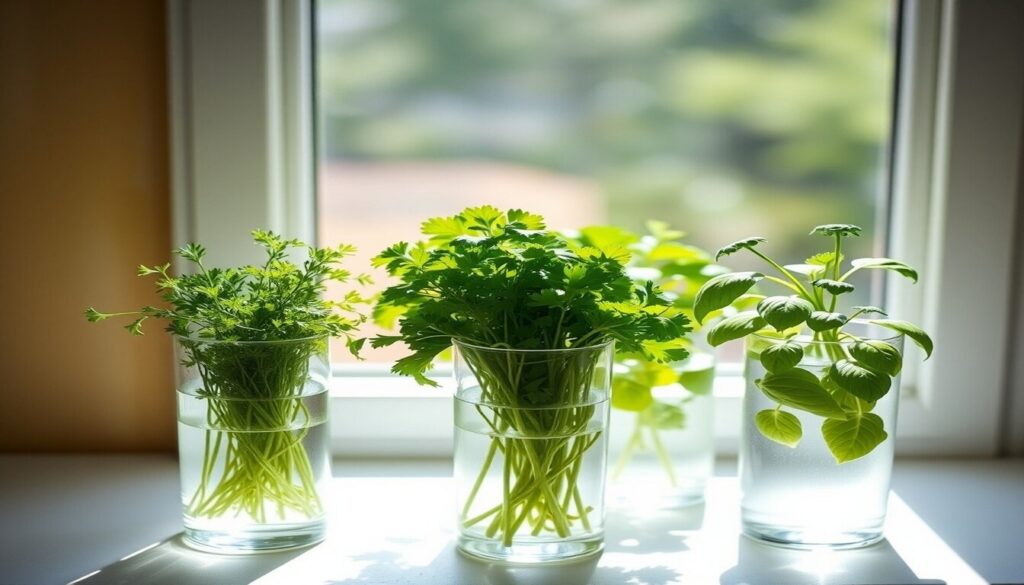
Fresh herbs are one of those small kitchen purchases that feel wasteful almost immediately. You buy a bunch of cilantro for one recipe, use a third of it, and a week later the rest is a slimy, sad mess in the crisper drawer. The good news is that most herbs die early not because they’ve actually gone bad, but because they were never stored the way they wanted to be. A little bit of sorting by type makes a real difference.
Jump to section
Treat soft herbs like flowers
Parsley, cilantro, basil, mint, and dill are all soft-stemmed herbs, and they respond well to the same trick florists use on cut flowers. Trim about half an inch off the stems, then stand the bunch upright in a glass or jar with an inch or two of water, the way you would a bouquet. Loosely cover the tops with a plastic bag to hold in humidity without smothering them.
Here’s where it gets a little herb-specific. Basil is the outlier of the group — it’s sensitive to cold and will blacken in the fridge, so keep its jar on the counter, out of direct sun. Parsley, cilantro, mint, and dill are happier with that same glass-of-water setup but placed in the refrigerator. Change the water every couple of days and most of these will hold up for one to two weeks, sometimes longer.
Hardy herbs want to be wrapped, not soaked
Rosemary, thyme, sage, and oregano behave more like twigs than flowers, and standing them in water tends to encourage rot rather than freshness. Instead, wrap the sprigs loosely in a slightly damp paper towel, then tuck the bundle into a partially open plastic bag or a container with the lid slightly ajar. The damp towel keeps them from drying out while the airflow keeps them from getting moldy. Stored this way in the fridge, hardy herbs will often stay usable for two to three weeks, sometimes longer if you started with a fresh bunch.
It’s worth checking the towel every few days — if it’s dried out, give it a light spritz; if it’s gotten soggy, swap it for a dry one. That balance is really the whole trick.
Reviving herbs that are already looking limp
If you open the fridge and find a bunch that’s gone floppy but isn’t slimy or discolored, it’s not necessarily done for. An ice bath can bring a surprising amount of life back. Fill a bowl with cold water and a handful of ice, trim the stem ends, and submerge the herbs for about fifteen to twenty minutes. Soft herbs especially tend to plump back up as they rehydrate. Pat them dry afterward before storing, since trapped moisture is what causes rot in the first place.
This trick works best as a rescue for herbs that are merely tired, not for ones that have already started to break down or smell off — at that point, it’s better to let them go and compost them.
A few extra habits that help
Buying herbs with the roots still attached, when available, tends to extend their life noticeably, since the plant is still technically alive and drawing up water. It’s also worth resisting the urge to wash a whole bunch right when you bring it home — excess moisture sitting on the leaves speeds up decay. Wash only what you’re about to use, and let the rest stay dry until it’s needed.
None of these methods require special equipment, just a jar, a paper towel, and a bit of attention every few days. Once the habit sticks, it’s a pretty reliable way to stop half of every herb bunch from ending up in the trash.