Bread and Milk Poultice: An Old Remedy for a Minor Boil
The bread and milk poultice is a folk remedy for a minor boil. Learn why moist warmth helps, why you should never squeeze a boil, and when to see a doctor.

A quick note: this is a traditional home remedy shared for general interest — not medical advice. See our medical disclaimer, and please see a doctor for severe, worsening, or persistent symptoms.
Of all the old skin remedies, few are humbler than bread soaked in warm milk and laid against a small, tender boil or the site of a stubborn splinter. It looks like almost nothing. Yet households in medieval Europe, colonial America, and many frontier communities kept returning to this warm poultice, and understanding what it does, and just as importantly what you should never do with it, makes it a reasonable comfort measure for a minor problem.
The idea behind it
A poultice like this is really a way of delivering gentle, steady, moist warmth to one spot for a while. Warm milk soaks the bread, and the soft bread holds that warmth and moisture against the skin far longer than a cloth that quickly cools. The traditional aim is to soften the skin over a small boil and encourage the body’s own process of bringing it to a head, or to soften the skin around a splinter so it can work its way out.
What the evidence actually says
The honest version is that the useful ingredient here is moist heat, not the bread or the milk in particular. Applying warmth to a minor boil is a genuinely recognized home measure: moist heat increases blood flow to the area and can help a small boil come to a head and drain on its own, which is exactly what standard advice for an uncomplicated boil suggests. A clean, warm, damp cloth used as a warm compress achieves the same thing and is more hygienic, which is worth knowing. The bread-and-milk version simply holds warmth well. There is no good evidence that bread or milk draws out infection through any special power, and because both can harbor bacteria, cleanliness matters a great deal. So value this remedy for the moist warmth it provides, and feel free to use a plain warm compress instead.
How it is traditionally used
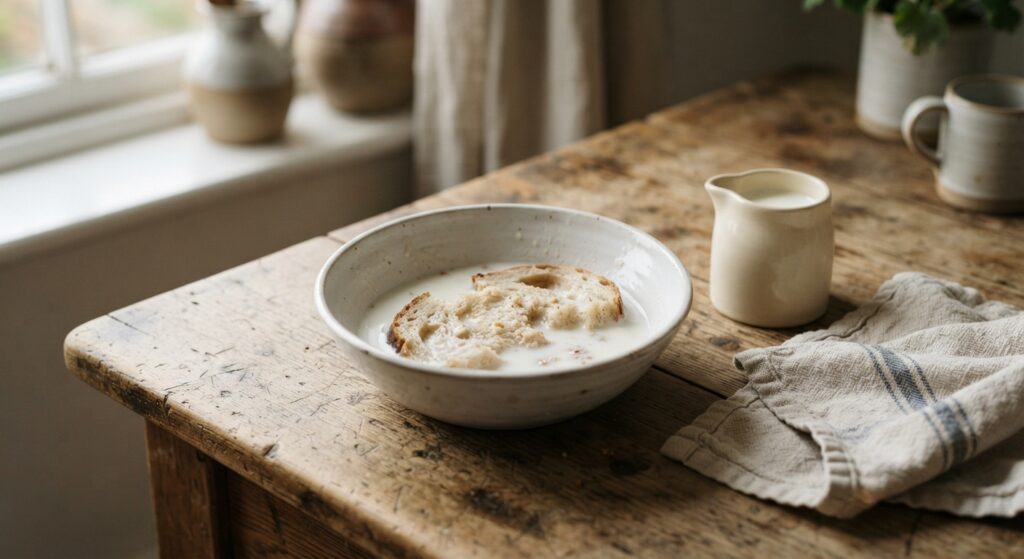
Tear a slice of bread into a small clean bowl and pour warm, never hot, milk over it until it is soft and soaked. Let it cool to a comfortable, safe temperature, then lay the warm poultice over the boil or tender spot, cover it with a clean cloth, and leave it in place for a short while. Refresh it with a clean batch when it cools, and always use fresh bread and milk, keeping everything as clean as you can. The single most important rule is this: never squeeze, pop, or try to lance a boil yourself. Doing so can push the infection deeper and spread it. Let a boil open and drain on its own, and keep the area clean if it does.
Safety and when to see a doctor
This poultice is only for a small, uncomplicated boil or a minor splinter; it is not a remedy for a serious skin infection. Several signs mean you should stop and see a doctor rather than keep applying warm bread. Get medical attention if a boil is large, very painful, or rapidly getting worse; if the redness spreads or you see red streaks running from it; if you develop a fever or feel generally unwell; or if the boil sits on the face, spine, or near the groin. People with diabetes, a weakened immune system, or a heart condition should be especially cautious and seek advice early, as should anyone whose boils keep coming back. A splinter that is deep, dirty, or will not come out, or any wound that shows spreading infection, also needs professional care. When in doubt, let a clinician take a look.
The bottom line
The bread-and-milk poultice is a gentle, old-fashioned way to bring soothing, moist warmth to a small boil or splinter, and that warmth is the part that genuinely helps. Keep it clean, keep it warm rather than hot, never squeeze a boil, and know the warning signs that mean an infection has outgrown any home remedy and needs a doctor.
This article is for general educational purposes only and is not medical advice. Traditional remedies are not a substitute for professional care. If your symptoms are severe, persistent, or getting worse, please consult a qualified healthcare provider.
Health disclaimer: This article describes a traditional folk remedy for general information only. It is not medical advice and is not a substitute for professional diagnosis or treatment. Some remedies can cause irritation, allergic reactions, or interact with medications. Consult a qualified healthcare professional before trying any remedy, patch-test anything applied to skin, and seek prompt medical care for severe, worsening, or persistent symptoms. See our full Medical Disclaimer.
The information on Kepoli is provided for general informational purposes only and is not professional medical, health, nutritional, or safety advice. Always use your own judgment and consult a qualified professional before acting on it.