Burnt Bread and the Story of Charcoal Dressings
Burnt bread as a wound remedy sounds odd, but it foreshadowed modern charcoal dressings. The history, the honest limits, and why deep wounds need a doctor.

A quick note: this is a traditional home remedy shared for general interest — not medical advice. See our medical disclaimer, and please see a doctor for severe, worsening, or persistent symptoms.
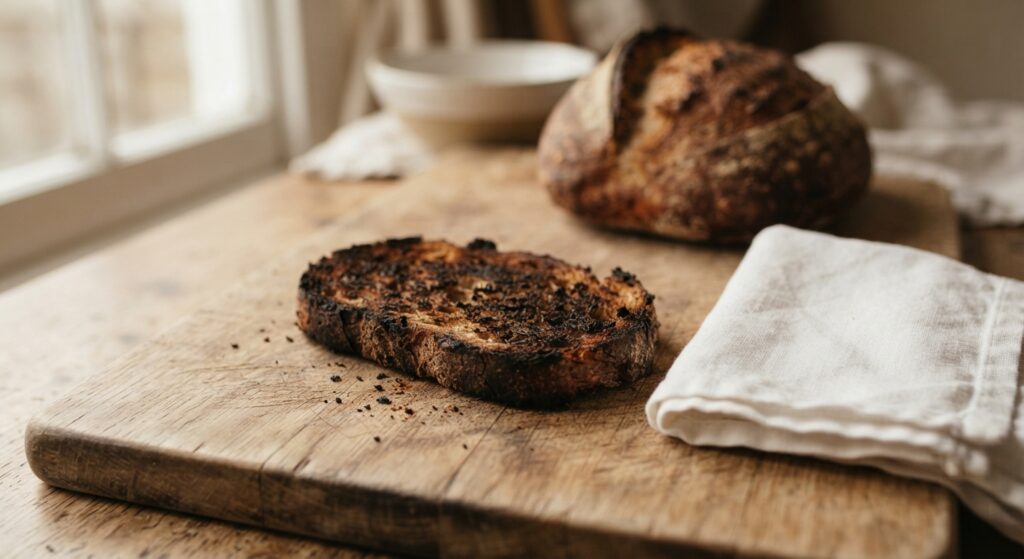
Few old remedies sound less appealing than pressing burnt toast against a scraped knee. It reads like a kitchen mishap rather than first aid. Yet charred bread as a wound covering appears again and again in rural European folk medicine, old American household guides, and traditional practices around the world, mostly in the long centuries before clean dressings and antibiotics existed. It is worth revisiting less as something to do today and more as a genuinely interesting ancestor of a tool modern medicine still uses.
The idea behind it
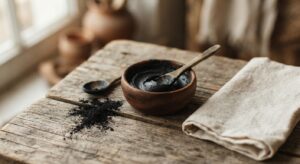
Char is essentially carbon. When bread is burnt through, what remains on the blackened surface is a crude, sooty form of the same element that, in a far more refined state, becomes activated charcoal. Carbon has a useful physical property: it can bind certain molecules to its surface and hold them there, a process called adsorption. In principle, a carbon-rich surface laid against a weeping minor graze could take up some of the fluid and odor around it. That is the entire logic, and it is a real one, even if burnt bread is an extremely rough way to put it into practice.
From folk toast to modern dressings
The reason this remedy deserves a little respect is that its underlying principle turned out to be sound. Hospitals today use activated-charcoal wound dressings, manufactured, sterile, and highly porous, on exactly the carbon-adsorption idea that charred bread only gestured at. Activated charcoal also has a serious role inside emergency medicine for certain poisonings, given under strict professional supervision. Our great-grandparents did not understand the chemistry, but they had noticed that something charred and black seemed to keep a small wound calmer. In a rough way, they were onto something later refined into a genuine medical product.
The gap between the folk version and the medical one is enormous, though. Burnt bread is not sterile, its carbon is coarse and inconsistent, and the bread itself can harbor microbes. So this is a story to appreciate far more than a technique to copy.
How it was traditionally used, and its honest limits
In its day, a piece of bread was toasted until fully blackened but still holding together, allowed to cool, and laid char-side down against a minor, shallow scrape, then covered and changed a few times a day. If you are curious enough to want to picture the tradition, that is the shape it took.
But the limits are firm, and they matter far more than the method:
- It was only ever suited to minor, superficial grazes, never deep, gaping, or heavily bleeding wounds.
- It is not, and never was, a safe answer to swallowed poisons. Charred bread is not medical activated charcoal, and no home char should be used to try to treat poisoning. For any suspected poisoning, contact emergency services or a poison control line at once.
- Clean modern first aid, gentle washing, an antiseptic, and a sterile dressing, is cleaner, more reliable, and far easier than anything involving toast.
Safety and when to see a doctor
For any wound that is deep, dirty, caused by a bite or a rusty object, or that shows spreading redness, warmth, swelling, pus, or red streaks, skip home methods entirely and seek professional care, some of these need cleaning, stitches, antibiotics, or a tetanus booster. The same is true of any wound in someone with diabetes or poor circulation, where minor injuries can turn serious quickly.
The honest bottom line
Burnt bread is best filed under history and curiosity, a folk precursor that happened to anticipate the real science behind today’s charcoal dressings. It is a lovely example of ordinary people noticing something true long before anyone could explain it. For an actual wound, though, reach for clean, modern first aid, and let the toast stay a story worth telling.
This article is for general educational purposes only and is not medical advice. Traditional remedies are not a substitute for professional care. If your symptoms are severe, persistent, or getting worse, please consult a qualified healthcare provider.
Health disclaimer: This article describes a traditional folk remedy for general information only. It is not medical advice and is not a substitute for professional diagnosis or treatment. Some remedies can cause irritation, allergic reactions, or interact with medications. Consult a qualified healthcare professional before trying any remedy, patch-test anything applied to skin, and seek prompt medical care for severe, worsening, or persistent symptoms. See our full Medical Disclaimer.
The information on Kepoli is provided for general informational purposes only and is not professional medical, health, nutritional, or safety advice. Always use your own judgment and consult a qualified professional before acting on it.