Charcoal Poultice: An Old Paste, and What It Does
A charcoal poultice is an old topical drawing paste for minor skin irritation. Learn what the evidence shows, safe use, and when a wound needs a doctor.

A quick note: this is a traditional home remedy shared for general interest — not medical advice. See our medical disclaimer, and please see a doctor for severe, worsening, or persistent symptoms.
Jump to section
Activated charcoal is in everything now: face masks, toothpaste, trendy black lemonade. Its older job was humbler. Traditional healers in many cultures mixed activated charcoal powder with water into a thick paste, spread it on a cloth, and laid it over a minor skin irritation, an insect bite, a bee sting, a small angry patch of skin. A home comfort for little complaints, and that modest, external use is the one worth talking about honestly.
The idea behind the paste
The logic is drawing. Activated charcoal is processed to be extremely porous, giving it an enormous internal surface area that can bind many substances through a process called adsorption, where molecules stick to its surface. Folk tradition stretched that idea to the skin, reasoning a charcoal paste might pull irritants out of a bug bite or calm an inflamed spot. As a cool, moist compress on minor irritation, plenty of people simply find it soothing.
What the evidence actually says
This is where the confusion usually starts, because charcoal’s real medical use gets mixed up with its folk one. Inside the body, hospitals use activated charcoal for certain poisonings because it can bind some substances in the digestive tract. That’s a serious emergency procedure run by professionals, and it is not something to try at home. A charcoal poultice on skin is a completely different thing and should never be treated as a poisoning remedy.
For skin use, the honest truth is there’s very little research on charcoal poultices, and good human evidence that they draw out venom, toxins, or infection is lacking. Activated-charcoal dressings do exist in modern wound care, mainly to manage odor, but those are manufactured, sterile products used under professional guidance, not a homemade paste. Best to treat a charcoal poultice as a traditional, soothing cover for minor irritation, not something that removes toxins or clears an infection.
How it’s traditionally used
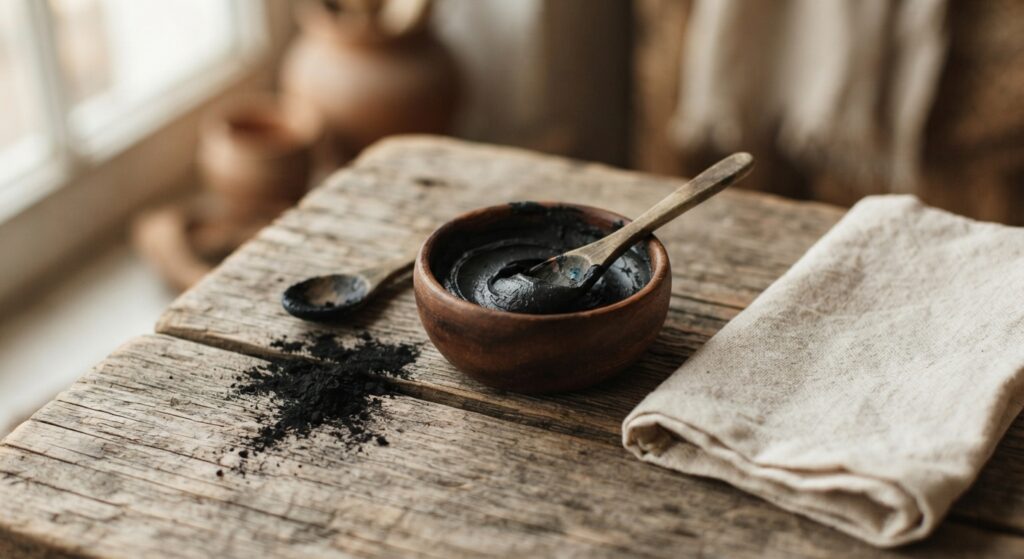
- Stir food-grade activated charcoal powder with a little clean water into a thick paste; a spoonful of ground flaxseed helps it hold together.
- Spread the paste onto a clean cloth or gauze rather than directly onto broken skin, lay it over the irritated area, and cover with another layer of cloth.
- Leave it for up to an hour or two, then remove and rinse gently.
- Patch-test first, and be warned: charcoal stains skin, fabric, and countertops a stubborn black. Protect your clothes and bedding.
Safety and when to see a doctor
Keep this to minor, superficial skin irritation only. Don’t apply charcoal paste to deep, gaping, puncture, or open wounds, or to burns. It can introduce particles, get in the way of proper cleaning, and interfere with real care. It’s not a treatment for a wound infection, and anyone with a large wound, a wound from a dirty or rusty object, a worsening bite, or a sting causing widespread symptoms needs proper medical attention.
Get urgent help for any sign of a serious allergic reaction: trouble breathing, swelling of the face, lips, or throat, dizziness, or a spreading hives-like rash, all of which can follow certain bites and stings. See a doctor for a wound or bite with spreading redness, warmth, pus, red streaks, increasing pain, or fever, and for any wound where you’re unsure about your tetanus protection. When in doubt, professional care beats a paste every time.
A charcoal poultice is a tidy, old-fashioned comfort for minor, everyday skin irritation, with a plausible drawing rationale and not much formal evidence behind the folk claims. Its genuine medical cousins, charcoal for poisoning and manufactured wound dressings, are serious professional tools a homemade paste can’t stand in for. Keep it small, mind the mess, and let a healthcare professional handle anything that looks like a real wound or infection.
This article is for general educational purposes only and is not medical advice. Traditional remedies are not a substitute for professional care. If your symptoms are severe, persistent, or getting worse, please consult a qualified healthcare provider.
Health disclaimer: This article describes a traditional folk remedy for general information only. It is not medical advice and is not a substitute for professional diagnosis or treatment. Some remedies can cause irritation, allergic reactions, or interact with medications. Consult a qualified healthcare professional before trying any remedy, patch-test anything applied to skin, and seek prompt medical care for severe, worsening, or persistent symptoms. See our full Medical Disclaimer.