Chicken Stew with Creamy Polenta
Bone-in chicken braised in a paprika, onion, pepper, and tomato sauce over creamy, lump-free polenta. How to brown, bloom the paprika, and cook it right.

The first time I made this stew for company, I burned the paprika and didn’t realize until the sauce reached the table tasting faintly of scorched pennies. I’d thrown the paprika into a screaming-hot pan of onions, walked off to answer the door, and come back to a sauce gone bitter in under a minute. Paprika is sugar and pigment as much as it is spice, and it turns acrid the instant it catches. That ruined pot taught me the one move this dish really hangs on: you bloom the paprika off the heat, gently, and everything else falls into place around it.
Jump to section
Why this stew works
A good chicken stew is built in layers, and each layer does a specific job. The browned skin and bone give the sauce its backbone; the onions, garlic, and bell peppers turn sweet and jammy and carry the paprika; the tomato brings brightness and a little acid to cut the richness. Then the whole thing simmers slowly until the meat loosens from the bone and the sauce thickens into something you’ll want to mop up. Spoon it over soft polenta and you get the contrast that makes the plate: a savory, garlicky sauce against a mild, creamy base that soaks it all in.
Browning the chicken for depth
Don’t skip this step, and don’t rush it. Pat the chicken pieces dry first: wet skin steams instead of browning, and you want a real crust. Season them with salt and pepper, then lay them skin-side down in oil that’s hot enough to sizzle on contact. Leave them alone for five or six minutes; if you fidget and lift them early, the skin tears and sticks. When they release cleanly and show a deep golden-brown, flip and give the other side a few minutes too. Work in batches so the pan stays hot. Crowd it and the pieces sweat and go gray. All those browned bits stuck to the pan, the fond, are pure flavor you’ll dissolve into the sauce later.
Building the sauce
Lower the heat to medium and cook the onions in the rendered chicken fat until they’re soft and golden, about eight to ten minutes. This is not the place to hurry; pale, raw onions leave the sauce sharp. Add the diced bell peppers and let them slump and sweeten for another five minutes, then stir in the garlic just until it smells fragrant, less than a minute, since garlic scorches even faster than onions.
Bloom the paprika off the heat
Here is the move that saves the whole pot. Pull the pan off the burner entirely, then stir the paprika and tomato paste into the hot fat. The residual heat is enough to wake up the paprika. You’ll smell it bloom, warm and slightly smoky, without pushing it past the point where it turns bitter. Give it maybe thirty seconds, stirring constantly so it coats everything, then return the pan to the heat and add the tomatoes and stock. Scrape up all that fond from the bottom as the liquid loosens it. Bring it to a gentle simmer, tuck the chicken back in skin-side up, and let it cook partly covered for about forty-five minutes, until the meat pulls away from the bone with a fork.
Creamy polenta without lumps
Lumpy polenta comes from dumping the cornmeal into water all at once, where it clumps before it can hydrate. The fix is simple: bring your salted water to a gentle simmer, not a hard boil, then pour the polenta in a thin, steady stream while you whisk constantly with the other hand. The whisking keeps each grain separate as it swells. Once it thickens enough that the whisk leaves a trail, switch to a wooden spoon, drop the heat to low, and stir often so the bottom doesn’t catch. Coarse polenta wants thirty to forty minutes of low, patient cooking to lose its graininess; taste a little to be sure it’s soft and no longer chalky. Off the heat, beat in a knob of butter, and a handful of grated cheese if you like, until it’s glossy and loose. It firms up fast as it sits, so serve it while it still slides off the spoon.
Common mistakes
- Scorched paprika: added over high heat, it turns bitter in seconds. Always bloom it off the flame in the warm fat, then add liquid straight after.
- Pale, steamed chicken: the pan was crowded or the skin was wet. Dry the pieces, give them room, and don’t move them until they release on their own.
- Thin, watery sauce: it didn’t reduce. Simmer uncovered for the last ten minutes to concentrate it, or lift the chicken out and let the sauce catch up.
- Lumpy polenta: the cornmeal went in too fast, or the water was boiling too hard. Rain it in slowly while whisking into a bare simmer.
- Grainy, undercooked polenta: it wasn’t cooked long enough. Give it the full time on low and taste before serving; the grit should be gone.
Variations worth trying
This is a forgiving base. Boneless thighs work if that’s what you have, though you’ll lose a little richness and should cut the simmer to about twenty-five minutes. A splash of white wine before the tomatoes adds a nice edge, and a spoonful of smoked paprika alongside the sweet gives the sauce a deeper, campfire note. In late summer I stir in a diced fresh tomato or two along with the canned. For a creamier finish, a spoonful of sour cream swirled into each bowl at the table is very much in the spirit of the dish. And if polenta isn’t your thing, the same stew is happy over mashed potatoes, rice, or crusty bread.
What to serve with it
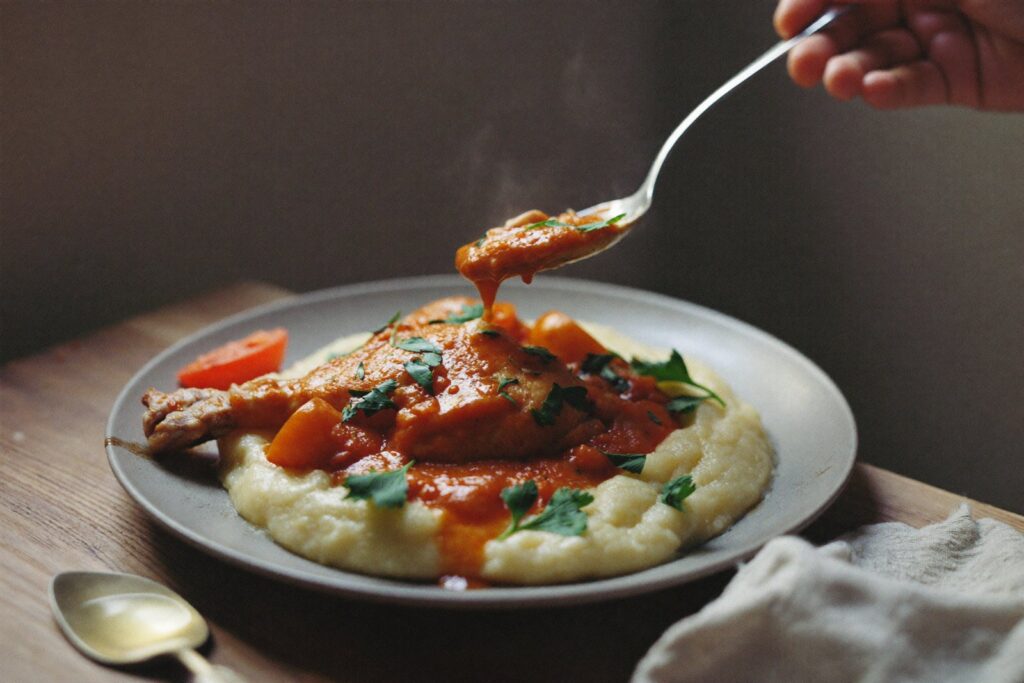
I serve this family-style: a wide, shallow bowl of polenta with the chicken and plenty of sauce ladled right over the top, so the polenta drinks up the edges. A scatter of chopped parsley brightens it, and a sharp, vinegary pickle or a simple green salad on the side cuts through the richness. Have bread on hand regardless: someone always wants to chase the last of the sauce.
Make-ahead and storage
The stew is even better the next day, once the paprika and tomato have settled into each other, and it keeps three to four days in the fridge in its sauce. It also freezes well for up to three months; cool it completely first and reheat gently with a splash of water. Polenta is best made fresh, since it stiffens as it cools, but leftovers aren’t wasted: spread cold polenta in a pan, chill it firm, then slice and pan-fry or grill the slabs until crisp. Reheat soft polenta with a little extra water or milk, whisking to bring it back.
Chicken stew with polenta FAQ
Can I use boneless chicken breast instead?
You can, but it’s easy to dry out over a long simmer. If you use breast, brown it, set it aside, and return it only for the last fifteen minutes so it just cooks through rather than braising the whole time. Bone-in thighs are far more forgiving here.
Why did my sauce turn bitter?
Almost always the paprika. Dropped into a very hot pan, it scorches and turns acrid fast. Bloom it off the heat in warm fat and add your liquid right behind it, and it stays sweet and warm instead.
Can I make the polenta ahead of time?
Soft, creamy polenta is best served straight away, as it sets firm on standing. You can hold it for a while over a pot of barely simmering water, whisking in a little more liquid to keep it loose, or make it fully ahead and fry the set slices later for a different but very good texture.
Chicken Stew with Creamy Polenta
Ingredients
- 1.2 kg (about 2.5 lb) bone-in, skin-on chicken pieces (thighs and drumsticks)
- 2 tbsp oil (sunflower or olive)
- 2 onions, finely chopped
- 2 red bell peppers, diced
- 4 garlic cloves, minced
- 1 tbsp sweet paprika
- 1 tbsp tomato paste
- 400 g (about 14 oz) can chopped tomatoes
- 250 ml (about 1 cup) chicken stock or water
- 1 bay leaf
- Salt and pepper, to taste
- 200 g (about 1 1/4 cups) polenta (coarse cornmeal)
- 1 liter (about 4 cups) water, for the polenta
- 30 g (about 2 tbsp) butter
- 2 tbsp grated cheese, optional
Instructions
- Pat the chicken pieces dry and season with salt and pepper. Heat the oil over medium-high until it shimmers, then lay the pieces in skin-side down. Leave them undisturbed for 5 to 6 minutes until deep golden, flip and brown the other side, and work in batches so the pan stays hot. Set the browned chicken aside.
- Lower the heat to medium and soften the onions in the rendered fat for 8 to 10 minutes, until golden. Add the diced bell peppers and cook 5 minutes more until they slump, then stir in the garlic just until fragrant, under a minute.
- Pull the pan off the heat. Stir in the paprika and tomato paste, letting them bloom in the hot fat for about 30 seconds so the paprika wakes up without scorching.
- Return the pan to the heat, add the chopped tomatoes, stock, and bay leaf, and scrape up the browned bits from the bottom. Bring to a gentle simmer.
- Nestle the chicken back in skin-side up with any resting juices. Partly cover and simmer gently for 40 to 45 minutes, until the meat pulls easily from the bone.
- Meanwhile, make the polenta: bring the water with 1 tsp salt to a gentle simmer, then pour in the polenta in a thin, steady stream while whisking constantly.
- Once it thickens, switch to a wooden spoon, drop the heat to low, and cook 30 to 40 minutes, stirring often, until soft and no longer grainy. Off the heat, beat in the butter and cheese until glossy.
- Taste the sauce and adjust the salt, then spoon the chicken and plenty of sauce over the creamy polenta and serve right away.