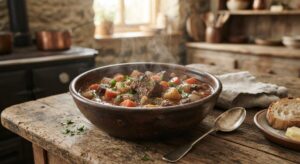
Braised Cabbage with Sausage
Braised cabbage with smoked sausage, cooked low and slow in one pan until silky and sweet. Why patience, not liquid, is the secret, plus fixes and easy swaps.


The first time I braised cabbage this way, I nearly drowned it. I had a pan mounded so high with shredded cabbage that the lid wouldn’t sit flat, and it looked so dry and unpromising that I panicked and poured in a cup of broth to help it along. What I got an hour later was pale, waterlogged boiled cabbage swimming in gray liquid — edible, barely, and nothing like the silky, sweet, faintly caramelized tangle I’d been chasing. It took a few more tries to learn the one thing this dish really asks of you: not liquid, but patience. Cabbage is almost all water, and given low heat and enough time, it releases that water, drinks it back, and turns sweet on its own.
Jump to section
- Why low and slow turns cabbage sweet
- Start with the sausage, not the cabbage
- Building the base: onions, paprika, a little tomato
- Adding the cabbage in stages
- Common mistakes, and how to avoid them
- Variations worth trying
- How to serve it
- Make-ahead and storage
- Braised Cabbage with Sausage FAQ
- Braised Cabbage with Sausage
Why low and slow turns cabbage sweet
Raw cabbage is sharp, squeaky, and mostly water — something close to ninety percent of it. That water is the whole reason this dish works, and the whole reason people ruin it. Given gentle heat and time, the shreds wilt, collapse, and let go of their moisture; then, as it slowly cooks away, the natural sugars in the cabbage concentrate and begin to brown. Sharp turns mellow, crisp turns silky. Rush it with high heat and you scorch the outside before the inside softens. Rush it with added water and you boil it instead of braising it, washing out the very sweetness you’re building. Patience is the one ingredient you can’t substitute.
Start with the sausage, not the cabbage
Before a single shred of cabbage goes in, deal with the sausage. Slice it into coins and lay them in a wide, heavy pan over medium heat — no oil needed if it’s a fatty kielbasa-style sausage, a spoonful if it’s lean. You’re after two things: color on the sausage itself, and the smoky, paprika-tinged fat it leaves behind. Let the coins sit undisturbed until the cut sides are deep brown and the fat has pooled, about 5 to 7 minutes, then lift them out and set them aside. That rendered fat is the foundation of the whole pan; everything you cook in it afterward tastes faintly of smoke. Skip the browning and just warm the sausage through, and you’ll taste the absence — the finished dish comes out flat and one-note.
Building the base: onions, paprika, a little tomato
Into that hot fat go the sliced onions. Cook them gently until soft and turning gold at the edges, 8 to 10 minutes; they lay down a second layer of sweetness beneath the cabbage. Now stir in the sweet paprika and tomato paste and let them cook for a minute, until the paprika smells toasty and the paste darkens a shade. This quick bloom in the warm fat wakes the paprika up; stirred in raw at the end, it only tastes dusty. Keep the tomato restrained, though — a spoonful of paste or a small splash of passata is there for background depth and color, not to make a tomato sauce — too much and the dish becomes something else entirely.
Adding the cabbage in stages
Here’s where a mountain of raw cabbage meets a pan that plainly cannot hold it. Don’t fight it — add it in stages. Pile in a few handfuls, salt them, and stir; within a couple of minutes they wilt and sink, making room for the next. The salt is doing real work here, pulling water from the shreds so they collapse faster. Keep going until the whole head is in the pan and glossy. It will look like far too much, and then, almost suddenly, like exactly the right amount.
The long, quiet braise
Tuck in the bay leaf, turn the heat to low, and cover the pan. Now mostly leave it alone, lifting the lid to stir only every ten minutes or so, for about 40 minutes. The cabbage will give up a surprising amount of liquid at first — this is exactly right, and it’s why you never needed to add any. It’s braising in its own juices, so resist the urge to pour anything in. If it ever looks genuinely dry and starts to stick, a tablespoon of water is plenty, but most of the time you won’t reach for even that.
Uncover and let it catch
When the cabbage is completely soft and cooked down to roughly a third of its original bulk, return the sausage, take off the lid, and nudge the heat up a little. This last stretch, another 15 to 20 minutes, is where good becomes very good. The liquid cooks off, the edges start to catch and caramelize against the pan, and the whole thing shifts from pale and wet to burnished and silky. Stir now and then so it colors evenly instead of sticking in one spot. When it looks glossy, deep gold in places, and no longer watery, it’s done.
Common mistakes, and how to avoid them
- Adding water or broth: the single most common misstep. Cabbage brings its own water; extra liquid boils it pale instead of braising it sweet. Trust the pan.
- Cooking it too hot: high heat scorches the outside before the inside gives up its water. Keep the flame low and let time do the work.
- Skipping the sausage sear: browning the coins first builds the smoky fat the whole dish is seasoned with. Don’t simply heat them through.
- Under-salting early: salt added with the cabbage draws the water out and speeds the collapse. Season in stages, not only at the end.
- Pulling it off too soon: the gap between fine and excellent is that last uncovered stretch. Wait for the caramelized edges.
Variations worth trying
The base takes happily to small changes. Smoked paprika in place of the sweet gives it a deeper, almost bonfire edge. A peeled, grated apple or a pinch of caraway seeds leans it toward the central-European kitchens it comes from. For a tangier, sauerkraut-style pan, swap some of the fresh cabbage for drained sauerkraut, or finish with a splash of vinegar. Trade the sausage for spicy chorizo, a frying sausage squeezed from its casing, or leftover ham; for a meatless version, brown mushrooms in oil first for the savory backbone and lean on smoked paprika for the smoke.
How to serve it
Most nights I eat this straight from the pan with nothing more than dark rye or crusty bread to catch the juices, and maybe a dab of mustard or a spoonful of sour cream on the side. It also makes a fine bed for a fried egg, or a partner to mashed potatoes when I want something more filling. A sharp, vinegary pickle cuts cleanly through the richness. It’s hearty enough to be dinner on its own and humble enough to sit beside a roast.
Make-ahead and storage
Like most braises, this one is arguably better the next day, once the flavors have settled. It keeps three to four days in the fridge in a covered container, and it reheats beautifully in a hot pan, the edges catching and caramelizing a second time. It freezes well too, for up to three months; cool it completely first, then thaw in the fridge and reheat gently. As with any cooked leftovers, chill it within a couple of hours of cooking and reheat it thoroughly before serving.
Braised Cabbage with Sausage FAQ
Do I really not add any liquid?
In almost every case, no. The cabbage releases plenty of its own water once it’s covered and cooking. Only if the pan looks genuinely dry and the cabbage starts to stick before it has softened should you add a tablespoon of water at a time. Keeping the lid on for the first stretch traps the steam, so it rarely comes to that.
What kind of sausage works best?
A firm smoked sausage — kielbasa, smoked pork sausage, or similar — holds its shape and gives the dish its backbone of smoke. Fresh, uncooked sausages work too, but brown them well and expect a milder, less smoky result. Whatever you choose, render it first.
Can I make this with red cabbage?
You can, though it behaves a little differently. Red cabbage is firmer and takes longer to soften, and it likes a touch of acid, so a splash of vinegar or that grated apple suits it well. Plan on a longer braise and a sweeter, more assertive result.
Braised Cabbage with Sausage
Ingredients
- 1 medium head green cabbage, about 1 kg (2 lb), cored and shredded
- 400 g (about 14 oz) smoked sausage (kielbasa or similar), sliced into coins
- 2 onions, halved and thinly sliced
- 1 tbsp tomato paste (or 2 tbsp passata)
- 1 tsp sweet paprika
- 1 bay leaf
- 1 tbsp oil, only if the sausage is lean
- Salt and pepper, to taste
- A splash of vinegar or a pinch of sugar, to finish (optional)
Instructions
- Slice the smoked sausage into coins and lay them in a wide, heavy pan over medium heat, adding the oil only if the sausage is lean. Let them sit undisturbed until the cut sides are deep brown and the fat has rendered, 5 to 7 minutes, then lift them out and set aside, leaving the fat behind.
- Add the sliced onions to the hot fat and cook slowly until soft and turning gold at the edges, 8 to 10 minutes. Stir in the sweet paprika and tomato paste and cook for a minute, until the paprika smells toasty and the paste darkens a shade.
- Add the shredded cabbage a few handfuls at a time, salting each batch and stirring, letting it wilt and sink before adding more, until the whole head is in and glossy.
- Tuck in the bay leaf, turn the heat to low, and cover. Cook, stirring only every ten minutes or so, for about 40 minutes, until the cabbage is completely soft and reduced to about a third of its bulk. Resist adding liquid; it braises in its own juices.
- Return the sausage, take off the lid, and nudge the heat up a little. Cook another 15 to 20 minutes, stirring now and then, until the liquid cooks off and the edges catch and caramelize.
- Taste and adjust the salt and pepper. Add a splash of vinegar or a pinch of sugar if you like, rest a few minutes off the heat, and serve.