Chicken Soup with Semolina Dumplings
Chicken soup with semolina dumplings made the gentle way: a clear golden broth, soft vegetables, and light griș dumplings that double in size. Tips and fixes.

For years I thought the broth was the hard part of this soup. It isn’t; the dumplings are, and I learned that the slow way. The first time I made it without my mother in the kitchen, I stirred the semolina into a beaten egg, spooned it into a hard rolling boil, and lifted the lid every half minute to check. What I got were tight grey pebbles that sank to the bottom. Hers had always doubled in size and floated, soft enough to break with the side of a spoon. Rushing the batter, boiling it hard, peeking at it: every single thing I’d done was the opposite of what semolina dumplings actually want.
Jump to section
Why this soup works
This is really two gentle things cooked side by side. A clear golden broth asks you to keep the heat low so it never clouds, and light griș dumplings ask for exactly the same restraint so they puff up instead of seizing. The whole dish rewards patience and punishes hurry, and I think that’s part of why a bowl of it feels like being looked after. Get the broth clean and the dumplings airy and you need little else: a little salt, some soft vegetables, a scatter of dill.
Building a clear, golden broth
A cloudy broth and a clear one often start from the same pot; the difference is heat and timing. Put the chicken in a large pot and cover it with cold water, not hot. A slow, cold start draws the flavor out and lets the proteins that cloud a broth rise in one grey raft instead of scattering. Bring it up slowly to just below a boil, and as that greyish foam gathers on the surface, skim it off with a spoon before it has a chance to break apart. This first skim does the most for a clear broth.
Once you’ve skimmed it clean, drop the heat until the surface barely moves: a lazy bubble every few seconds, somewhere around 190°F (88°C), and never a rolling boil. A hard boil churns the fat back into the liquid and turns it murky; a bare simmer keeps it golden and clean. Leave it uncovered to cook gently for about an hour, skimming now and then. You can’t rush this part.
The vegetables that make it golden
Carrot, celery, onion, and parsnip are what give this broth its color and its quiet sweetness. Add them in big pieces rather than small ones so they hold their shape over a long simmer instead of shredding apart. A whole onion, skin left on, deepens the broth to a proper gold. I add them for the last 25 to 30 minutes, long enough to soften and give up their sweetness but not so long that they collapse into mush. Parsnip and celery bring a rounder, almost peppery depth behind the carrot’s sweetness; leave the parsnip out and the broth tastes noticeably flatter.
The semolina dumplings (găluște de griș)
The batter: egg, semolina, and a real rest
The batter could not be simpler: egg, fine semolina, a pinch of salt, a spoonful of oil or soft butter. That simplicity is exactly why the details matter. I use roughly three tablespoons of semolina per egg. Too much and the dumplings turn dense; too little and they slump apart in the pot. Whisk the egg with the salt and oil first, then stir in the semolina until it’s even.
Then walk away for ten to fifteen minutes, because this rest is not optional. Semolina is coarse, and it needs time to drink up the egg and swell; you’ll watch the batter go from loose and runny to thick enough to hold its shape on a spoon. Skip the rest and the grains keep absorbing liquid while they cook, which is precisely what gives you small, gritty, leaden dumplings. Rested batter swells in the pot; unrested batter swells in your bowl.
Simmering them gently and covered
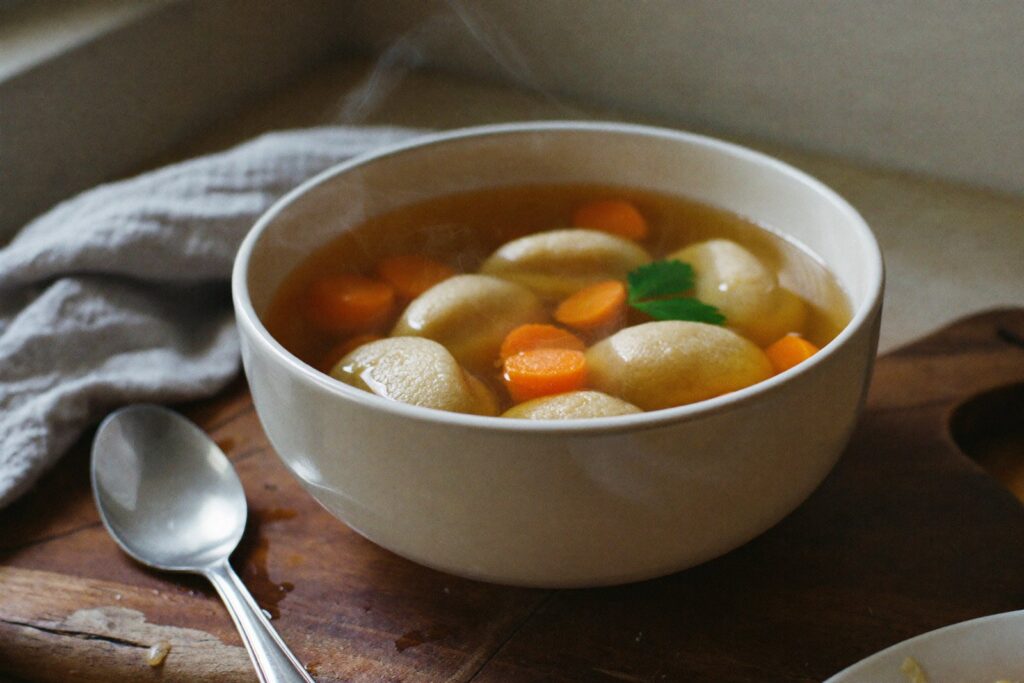
Bring the broth, or, if you want to keep it perfectly clear, a separate pot of lightly salted water, to a gentle simmer, not a boil. Dip two teaspoons in the hot liquid so the batter slides off cleanly, and drop in small ovals, well spaced, because they’ll grow. Then the two rules that took me years to respect: keep the heat gentle, and put the lid on. A hard boil tears the dumplings apart before they’ve set, while the trapped steam under the lid is what puffs them up. Let them go 15 to 20 minutes without lifting the lid, and I mean it, no peeking, because a sudden rush of cool air can make half-set dumplings sink and deflate. They’re ready when they’ve roughly doubled, float high, and a test one cut in half is cooked through with no raw center.
Common mistakes, and how to avoid them
- Cloudy broth: the water boiled hard, or the foam wasn’t skimmed in time. Start cold, skim early, and hold a bare simmer the whole way through.
- Dense, pebble-like dumplings: the batter wasn’t rested, or there was too much semolina. Give it the full rest and stick to about three tablespoons per egg.
- Dumplings that fall apart: usually a batter that’s too loose, or a boil that’s too hard. Stir in a little more semolina and drop the heat to a gentle simmer.
- Dumplings that deflate: the lid came off mid-cook. Leave it on and don’t peek until the time is up.
- Greasy broth: the fat got boiled back in. Skim the surface, and keep the simmer lazy rather than lively.
- Flat, thin flavor: under-seasoning. Salt the broth properly once the vegetables are in, and taste it again before serving.
Variations worth trying
This is a template as much as a recipe. Fold beaten egg white into the batter for the airiest dumplings, or leave them plain and rustic. In place of griș, fine soup noodles make it a different but equally comforting bowl. Fresh herbs change its whole character: dill and parsley are the classics, but a little lovage (leuștean) gives it the deep, celery-like fragrance that so many home versions are built around. A squeeze of lemon at the end lifts everything.
Serving
Ladle the hot broth over a few dumplings in each bowl, add some of the sliced carrot, and finish with a good pinch of chopped dill or parsley. I serve the poached chicken alongside or shredded into the soup, with bread and a wedge of lemon for brightness. It wants very little dressing up; the clean broth and the soft dumplings are the point, so let them lead.
Make-ahead and storage
The broth is the make-ahead friend here. It keeps three to four days in the fridge, freezes beautifully, and like most soups it tastes rounder the next day. The dumplings are another matter. They’re at their best fresh, and left sitting in liquid they keep drinking it up and eventually go soft and swollen. If you know you’ll have leftovers, store the dumplings apart from the broth when you can, and reheat everything gently rather than at a boil. As with any cooked food, cool it promptly, refrigerate within a couple of hours, and reheat until it’s properly hot right through.
Chicken Soup with Semolina Dumplings FAQ
Why did my semolina dumplings turn out hard and small?
Almost always because the batter wasn’t rested, or there was too much semolina in it. Let the batter sit ten to fifteen minutes so the grains swell before cooking, keep the ratio near three tablespoons of semolina per egg, and simmer them gently and covered rather than at a hard boil.
Should I cook the dumplings in the broth or in separate water?
Either works. Cooking them right in the broth gives them a little more flavor; cooking them in a separate pot of salted water and then adding them keeps the broth perfectly clear, since the dumplings shed some starch as they cook. I choose based on how clear I want the finished bowl to look.
How do I keep the broth clear and golden?
Start the chicken in cold water, bring it up slowly, and skim the grey foam before it disperses. Then hold it at a bare simmer, never a rolling boil, for the whole cook, and skim the fat now and then. A whole onion left in the pot deepens the color to a proper gold.
Chicken Soup with Semolina Dumplings
Ingredients
- 1 whole chicken, about 1.5 kg (about 3 1/2 lb), or an equivalent mix of bone-in pieces
- 2 carrots, cut into large chunks
- 1 parsnip, cut into large chunks
- 2 celery stalks (or a small piece of celeriac), in large pieces
- 1 large onion, left whole, skin on
- 1 bay leaf
- A few black peppercorns
- Salt, to taste
- 2 eggs
- 6 tbsp (about 90 g) fine semolina (griș)
- 1 tbsp oil or soft butter
- A handful of fresh dill or parsley, chopped, to finish
Instructions
- Put the chicken in a large pot, cover with cold water, and bring slowly up to just below a boil. As the grey foam gathers on the surface, skim it off with a spoon before it breaks apart and clouds the broth.
- Once skimmed clean, drop the heat to a bare simmer, add the whole onion, bay leaf, and peppercorns, and cook uncovered at a lazy bubble for about an hour, skimming now and then.
- Add the carrot, parsnip, and celery in large pieces and simmer 25 to 30 minutes more, until soft. Season the broth with salt, then lift out the chicken and vegetables. Strain the broth if you want it very clear.
- Meanwhile, whisk the eggs with a pinch of salt and the oil, stir in the semolina until even, and let the batter rest 10 to 15 minutes, until it thickens and holds its shape on a spoon.
- Bring the broth (or a separate pot of lightly salted water) to a gentle simmer. Dip two teaspoons in the hot liquid and drop in small ovals of batter, spacing them well apart, since they will grow a lot.
- Cover and hold at a bare simmer for 15 to 20 minutes without lifting the lid, until the dumplings have doubled in size and float high. A test one, cut in half, should be cooked through with no pasty core.
- Slice some of the carrot back into the broth, add shredded chicken if you like, and ladle into bowls with the dumplings. Finish each with chopped dill or parsley.