Herbal Steam Inhalation for a Stuffy Head and Chest
Herbal steam inhalation with thyme, eucalyptus, or peppermint can ease a stuffy head. Here is what the evidence shows and how to steam safely without burns.

A quick note: this is a traditional home remedy shared for general interest — not medical advice. See our medical disclaimer, and please see a doctor for severe, worsening, or persistent symptoms.
Jump to section
I’ve stood over a pot of boiling water with a towel over my head more times than I can count, and I still do it the moment a cold hits. Herbal steam inhalation (hot water, a handful of herbs, a towel tented over your head) is one of the oldest comfort measures around for a stuffy nose or a heavy, congested head. It costs almost nothing, and for a lot of people, myself included, it genuinely feels better afterward. At least for a little while.
Why it feels like it helps
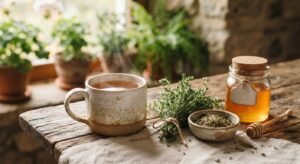
Warm, moist air loosens thick mucus and calms dry, irritated nasal passages. It’s the same reason a hot shower feels good when you’re sick. Traditional recipes add herbs on top of that. Thyme brings thymol, the compound in some antiseptic mouthwashes. Eucalyptus brings cineole. Peppermint brings menthol, the cooling ingredient in half the chest rubs on a pharmacy shelf, and menthol especially creates a strong, convincing sensation that your airway just opened up.
What actually happens, versus what it feels like
Here’s the part worth being straight about. The warmth and moisture can genuinely make congestion more comfortable, and menthol can make you feel like you’re breathing easier. But studies on steam inhalation for the common cold haven’t found that it reliably shortens a cold or clears an infection, even when it feels soothing in the moment. Menthol is a known trickster here too: it can create a sensation of more airflow without actually moving more air. Most of what you’re getting is symptom comfort, not a faster recovery.
The individual herb compounds, thymol and eucalyptol among them, do show activity against microbes in lab research. But a bowl of steam on the kitchen counter is nothing like a controlled study, and there isn’t strong evidence that breathing herbal steam speeds up how quickly you get over a cold. Enjoy it for the comfort. Just don’t expect more than that from it.
How to do it
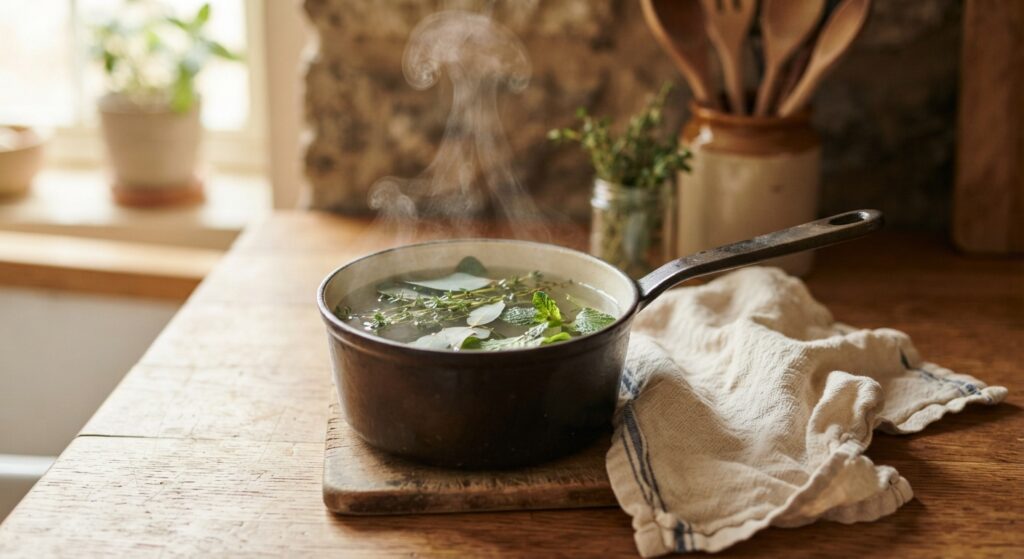
- Boil a pot of water, then take it off the heat and let it stop bubbling. You want steam, not a rolling boil in your face.
- Stir in a small amount of dried thyme, eucalyptus, or peppermint, or a drop or two of the essential oil.
- Set the pot somewhere stable and heatproof, well away from the edge of the counter.
- Lean over it at a comfortable distance, drape a towel over your head to trap the steam, and breathe gently for 5 to 10 minutes.
Keep your face far enough back that the steam feels warm, not hot, and close your eyes. Vapor and essential oils both sting.
Where this gets risky
Scald burns are the real danger, and they’re not rare. A pot or bowl of just-boiled water tips or splashes more easily than you’d think, so this isn’t something for young children to do at all. A steamy bathroom is a much safer version for them. If you have asthma, go easy: strong menthol or eucalyptus vapor can irritate sensitive airways instead of soothing them. Essential oils are concentrated, a drop or two is plenty, and keep them well clear of the skin around your eyes.
See a doctor if the congestion comes with a high fever, facial pain or swelling, symptoms dragging past ten days or worsening after they’d started to improve, discolored or bloody mucus, or any real trouble breathing. Those can point to a sinus or chest infection that needs an actual diagnosis.
Herbal steam is a soothing ritual for a stuffy head, and I’ll keep doing it on bad cold days. Just know it’s easing how you feel, not shortening the illness, and keep the hot water away from kids.
This article is for general educational purposes only and is not medical advice. Traditional remedies are not a substitute for professional care. If your symptoms are severe, persistent, or getting worse, please consult a qualified healthcare provider.
Health disclaimer: This article describes a traditional folk remedy for general information only. It is not medical advice and is not a substitute for professional diagnosis or treatment. Some remedies can cause irritation, allergic reactions, or interact with medications. Consult a qualified healthcare professional before trying any remedy, patch-test anything applied to skin, and seek prompt medical care for severe, worsening, or persistent symptoms. See our full Medical Disclaimer.