Alum Stone for Shaving Nicks: How This Astringent Works
Alum stone is a simple mineral astringent that can slow bleeding from minor shaving nicks and small cuts. Here is how it works, plus honest safety limits.

A quick note: this is a traditional home remedy shared for general interest — not medical advice. See our medical disclaimer, and please see a doctor for severe, worsening, or persistent symptoms.
Jump to section
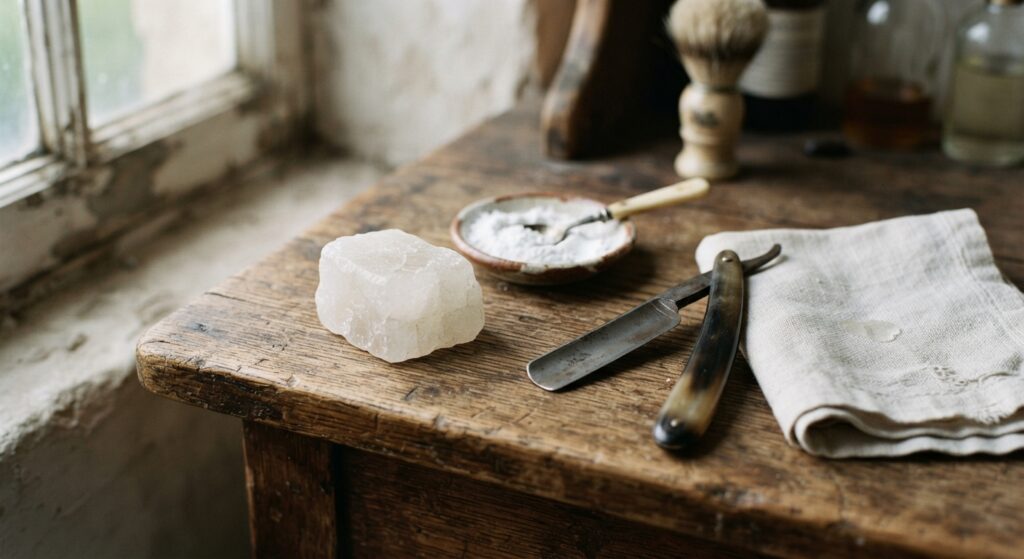
My grandfather kept a smooth gray stone by the bathroom sink for as long as I can remember, and it took me years to realize it wasn’t decorative. That stone was alum, a naturally occurring mineral, potassium aluminum sulfate if you want the chemistry, and old-fashioned barbers pressed it against a fresh nick the same way he did: to make the bleeding stop. Long before it turned up in pickling jars and natural deodorants, alum’s whole job was calming small razor cuts. The mechanism is simple and honest, and it’s worth actually understanding it instead of just trusting the ritual.
What it actually is
Alum is a mineral salt, sold as a solid block, often called a styptic stone, or as a fine powder. Its reputation comes down to one property: it’s a strong astringent, meaning it makes tissue pull tight and contract. This isn’t folklore dressed up as science. Alum’s astringent action has been documented in medical writing for a very long time.
Why it slows a bleeding nick
Press wet alum against the raw edge of a small cut, and the proteins in the exposed cells draw together. That tightening constricts the tiny blood vessels right at the edge, which is why minor bleeding tends to slow fast. It’s the same principle behind styptic pencils, most of which are alum or a close aluminum cousin. Alum also lowers the pH at the surface and pulls moisture away, which makes it a less hospitable spot for bacteria, though I’d call that a side note. The astringent, bleeding-slowing effect is the real, well-understood one; I wouldn’t lean on it as a germ-fighter.
Some people also dab a little on a canker sore, on the theory that the same drying, tightening action takes the edge off the discomfort. That one’s mostly tradition and personal experience rather than real study, a comfort measure, nothing more.
How it’s used
For a shaving nick: wet the block and press it lightly against the cut for about 30 seconds, then rinse. It stings, a sharp, puckering sensation, and a little goes a long way.
For a canker sore: some people touch a very small amount of powdered alum to the ulcer for under a minute, then rinse the mouth thoroughly. Don’t swallow the powder.
Everyone’s skin reacts differently, so try it on a small healthy patch first to check for redness or irritation, and keep it well away from your eyes.
Where the line is
Alum is for minor, surface-level nicks and small mouth sores. That’s it. It is not a remedy for a real wound, not a deep cut, not a puncture, not anything gaping, and not bleeding that doesn’t stop with steady, gentle pressure. Those need proper first aid, sometimes a doctor.
It’s not for internal use. Swallowing more than a trace can upset the stomach, so keep it away from young kids. Stop using it if your skin turns red, itchy, or inflamed, that’s a sign of sensitivity to aluminum salts, not something to push through.
Watch any cut for spreading redness, warmth, swelling, pus, or a wound that just won’t heal, that’s a doctor visit, not a job for the stone. And bleeding that soaks through and won’t slow after ten minutes of steady pressure needs help now.
The honest version
An alum block does one narrow job well: calming the small nicks of everyday shaving, and for some people, taking the edge off a canker sore. My grandfather’s stone lasted him decades, a block barely shrinks with use. Just keep its role in proportion. Minor surface care, nothing more, and let anything serious go to someone qualified to treat it.
This article is for general educational purposes only and is not medical advice. Traditional remedies are not a substitute for professional care. If your symptoms are severe, persistent, or getting worse, please consult a qualified healthcare provider.
Health disclaimer: This article describes a traditional folk remedy for general information only. It is not medical advice and is not a substitute for professional diagnosis or treatment. Some remedies can cause irritation, allergic reactions, or interact with medications. Consult a qualified healthcare professional before trying any remedy, patch-test anything applied to skin, and seek prompt medical care for severe, worsening, or persistent symptoms. See our full Medical Disclaimer.