Purslane: The Edible ‘Weed’ Worth Keeping
If you've ever weeded a garden bed or a crack in the pavement in summer, you've probably met purslane — a low, sprawling plant with smooth reddish…

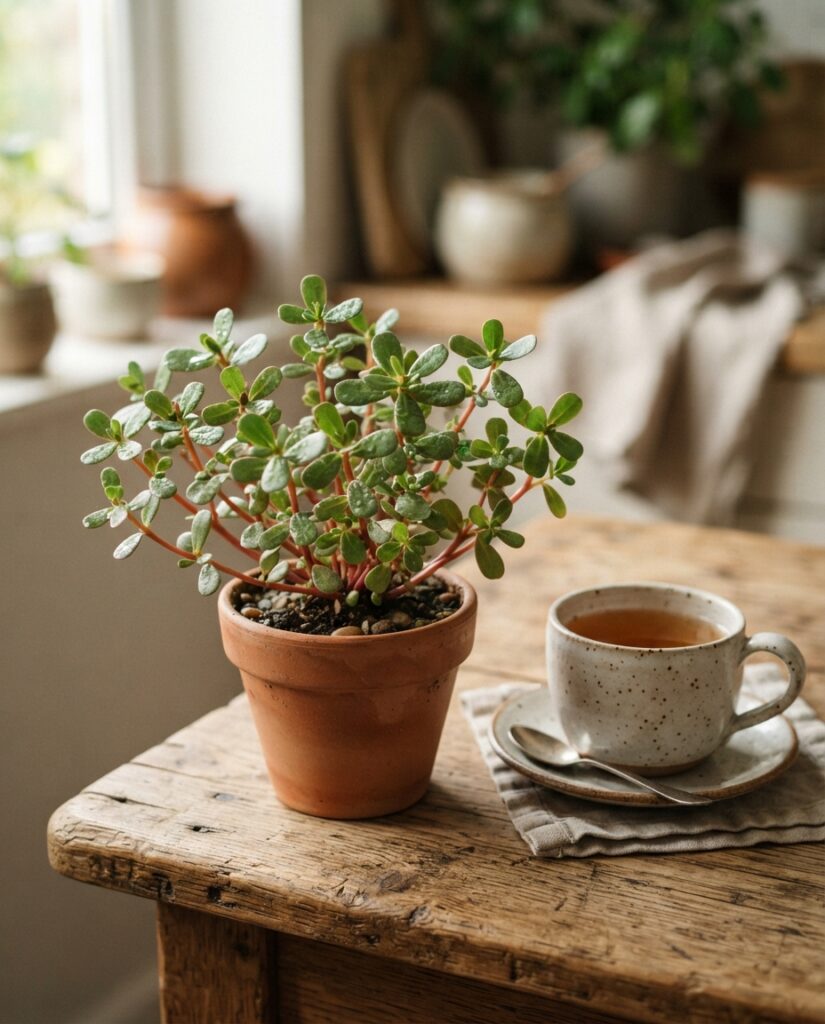
I spent a whole summer yanking purslane out of the cracks in my patio before I found out I’d been composting a vegetable. It’s the low, sprawling stuff with smooth reddish stems and small, plump leaves that shows up uninvited in garden beds everywhere. Across the Mediterranean, the Middle East, Mexico, and much of Asia, though, purslane (Portulaca oleracea) has been eaten on purpose for centuries, and it’s genuinely worth eating.
Jump to section
A ‘weed’ with a place at the table
Purslane grows almost anywhere and spreads fast, which is exactly why gardeners fight it. The leaves and tender stems are good eating, though: mildly tangy, a little lemony, with a juicy, slightly salty crunch. It goes into salads, gets folded into soups and stews, stirred into yogurt, or sautéed quickly as a simple green.
What makes it worth eating
Purslane’s real claim to fame is that it’s one of the richest plant sources of omega-3 fatty acids, specifically ALA (alpha-linolenic acid), which is unusual for a leafy green. Most greens don’t come close. It also brings vitamins A and C, minerals like magnesium and potassium, plus antioxidants, all for almost no calories. Think of it as a good vegetable to fold into a varied diet, not a supplement, and not a substitute for one.
How to tell it apart from the dangerous look-alike
Purslane has thick, smooth, fleshy leaves, hairless reddish stems, and small yellow flowers. The one to actually worry about is spurge, which isn’t edible and can irritate your skin and mouth. Snap a stem to check: spurge leaks a milky white sap and has thin, wiry stems with slimmer leaves, while purslane has no sap at all and noticeably thicker, succulent stems. If you’re not sure, don’t eat it, and only forage from ground you know hasn’t been sprayed.
Who should ease up on it
Purslane runs fairly high in oxalates. That’s a non-issue for most people eating it as part of a balanced diet, but if you’re prone to calcium-oxalate kidney stones, eat it in moderation. A quick cook reduces the oxalate content somewhat, which is probably why so many traditional recipes cook it rather than serve it raw.
How to prepare it once you’ve picked it
Purslane grows low and close to the soil, so it picks up grit and sand more than most greens, give it two or three rinses in a bowl of water, swishing and lifting it out each time rather than pouring the water (and the sand) back over it. Trim off the tougher, woodier base of the stems and keep the tender tips and leaves. It’s good eaten raw in a salad for the crunch, or sautéed briefly with garlic and olive oil, but don’t cook it too long, like okra, it turns slightly mucilaginous if it sits over heat, so a quick minute or two is plenty. It also holds up well pickled in a light vinegar brine, which is a good way to use up a big handful before it wilts.
Foraging or growing it responsibly
If you’d rather let it grow than fight it, only pick it from soil you actually know, your own untreated garden, not a roadside verge or a lawn that gets sprayed, since it takes up whatever’s in the ground around it. It self-seeds aggressively, so a few plants left alone will keep coming back on their own; snip what you need rather than pulling the whole plant, and it’ll keep producing through the season. It also roots easily from a cut stem left in a glass of water, which is an easy way to start a patch on purpose instead of waiting for it to show up uninvited.
Simple ways to use a handful
A basic approach that works well: toss chopped purslane with cucumber, tomato, a little feta, olive oil, and lemon for a quick summer salad, or stir it into a pot of simmering lentils or beans in the last few minutes of cooking, where it softens slightly and adds a mild tang. Because it wilts fast once picked, treat it like a delicate herb rather than a sturdy green, use it within a day or two rather than letting it sit in the fridge.
‘Weed’ turns out to be a label, not a fact. Learn to tell purslane apart from its look-alikes, pick it from clean ground, and it earns a spot in your salad bowl instead of your compost bin.
This article is for general information only and is not medical advice. If you have a health condition, take medication, or have concerns, please consult a qualified healthcare professional. See our medical disclaimer.