Smart Storage Ideas for the Cabinets Above the Fridge
Every kitchen seems to have one spot nobody quite knows what to do with: the tall cabinet above the refrigerator, or the top shelf that sits just out of…

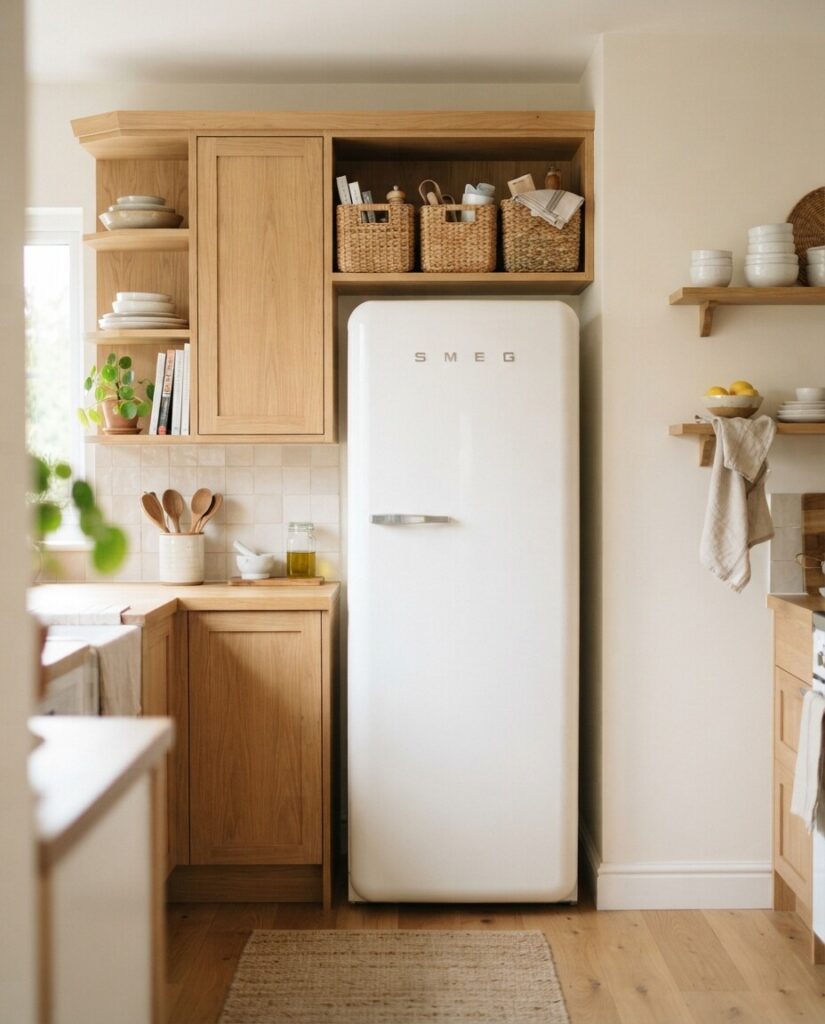
The cabinet above my fridge held, until recently, a waffle iron I’ve used exactly twice, four mismatched candlesticks, and a spice jar old enough to vote. Every kitchen has this spot: too high for daily use, awkward to climb to, somehow always full of things you forgot you owned. That dead space turns into one of the more useful corners of the kitchen with a bit of planning.
Jump to section
Start by clearing it out, completely
You can’t reimagine the space until you see what’s actually in it. Pull everything down, wipe off the dust that settles up there undisturbed for months, give the shelves an actual clean. A step stool and a damp microfiber cloth cover it. You’ll almost certainly rediscover something: an appliance you meant to return, a spice older than your last move.
Treat it as long-term storage, not daily reach
The single most useful shift is to stop treating high cabinets like prime real estate. They’re perfect for things you want to keep but rarely need. Save the easy-to-reach shelves for daily essentials, send the occasional-use stuff up top.
Good candidates:
- Holiday platters and seasonal serving dishes
- Appliances you use a few times a year, like a waffle iron or ice cream maker
- Bulk paper goods like napkins and paper towels
- Party supplies, spare candles, disposable tableware
- Backup pantry basics like extra oil or canned goods
Skip anything fragile that could fall, and skip foods that spoil fast enough to get forgotten out of sight.
Bins and baskets do the actual organizing
Loose items on a high shelf turn into clutter within a month. Clear plastic bins or labeled baskets keep things grouped and easy to lift down in one motion. Pick containers with handles so you’re not fishing around blind, and label them plainly: Baking Extras, Entertaining, Holiday. Bins also shield everything from the thin film of dust and cooking grease that drifts upward over time, which is grosser than it sounds until you clean up there once.
Small upgrades worth the money
If you’re willing to spend a little, a pull-down shelf brings the contents to eye level, and a lazy Susan lets you spin to what you need instead of unloading everything to find it. I put off buying either for years, figuring a step stool was good enough for anyone; the lazy Susan I finally caved on paid for itself in the first week. Most of these organizers cost about what a decent kitchen gadget does, and install in a few minutes with basic tools.
Keep a running list
The real downside of high storage is out of sight, out of mind. A short list taped inside a nearby cabinet door, or just a note on your phone, saves you from forgetting what’s actually up there. Something as plain as “top cabinet: fondue set, spare bulbs, large platter” will spare you a frustrating search months later. I learned this after buying a second waffle iron I didn’t need.
Check it twice a year
Set a reminder to look every six months, ideally before the busy cooking seasons hit. Toss what’s past its prime, move anything you’ve started using more often down to a handier spot, and set aside what you clearly never touch. Keep this up and the cabinet stops quietly refilling with clutter on its own.
A few things people ask
How much weight can these cabinets hold?
Most standard cabinets handle everyday kitchenware fine, but keep the heaviest items lower and well supported. If a shelf feels loose, tighten or reinforce it before loading it up.
What if I can barely reach the shelf?
Store only lightweight items up top and keep a sturdy step stool nearby. Save the highest spots for things like paper goods that won’t hurt anyone if they shift.
Is it safe to store food up there?
Shelf-stable extras are fine, just check them during your twice-yearly pass so nothing sits forgotten past its date.
A cabinet above the fridge isn’t wasted space. It’s space that needed a plan, a clean-out, and a few bins. Once you’ve got a system for remembering what’s up there, that hard-to-reach corner quietly holds everything you need less often, and the shelves you actually use stay clear for what you reach for every day.