How to Tell If a Watermelon Has Gone Bad
A cold slice of watermelon is one of summer's simplest pleasures, but the fruit does not always show its age on the outside. A melon that looks fine on…

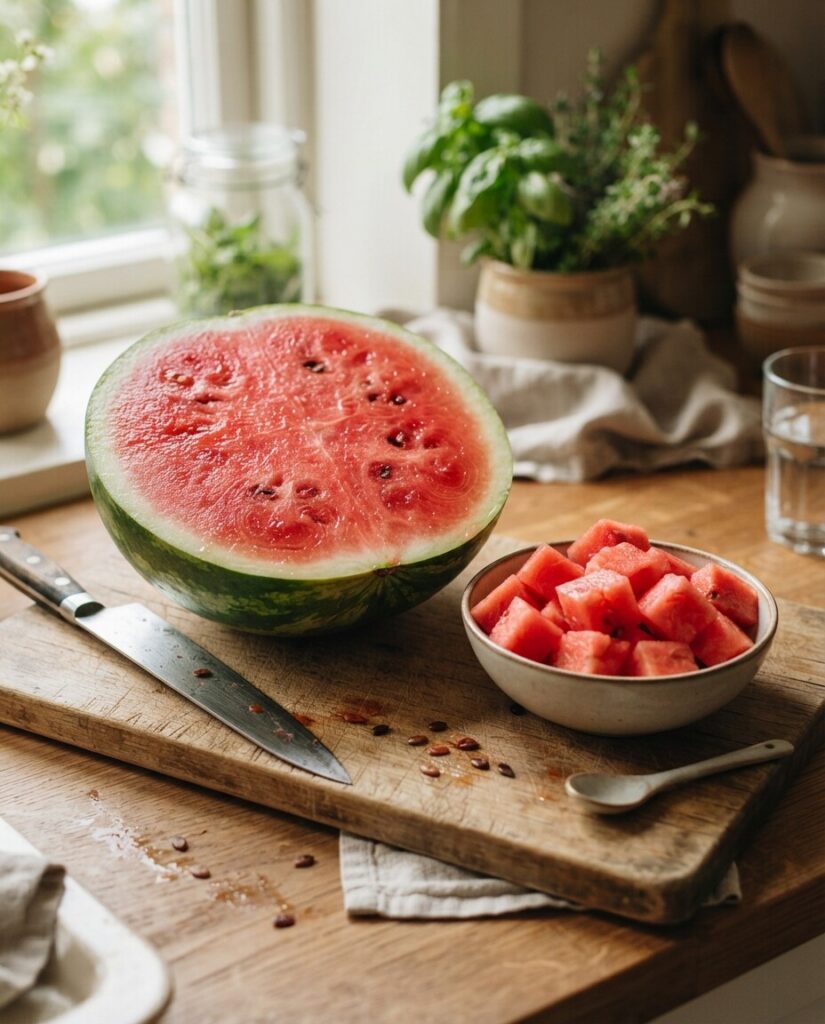
A watermelon can look perfectly fine sitting on the counter and be dull, mushy, or fermenting by the time you cut into it. That’s the annoying thing about melons: the rind gives away almost nothing. I’ve carried home what looked like a great one and opened it up to something closer to swamp water. Knowing the signs before you commit a knife to it saves you a ruined lunch, and keeps you away from the mild food-safety risks that come with actually spoiled fruit.
Jump to section
Why a quick check is worth it
Watermelon is mostly water and sugar, which happens to be exactly what bacteria and yeast want once the rind is opened. A whole, uncut melon holds up fine for a while. Cut fruit left out too long, or stored warm, turns faster than most people expect. A few seconds of looking, smelling, and touching before you eat is the cheapest insurance you’ll ever get, and it’s become second nature for me after that one bad melon.
The signs it’s turned
A sour or fermented smell
Fresh watermelon smells clean and faintly sweet, almost nothing at all. A sour, boozy, or off odor near the cut surface is one of the earliest and most reliable warnings.
A slimy or sticky surface
Good flesh feels firm and juicy, not slick. If it turns slippery or tacky under your fingers, that’s microbial growth, and a clear reason to toss it.
Dull or discolored flesh
Ripe flesh is vivid pink or red. Brown patches, gray areas, dark spots, or a faded, washed-out color point to decay or oxidation.
Any mold at all
White fuzz, green spots, black patches on flesh or rind: the whole piece goes. Mold reaches further than what you can see, so cutting around it isn’t safe.
A fizzy or tingling taste
If a bite feels faintly bubbly or tingles on your tongue, the sugars are fermenting. Even if it still looks fine, stop there.
Mushy, collapsing texture
An overripe or spoiling melon caves in when you press or slice it, and loses that clean, crisp bite entirely.
An off flavor, full stop
Sometimes it looks and smells fine and just tastes wrong: sour, bitter, off. Trust that and set the rest aside.
How long it actually lasts
- Whole melons hold for about 7 to 10 days at cool room temperature, longer somewhere cool and dark.
- Cut watermelon should go in the fridge promptly and get eaten within 3 to 5 days.
- Pre-cut tubs need a closer look: check the date, make sure it’s actually been kept cold, and inspect for sliminess or dull color before you buy.
Storing it well
- Leave whole melons at room temperature until you’re ready to cut. It keeps flavor and texture at their best.
- Once cut, wrap it tightly or store it in an airtight container, cut side down, to limit air exposure.
- Keep the fridge at or below 40°F (4°C) to slow bacterial growth.
- To save some for later, cube it and freeze on a tray before bagging. Frozen chunks are good in smoothies and chilled drinks, though they go soft once thawed.
Picking a good one in the first place
Good storage starts with a ripe melon. Look for one that’s firm, symmetrical, and feels heavy for its size, with a creamy yellow spot where it sat on the ground. A dull rather than glossy rind and a deep, hollow sound when you tap it are both good signs.
FAQ
Can I just cut off the bad part?
Better not to, especially with mold, a sour smell, or slime. Spoilage spreads past what you can see, so when in doubt, the whole piece goes.
Is slightly soft watermelon still okay?
If it’s only a bit soft but still smells fresh, looks vibrant, and tastes sweet, it’s probably just overripe, not spoiled. Use your senses and lean cautious.
Can spoiled watermelon make you sick?
Yes. Eating spoiled fruit can cause stomach upset: cramps, nausea, diarrhea. Young children, older adults, pregnant people, and anyone with a weakened immune system should be especially careful.
The one rule worth remembering
When you’re not sure: if it looks off, smells off, or tastes off, throw it out. That’s genuinely all the awareness it takes to eat watermelon safely all season.
This article is for general information only and is not a substitute for professional food-safety or medical guidance. Always wash hands and use clean tools when handling cut fruit.