Depression-Era Desserts That Turned Little Into Plenty
From water pie to wacky cake, explore 13 real depression era desserts made without eggs or extra sugar, sweet, resourceful bakes that hard times built.

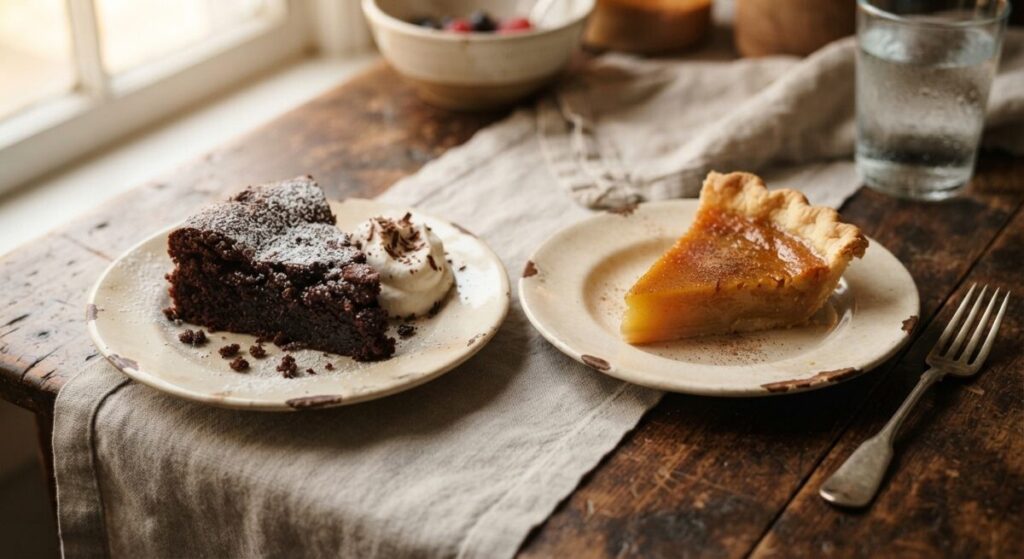
Sugar was rationed by the budget long before it was rationed by any government, and eggs and butter were often too dear to spare on something as frivolous as dessert. And yet the Depression era produced some of the most inventive, oddly touching sweets in American home cooking — pies made without fruit, cakes made without eggs, puddings made from stale bread that would otherwise have gone to the chickens. Necessity forced a kind of quiet genius into the kitchen, and a few of these desserts have never really been improved on since.
Jump to section
I’ve baked my way through nearly every one of these at some point, mostly out of curiosity about whether they’d actually hold up, and most of them do. None required a trip to a fancy grocer, and most used ingredients that were already sitting in the cupboard. Here are the desserts that proved a little sugar, a little imagination, and a hot oven could still add up to something sweet.
Water Pie
About as bare-bones as dessert gets, this pie filled a crust with nothing more than water, sugar, flour, and a few pats of butter, then baked until the filling set into something close to a soft custard. It sounds impossible until you taste it — the sugar and butter caramelize just enough to fool you into thinking there’s cream inside.
Vinegar Pie
When lemons weren’t in the budget, a splash of vinegar stood in for citrus, cut with sugar, butter, and eggs into a filling that baked up tangy and custardy, not unlike a chess pie. It’s a strange-sounding dessert that tastes remarkably ordinary — bright, sweet, and satisfying — once it comes out of the oven.
Mock Apple Pie
With apples scarce or too expensive some winters, cooks simmered crushed soda crackers with sugar, cinnamon, and lemon juice until the mixture thickened and baked it inside a double crust. The texture fooled plenty of guests, and the trick became famous enough that the recipe was printed on cracker boxes for decades afterward.
Wacky Cake
Mixed right in the baking pan with no eggs, milk, or butter at all, this chocolate cake relied on vinegar and baking soda for its rise and stayed remarkably moist despite having none of the usual richness. It became one of the defining desserts of the era precisely because it needed almost nothing to make.
Applesauce Cake
A jar of home-canned applesauce replaced the eggs and much of the fat in this spiced, dense cake, and a handful of raisins or chopped nuts, if they could be spared, made it feel a little more special. It kept well for days under a cloth, which made it a practical cake as much as a sweet one.
Poor Man’s Cake
Raisins simmered with water, sugar, and spices formed the base of this eggless, butterless cake, with the cooled raisin liquid standing in for both moisture and sweetness. It baked up dark, spiced, and faintly like a soft fruitcake, and it needed no icing to taste finished.
Molasses Cookies
Molasses was cheaper than sugar and stretched further, so it became the backbone of countless Depression-era cookie jars, rolled in a little sugar before baking to give the tops a cracked, sparkling finish. Warm from the oven, they filled a kitchen with the smell of ginger and clove for almost no cost at all.
Oatmeal Cake
A bowl of oats soaked in boiling water softened into a base that replaced some of the flour and fat in this simple spice cake, giving it a moist, hearty crumb. A quick broiled topping of brown sugar and coconut, when coconut was affordable, turned an everyday cake into something worth saving for Sunday.
Bread Pudding
Stale bread, too dry to eat any other way, was torn into a baking dish and soaked in a custard of milk, a little sugar, and whatever spice was on hand, then baked until set and golden on top. It let nothing go to waste, and served warm with a spoonful of syrup, it tasted far richer than its ingredients suggested. Because it’s an egg-and-milk custard, leftovers should be covered and kept in the refrigerator rather than left out overnight.
Depression-Era Fudge
Cocoa powder, sugar, milk, and a little butter boiled together on the stovetop and beaten until it thickened made a simple fudge that needed no thermometer and no fancy chocolate. It set up soft and rich, and a single batch could satisfy a sweet tooth for a whole week.
Three-Ingredient Peanut Butter Cookies
Peanut butter, sugar, and a single egg mixed together and pressed with a fork made cookies that needed no flour at all, which made them both cheap and useful when flour ran low. They baked in minutes and disappeared from the cooling rack just as fast — mine never make it past the same afternoon.
Rice Pudding
Leftover cooked rice simmered gently with milk, sugar, and a beaten egg turned creamy and thick, and a sprinkle of cinnamon on top made it feel like a proper dessert rather than reheated leftovers. It was a favorite way to use up rice from the night before, and it never tasted like an afterthought.
Prune Cake
Stewed, chopped prunes added natural sweetness and moisture to this spiced cake, allowing cooks to use less sugar than most recipes of the day called for. It stayed soft for nearly a week wrapped in cloth, which made it as practical as it was pleasant to eat.
What these desserts have in common isn’t scarcity so much as resourcefulness — a refusal to let hard times mean no sweetness at all. A cake made without eggs, a pie made without fruit, a pudding made from bread that would otherwise be tossed to the chickens: each one is proof that a little sugar and a lot of care could still make something worth gathering around the table for.
There’s still something to learn from a dessert that asked for so little and gave back so much.