Dark Spots: Why to Skip the Lemon-and-Baking-Soda Fix
Dark spots, whether they come from old blemishes, sun exposure, or hormonal changes, can feel stubborn, so it is easy to understand why homemade recipes…

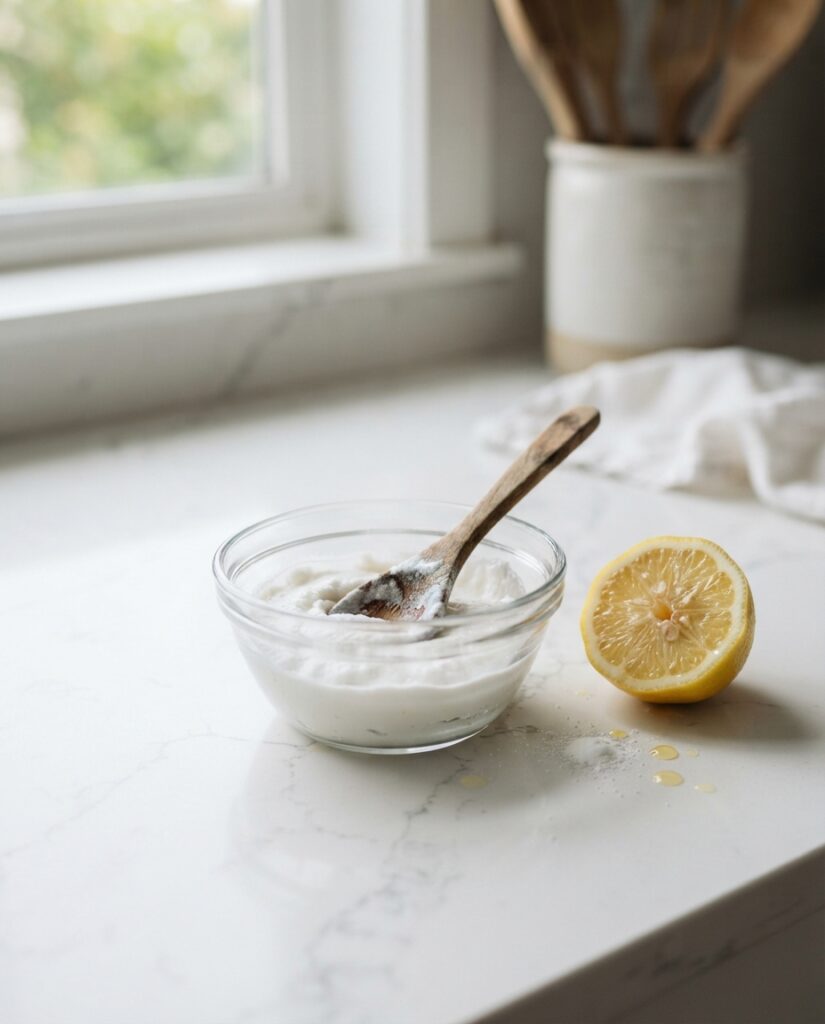
I tried the lemon-and-baking-soda paste on a stubborn spot on my cheek years ago, before I knew any better. It stung for a full minute, and the spot looked worse, not better, for a week after. That’s the whole review, honestly, and it lines up with what dermatologists have been saying for years.
Jump to section
Why the recipe spreads anyway
The logic sounds reasonable on the surface. Lemon juice is acidic and lightens some surfaces, so people assume it lightens skin the same way. Baking soda feels gritty, so it seems like a gentle scrub. Honey is genuinely soothing, which softens the whole idea and makes the mix feel kind rather than harsh. Add a few before-and-after photos online and it looks like a shortcut to even skin tone. Skin isn’t a countertop, though, and what lifts a coffee stain from a mug has nothing to do with what safely fades pigment in living tissue.
What it actually does to your skin
Healthy skin sits at a slightly acidic pH, protected by a thin layer sometimes called the acid mantle. Baking soda is strongly alkaline, and putting it on your face can strip that layer, leaving skin dry, tight, and more reactive. A damaged barrier tends to look duller and feel rougher over time, the opposite of the goal. Lemon juice brings its own problem: it’s acidic enough to sting broken or sensitive skin, and it makes skin more reactive to sunlight. That can mean a blistering reaction in the wrong conditions, and it can deepen a dark patch instead of fading it. Mixing an aggressive acid with an aggressive alkali doesn’t cancel them out. It just hits your skin with both.
What genuinely fades dark spots
Real fading is slower, but it doesn’t gamble with your skin barrier:
- Daily broad-spectrum sunscreen. The single most important step. Sun exposure darkens existing spots and undoes everything else you do, so protection is what lets the rest actually work.
- Vitamin C in the morning. A well-formulated serum can gradually brighten and even out tone.
- Gentle chemical exfoliation. Glycolic or lactic acid at sensible strengths encourages cell turnover far more predictably than a kitchen scrub ever will.
- Targeted ingredients. Niacinamide, azelaic acid, and, where appropriate, retinoids can fade discoloration over weeks and months.
- Patience. Pigment sits deeper than a surface stain. Meaningful change usually takes several weeks at minimum.
None of these strip the barrier, which is exactly why the results stick.
When to see someone instead
If a dark patch is new, changing, growing, or has an odd border, get a dermatologist to look at it rather than treating it at home. They can also prescribe stronger options than anything from a kitchen cupboard, and rule out anything that needs real medical attention, especially if the spots are widespread or bothering you.
It’s completely normal to want a cheap, fast fix. But the kindest thing for uneven skin is daily protection, a few proven ingredients, and time. Skip the lemon and baking soda. Your barrier will thank you, and the results will actually hold.
This article is for general information only and is not medical advice. If you have a health condition, take medication, or have concerns, please consult a qualified healthcare professional. See our medical disclaimer.