Red Onion: A Simple Vegetable Worth a Closer Look
Few ingredients are as ordinary, or as quietly useful, as the red onion. It shows up in salads, sandwiches and countless cooked dishes, yet it rarely…

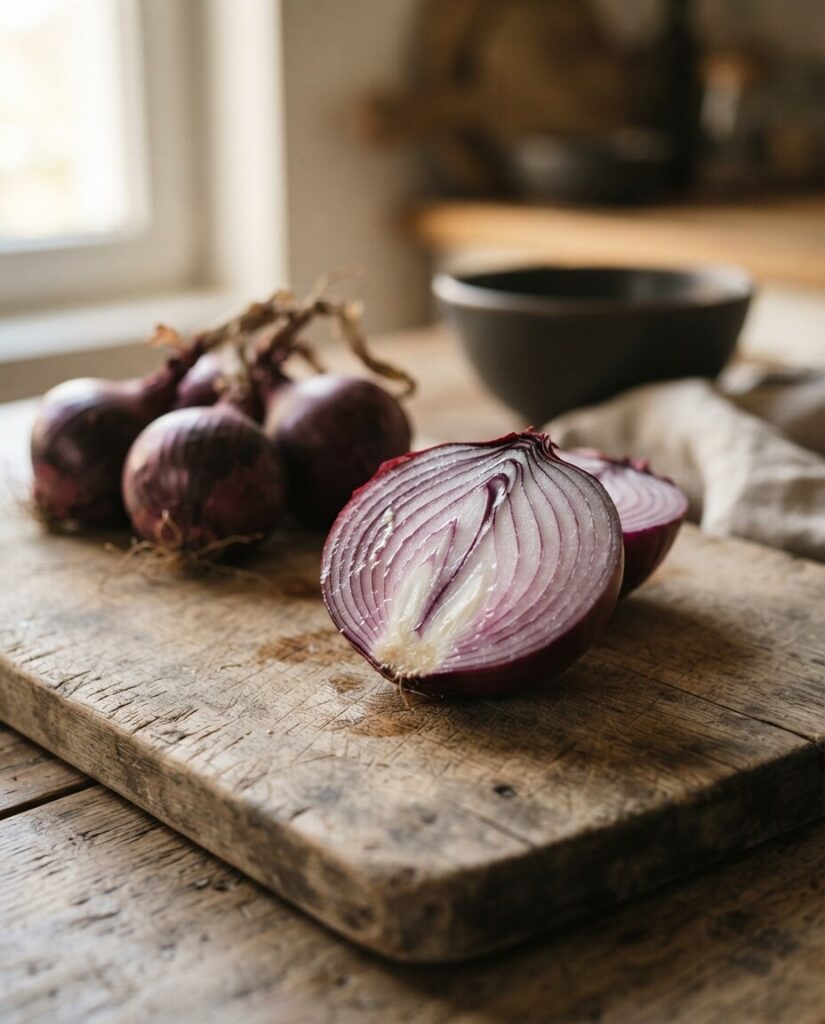
Red onion doesn’t do anything magic, and I say that as someone who cooks with it almost daily. It’s an inexpensive, low-calorie vegetable with a genuinely rich nutrient profile, and that’s a better story than most of what gets claimed about it online.
Jump to section
It shows up in salads, sandwiches, and half of what I cook, but the red onion rarely gets much credit on its own. Lately it’s been popping up in wellness posts with bold claims attached. Here’s the calmer, more accurate version.
What Actually Makes It Stand Out
That deep purple color comes from anthocyanins, the same plant pigments found in berries and red cabbage, which act as antioxidants in the body. Red onion is also a strong everyday source of quercetin, a flavonoid that’s drawn a lot of research interest. Red varieties generally carry more of these compounds than white or yellow onions. A 100-gram serving is only around 40 calories, while still adding flavor, a little fiber, and some vitamin C — an easy way to add character to a meal without much else going on.
What the Early Research Actually Suggests
Honesty matters here. Onions and their compounds, quercetin especially, have been studied for possible effects on metabolic health, inflammation, and antioxidant activity. Some small human observations and animal studies report modest associations, and reviews keep coming back to how these compounds behave. Even so, it’s preliminary and far from settled. Red onion is best treated as a nourishing food in a varied diet, not a remedy or a stand-in for anything your doctor recommends. Anyone hoping one vegetable will move their numbers is going to be disappointed. Steady habits across the whole diet do the real work.
How I Actually Use It
Red onion is one of the easiest vegetables to work into daily meals.
- Raw and thinly sliced: scattered over salads, tacos, or sandwiches for crunch and a bright, sharp bite. A quick soak in cold water tames the sharpness if it’s too much, which is my go-to trick when I’m serving it to guests who find raw onion too harsh.
- Lightly cooked: a gentle sauté or roast softens it and brings out a natural sweetness while keeping some bite.
- As a warm infusion: some people simmer a chopped onion in water for 10 to 15 minutes, strain it, and sip it warm with a little lemon. It’s an old kitchen habit, not a proven remedy, but it’s harmless if it appeals to you.
- Paired for flavor: red onion works well with garlic, tomato, lemon, or fresh herbs.
Choosing and Storing
Pick onions that feel firm and heavy, with dry, glossy skins. Skip anything with soft spots or green sprouts. Keep whole onions in a cool, dry, well-ventilated spot away from potatoes, and store cut onion in a sealed container in the fridge for a few days.
A Few Practical Notes
Red onion is generally well tolerated, but raw onion can cause temporary bloating or discomfort for sensitive stomachs, so start with smaller amounts if that’s you. If you take medication for a health condition, keep your usual routine and check with your doctor before making onion a large, deliberate part of your diet. It’s a flavorful, everyday food, not a substitute for medical care.
Questions Worth Answering
How much red onion is reasonable to eat? There’s no special dose. Using it as a normal ingredient, raw or cooked, across your meals is a sensible everyday approach.
Does cooking destroy the good compounds? Gentle cooking keeps much of red onion’s character and nutrients, while raw onion may hold onto slightly more of certain compounds. Both are worth eating.
Is the color important? The purple pigments are antioxidants, so red onion offers a bit extra there compared with white or yellow, though all onions bring value to a meal.
This article is for general information only and does not replace professional medical advice. Always talk with your doctor before making changes to your diet, especially if you have a health condition or take prescription medication.
Wellness note: This article is for general information only and is not medical advice or a substitute for professional diagnosis or treatment. Natural foods and ingredients can cause reactions or interact with medications. Consult a qualified healthcare professional before making changes — especially if you are pregnant, take medication, or have a health condition. Seek prompt medical care for severe, worsening, or persistent symptoms.