How to Clean Burnt Pots and Pans Naturally
Sooner or later, everyone scorches a pot. A forgotten pan of rice, a sauce left a minute too long, a stubborn brown ring baked onto the base. The good…

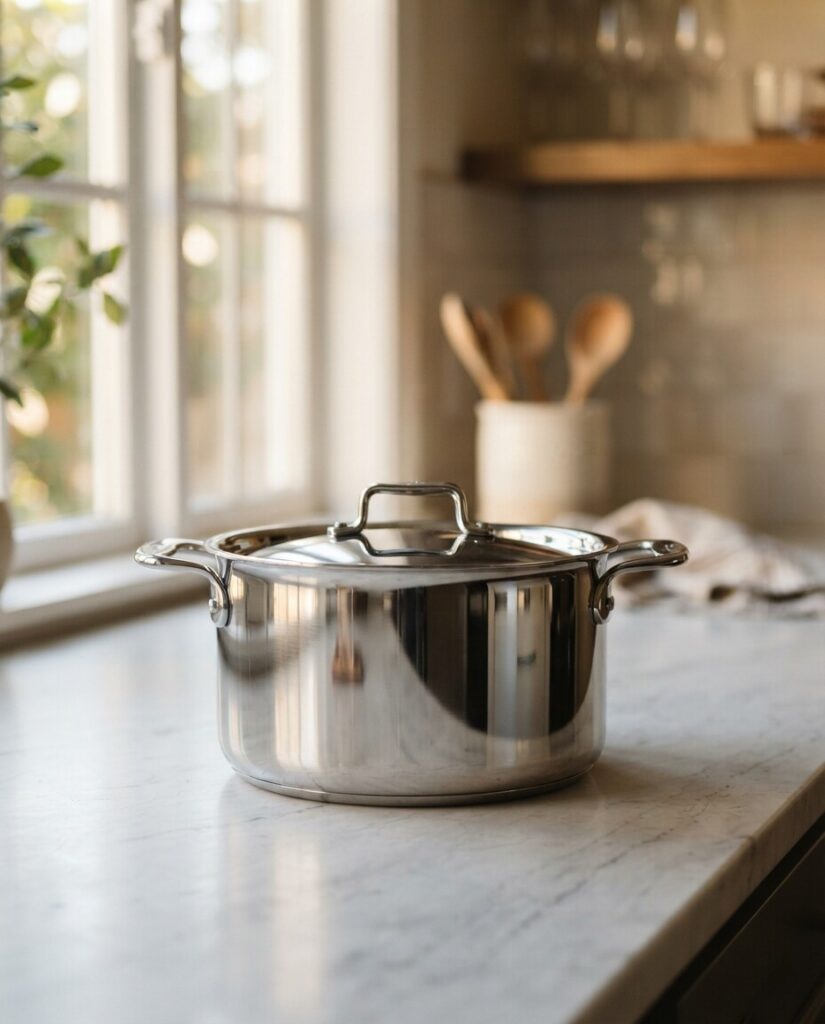
Burnt-on rice smells nothing like burnt toast: sharper, a little sweet, and it clings to the bottom of a pot for a week if you let it. Sooner or later it happens to everyone, a sauce left a beat too long, a forgotten pan of rice, a brown ring baked hard onto the base. I keep a box of citric acid under my own sink for exactly this reason, it’s rescued more pots than I can count, and I’ve genuinely never needed anything harsher. Baking soda, salt, vinegar, and citric acid, four things probably already in your kitchen, will get a scorched pot back to clean.
Jump to section
Soak it first
Before you reach for any of them, scrape out the loose bits, fill the pan with warm water and a squirt of dish soap, and let it sit for 20 to 30 minutes. It softens the top layer of burnt residue so you’re not scrubbing against dried concrete. Then pick the method that matches how bad the mess actually is.
Baking soda: the one to reach for first
Baking soda is mildly abrasive, so it lifts burnt residue without scratching most surfaces. Good everyday choice, especially on stainless steel.
- Mix baking soda with a little water into a thick paste.
- Spread it over the burnt spots.
- Let it sit 30 to 60 minutes, overnight if the buildup is heavy.
- Scrub with a sponge or soft brush, then rinse well.
Salt: for a fresh, light scorch
Coarse salt loosens residue that hasn’t set yet and scours gently without scratching.
- Dampen the bottom of the pan and sprinkle it generously with coarse salt.
- Rub gently with a sponge or cloth.
- Rinse well.
This one’s really for maintenance, catching a scorch before it has a chance to bake on.
Baking soda plus vinegar: for greasy, stubborn buildup
When old grease won’t budge, the fizzing reaction between the two helps break it loose.
- Pour a little white vinegar over the burnt area.
- Sprinkle baking soda on top and let it foam.
- Leave it 10 to 15 minutes.
- Scrub and rinse.
Citric acid: the strongest option
Citric acid, sometimes sold as sour salt, is genuinely the best tool against baked-on residue and mineral scale. Two ways to use it.
Boiling
- Fill the pot with enough water to cover the burnt area.
- Add 1 to 2 tablespoons of citric acid.
- Bring to a boil, then simmer 10 to 15 minutes.
- Let it cool slightly, then scrub and rinse.
Paste
- Mix citric acid with a little water into a paste.
- Apply it to the burnt surface.
- Let it rest 20 to 30 minutes.
- Scrub and rinse.
Both work well on stainless steel and pots that are badly burnt.
A few precautions
- Skip citric acid on plain aluminum. It can dull or discolor the surface.
- Skip metal scouring pads on non-stick coatings, which scratch easily.
- Never mix citric acid or vinegar with bleach or chlorine-based cleaners. The combination releases dangerous fumes.
- Test any method on a small, hidden spot first.
- Wear gloves if your skin is sensitive.
Keeping it from happening again
Cook rice and sauces over lower heat and stir now and then so nothing settles on the base. Match the burner size to the pan so the heat isn’t concentrated on one spot. And deal with spills while the pan’s still warm, I learned this one the annoying way, since residue lifts off far easier before it fully hardens.
Questions people actually ask
Which method is best for stainless steel?
Baking soda handles most jobs. Citric acid is the one to reach for on heavy, baked-on burns. Both are safe on stainless.
Can I use these on non-stick pans?
Yes, but stick to soft sponges and gentle pastes, and skip the abrasive scrubbing so you don’t wear down the coating.
What about a really old, blackened bottom?
Try the boiling citric-acid method first, and repeat if it needs it. Patience beats hard scrubbing here. For the exterior base, where years of buildup can sit, a baking-soda paste left on overnight before you scrub can make a real difference.
Is this safe for cast iron?
Go easy with cast iron. Baking soda and a gentle scrub are fine for lifting burnt food, but skip long acidic soaks, and dry the pan thoroughly and re-season it afterward so the surface doesn’t suffer.
None of this needs harsh chemicals. A badly scorched pot cleans up fine with what’s already in your cupboard.