How to Revive a Struggling Orchid at Home
Orchids are loved for their elegance and their long-lasting, sculptural blooms, but they have a reputation for being fussy. If yours is dropping leaves…

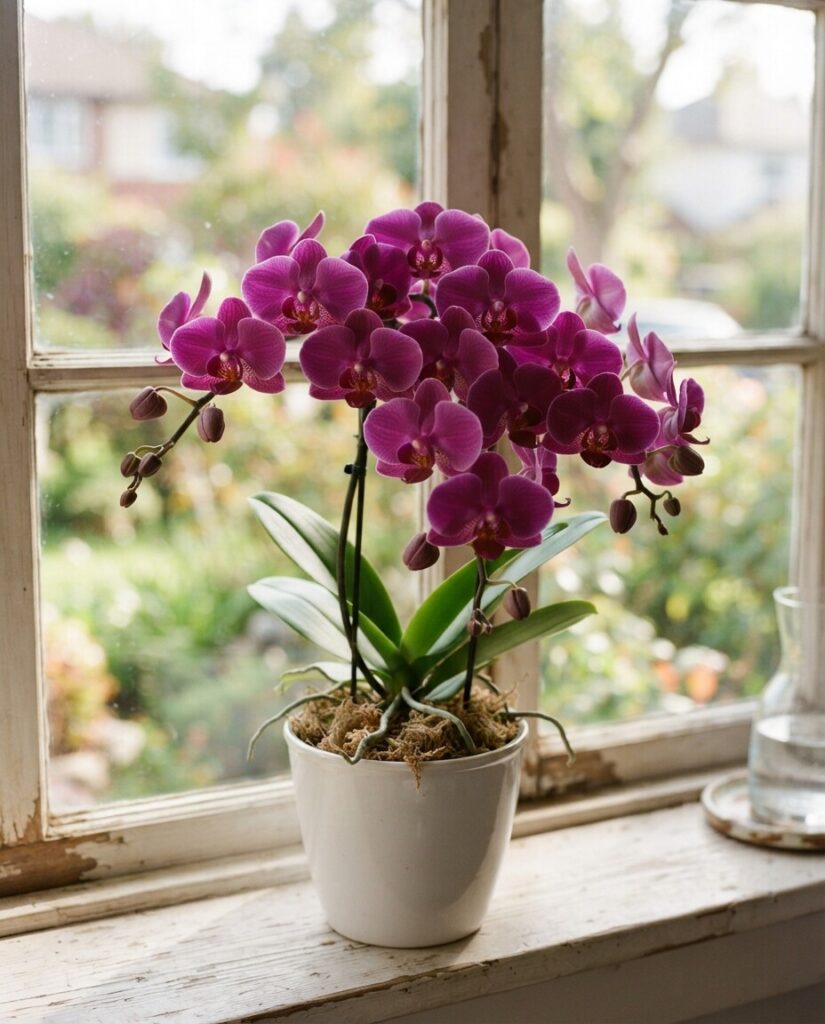
My first orchid died within a month. My second one is nine years old now and still throws a new flower spike almost every winter. The difference wasn’t luck — it was learning to stop treating it like a houseplant that wanted watering on Sundays.
Jump to section
If yours is dropping leaves, losing roots, or just looking miserable, it’s probably not dead. Orchids are dramatic. Here’s how to actually bring one back.
Figure out what went wrong first
Before you do anything, check for the usual suspects:
- Too much water. Soggy roots rot when the medium never gets a chance to dry.
- Too little water. Roots shrivel and the plant can’t take up what it needs.
- Bad light. Too little light and it sulks; too much direct sun and it scorches.
- Old medium. Bark breaks down over a year or two and turns into something closer to soil, which suffocates the roots. If yours smells sour or looks like mulch, that’s your problem.
Bringing it back, step by step
Check the roots first
Slide the plant out of its pot and actually look at the roots. Healthy ones are firm and green or silvery-white. Rotten ones are brown, mushy, and give way when you squeeze them gently. Cut off anything dead with clean, sterilized scissors. It feels brutal the first time, but a plant putting energy into dead roots is a plant that’s stuck.
Soak it
Soak just the roots, not the leaves, in room-temperature water for 20 to 30 minutes. I add a small pinch of ground cinnamon to the water sometimes — it’s an old trick for helping freshly cut roots resist fungus, and it can’t hurt.
Repot in fresh bark
Move it into fresh, chunky orchid mix, in a clear pot with real drainage holes. The clear pot matters more than it sounds like it should: being able to see the roots is how you catch problems early next time, instead of finding out six months later.
Put it somewhere it actually likes
Bright, but out of harsh direct sun. An east- or west-facing window usually works. Room temperature, moderate humidity, nothing exotic.
Water by looking, not by calendar
Let the medium go fully dry before watering again. The roots are your cue: they turn silvery when it’s time, green when they’re still holding water. Use room-temperature water, and rainwater or filtered water if you can be bothered. Tap water’s minerals build up over time and orchids don’t love it.
If you want it to actually flower again
- Wipe the leaves with a damp cloth now and then. Dusty leaves can’t use light well.
- Feed lightly, every couple of weeks, with a fertilizer made for orchids.
- A few weeks somewhere slightly cooler can nudge a reluctant orchid into sending up a new spike.
The mistakes I see most often
- Watering on a schedule. Orchids don’t care what day it is. Check the roots.
- Letting water sit in the saucer. Tip it out every time, or the roots sit in a puddle and rot.
- Regular potting soil. It holds too much water and smothers the roots. Bark-based mix only.
- Cutting a green flower spike too soon. A spike that’s still green and firm may bloom again. Wait until it’s fully dry and brown before you trim it.
How long recovery actually takes
Weeks, not days. Leaves firm up and green out first. New roots show up next. Flowers, if they come, are usually months out. My nine-year-old orchid takes its sweet time every single year and I’ve made peace with it. That’s just how they work.
My orchid has no roots left. Is it done?
Not necessarily. A plant with a healthy crown and a leaf or two left can regrow roots with the soak-and-repot approach, given enough patience.
Why did the flowers drop off?
Blooms fade naturally at the end of their season, and stress or a change of location can speed that up. Losing a flower spike doesn’t mean the plant is dying.
Reviving a struggling orchid comes down to a few unglamorous steps: check the roots, refresh the medium, water when the roots actually ask for it instead of on a schedule. Do that consistently and most orchids come back. Mine always has.