3 Dried Fruits for a Calmer Evening Snack
A small bowl of dried fruit in the evening is one of those quiet, old-fashioned habits that never really goes out of style. Raisins, dried figs, and…

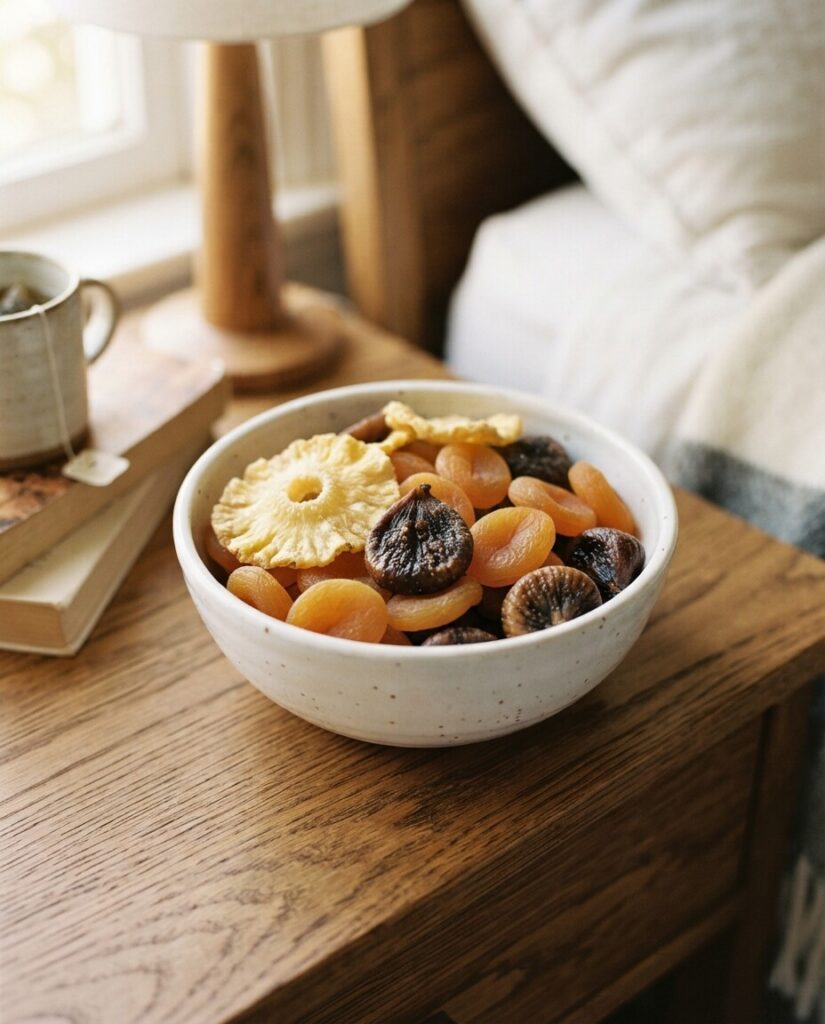
Raisins, dried figs, and almonds are not sleep aids, and I’ll say that clearly up front. Nothing on this list will knock you out. But there’s something to the old-fashioned habit of a small bowl of dried fruit before bed, and it’s worth doing right instead of letting it turn into a heavy late-night snack.
Jump to section
Why an Evening Snack Feels Good
As the day winds down, a light bite can be genuinely comforting, and it helps you avoid going to bed hungry. The trick is keeping it small. A big, rich, or salty snack close to bedtime tends to do the opposite of what you want, leaving you restless instead of settled.
Dried fruit and nuts work well here because a little goes a long way. A tablespoon of raisins or a few almonds is genuinely satisfying, not a consolation prize.
There’s a psychological piece too. A small, familiar ritual at roughly the same time each evening quietly tells your body the day is ending, and that cue is often doing as much work as anything on the plate. In my house it changes by the season: a few raisins by the armchair some weeks, dried figs after supper other weeks, a little dish of almonds within reach of the couch when I can’t decide.
The Three I Reach For
Raisins
Naturally sweet, and they carry potassium, a mineral involved in normal muscle and nerve function. A small handful settles a sweet craving without reaching for actual dessert.
Dried figs
Figs bring fiber and minerals like magnesium. The fiber supports comfortable digestion, which is reason enough to keep the portion small in the evening.
Almonds
Healthy fats, a little protein, and magnesium. Magnesium gets mentioned a lot in connection with relaxation, though it’s only one piece of the sleep puzzle, not the whole thing.
Keeping the Habit Gentle
The details matter more than the food itself:
- Keep the portion small — about a tablespoon of raisins, one dried fig, or a few almonds.
- Eat it a while before bed — an hour or two ahead, not as your head hits the pillow.
- Go easy on liquids late — a large drink alongside your snack can interrupt sleep later.
- Stay consistent — a steady routine does more than any single ingredient.
What Actually Undermines Sleep
Often the bigger wins come from what you stop doing, not what you add.
| Helpful habit | Habit to rethink |
|---|---|
| A light evening snack | A heavy, late dinner |
| Small sips of water | Large drinks right before bed |
| A calm wind-down | Bright screens late at night |
| A consistent bedtime | An irregular schedule |
Afternoon and evening caffeine, coffee, strong tea, some sodas, is another common reason for restless nights.
What the Research Actually Supports
Magnesium is involved in relaxation and normal muscle function, potassium supports nerve and muscle activity, and fiber aids digestion. None of that means a specific food will transform your nights. The most reliable results still come from the whole picture — balanced meals, sensible timing, steady sleep habits.
A Simple Wind-Down
- Finish dinner a couple of hours before bed
- Ease off fluids after your evening meal
- Enjoy a small portion of dried fruit or nuts
- Dim the lights and set screens aside
- Aim for the same bedtime each night
Frequently Asked Questions
Will dried fruit help me sleep through the night?
It might be a pleasant part of a calming routine, but it’s not a guaranteed fix. Consistent habits matter far more than any single snack.
How long before I notice a difference?
If a steadier evening routine helps you, most people notice it within a week or two.
Should I stop drinking water in the evening?
No. Stay well hydrated through the day, and simply ease off large amounts close to bedtime.
A quick note: This article is for general information only and is not medical advice. If broken sleep or frequent night-time waking is persistent or getting worse, please see a qualified healthcare provider for proper evaluation.
Wellness note: This article is for general information only and is not medical advice or a substitute for professional diagnosis or treatment. Natural foods and ingredients can cause reactions or interact with medications. Consult a qualified healthcare professional before making changes — especially if you are pregnant, take medication, or have a health condition. Seek prompt medical care for severe, worsening, or persistent symptoms.