18 Things You Should Never Put in Your Dishwasher
You load it, press start, and walk away. No scrubbing, no soaking, just done. For most of your everyday plates and glasses, the dishwasher really is that…

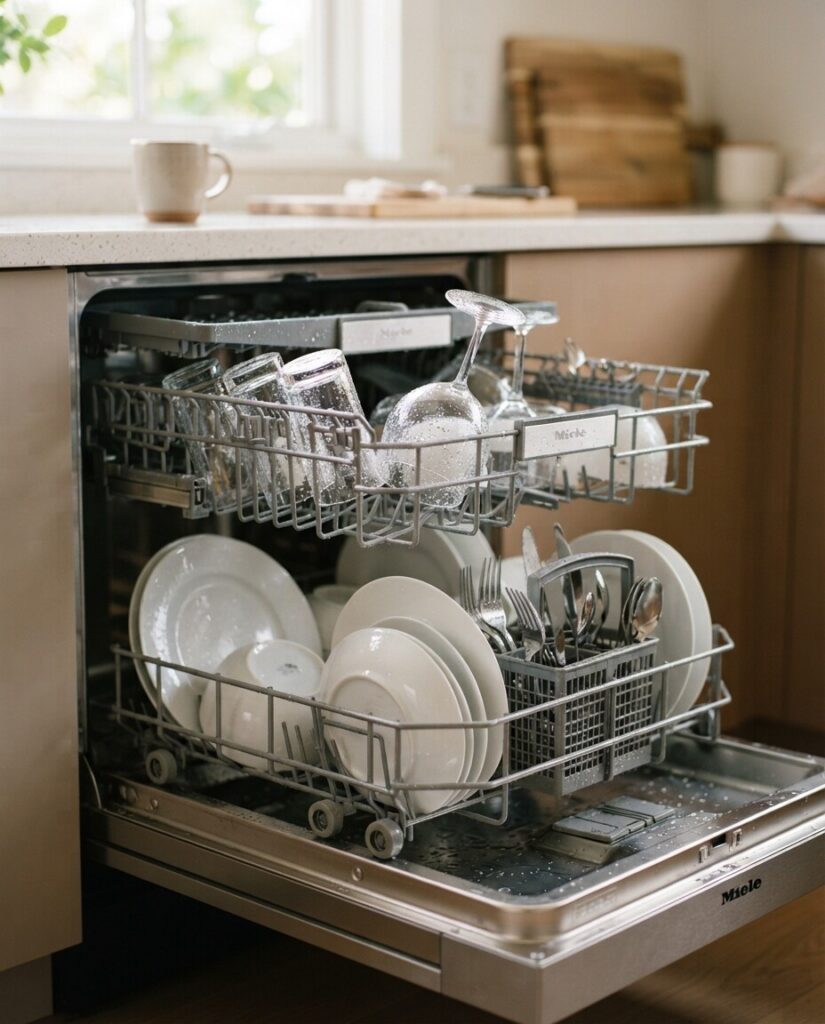
I ruined a good wooden spoon in about six months of tossing it in the dishwasher before I bothered to look up why it had gone rough and pale. Load it, press start, walk away — for plates and glasses that’s genuinely all the dishwasher asks of you. For a lot of other things in your kitchen, it’s not nearly as gentle as it looks.
Jump to section
Why It’s Harsher Than It Looks
Very hot water, strong detergent, high-pressure spray, then a heated dry cycle — that’s the combination doing the damage. Heat plus moisture plus chemicals is exactly what certain materials can’t handle. Some crack. Some fade. A few just fall apart slowly enough that you don’t notice until the damage is done.
Wood and Blades
- Wooden cutting boards: detergent strips the oils that keep wood smooth, and the moisture warps and cracks it. Hand wash, dry right away.
- Wooden spoons and utensils: same fate. They dry out, splinter, and lose their finish. This is the one that got mine.
- Sharp knives: blades dull faster, wooden handles split, and a blade pointing up in the rack is just a hazard waiting for your hand. A quick hand wash takes seconds.
Cookware That Doesn’t Belong In There
- Cast iron: strips the seasoning you worked to build, which invites rust and sticking.
- Enameled cast iron: the enamel and rims can chip and dull; most makers still say hand wash.
- Aluminum pots and pans: a chemical reaction can leave them dull, blotchy, eventually pitted.
- Copper cookware: that glow fades almost immediately, and it doesn’t come back easily.
- Copper and brass mugs: that shine deserves a gentle hand wash, not a chemical bath.
- Pressure cooker lids: the valves and seals can trap food and stop working right, which is a safety issue, not just a look.
"But It Says Dishwasher Safe"
- Nonstick pans: even labeled safe, the coating breaks down faster under repeated heat and detergent. Skip the heated dry, at least.
- Ceramic-coated cookware: it’s a coating, not solid ceramic, and harsh detergent wears it down sooner than you’d think.
- Acrylic dishware: fades, cracks, and clouds over time.
- Melamine: light and colorful, but repeated hot cycles warp and crack it.
The Sentimental Stuff
- Printed or measuring glassware: the markings wash away, slowly.
- Hand-painted ceramics: fragile designs that fade after a handful of washes.
- Fine china with metallic trim: gold and silver accents can flake off for good.
- Vintage china and delicate crystal: older or repaired pieces weaken under heat and pressure; crystal can cloud.
- Insulated mugs and tumblers: high heat can break the sealed air gap that keeps drinks hot. Once water gets in, the insulation’s gone for good.
A Rule That Actually Works
Ask two questions: is it wood, a reactive metal, or a coating? Would losing it actually bother you? If either answer is yes, give it two minutes at the sink instead. It’s a small habit that saves you from replacing things you’d rather keep — I wish I’d applied it to that spoon sooner.
FAQ
Is enameled cast iron really unsafe in the dishwasher?
It won’t fall apart after one wash, but repeated cycles dull the enamel and wear the exposed rim. Hand washing keeps it looking better for a lot longer.
What if my item is labeled dishwasher safe?
Usually that just means it won’t melt or shatter, not that it’ll hold up as well as it would with hand washing. For anything valuable or coated, hand washing is still the safer bet.
How do I protect delicate glasses if I do use the dishwasher?
Top rack, a gentle or low-heat setting, skip the heated dry, and don’t let pieces touch. That alone cuts down on chips and clouding.