8 Things to Keep Out of Your Dishwasher (and Why)
The dishwasher is one of the best time-savers in a modern kitchen, and most everyday dishes come out perfectly clean. But a handful of items don't belong…

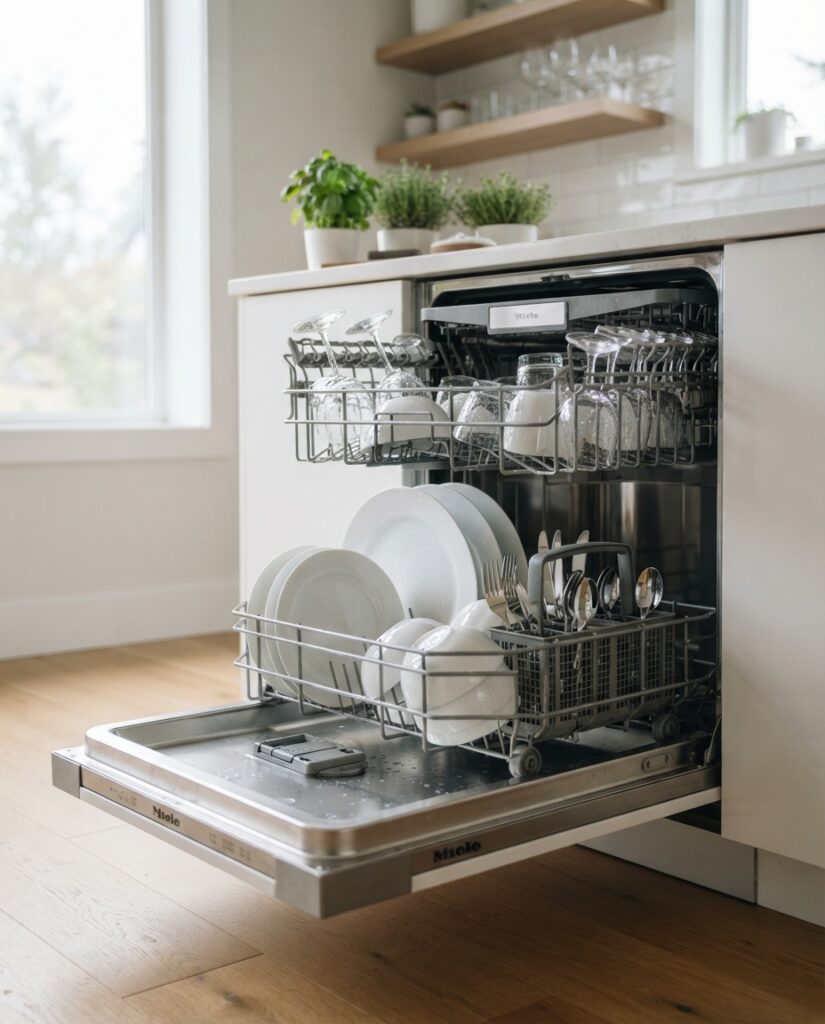
My chef’s knife came out of the dishwasher looking fine for about two years. Then I ran my thumb along the edge one day and it had gone soft, dulled from a hundred trips through the rack. Nobody warned me. Most dishes handle the dishwasher fine, but a handful of things quietly wear out in there, and it’s worth knowing which.
Jump to section
Cookware the dishwasher slowly wears down
Cast-iron pans should stay out, full stop. Detergent strips the seasoning, that thin layer of baked-on oil giving the pan its slick surface, and sitting in water invites rust. A quick hand wash and a dry over low heat keeps a cast-iron pan going for decades.
Aluminum cookware that isn’t anodized can react with harsh detergent and turn dull, dark, or spotty. Nonstick pans, unless the label specifically says dishwasher-safe, wear out faster under repeated hot cycles and abrasive detergent, which shortens the coating’s life.
Sharp knives and anything wooden
Good knives take a double hit in there. The blade knocks against the rack and other dishes, dulling and chipping the edge, and a loose blade is a real hazard when you reach in to unload. Hand washing is what actually keeps the edge, and your fingers, intact.
Wooden cutting boards and utensils absorb water, and heat plus moisture makes them swell, crack, warp, and eventually split. A quick wash and a towel-dry treats them far more kindly and keeps them going for years.
Delicate and sealed pieces
Fine china and glassware with gold or painted trim don’t hold up to abrasive detergent and high heat, which can fade or lift metallic and hand-painted decoration. Delicate glass can also develop a permanent cloudy haze called etching, and no amount of rewashing brings it back.
Insulated or vacuum-sealed mugs and bottles are another one to skip. Water can work its way into the seal between the double walls, damaging the vacuum layer so the bottle slowly stops keeping drinks hot or cold.
Plastics without a dishwasher-safe label
Not every plastic handles the heat. Unlabeled containers and lids can warp or distort, especially on the bottom rack near the heating element, and some break down over time. No dishwasher-safe marking means wash it by hand, or keep it strictly on the top rack if the manufacturer says that’s fine.
Signs something’s already taking damage
Cast iron that’s been through a cycle or two too many looks dull and gray instead of dark and slightly glossy, sometimes with faint rust spots starting at the edges. A knife that’s dulled shows up as a blade that catches or drags instead of gliding through a tomato skin, or one that visibly rolls at the edge when you run a thumbnail across it (carefully). Wood that’s had enough looks visibly grayed, feels rough, or shows a hairline crack along the grain, sometimes with a slightly sour smell if water’s been sitting in a seam. Nonstick that’s failing starts flaking at the edges or scratches you can see under a light, and once the coating’s compromised it’s worth replacing the pan rather than pushing on, flaking nonstick can end up in your food. Catching any of these early and switching that item to hand washing stops the damage from getting worse, though a knife that’s already dulled will need an actual sharpening, not just gentler treatment going forward.
A system that makes this automatic
The easiest fix isn’t remembering a list, it’s keeping a small tray or bin by the sink for hand-wash-only items: the good knife, the wooden spoon, the cast-iron pan. Rinse it and set it there the moment you’re done cooking, instead of deciding case-by-case while you’re loading the rack on autopilot. After a week or two it stops being a decision at all, your hands just know where those pieces go.
When the manual actually settles it
If a piece came with care instructions, that beats any general rule here, manufacturers test their own materials and coatings, and “dishwasher safe” on the box means they’ve actually verified it holds up. The guidance above is for the gray areas: the hand-me-down cast-iron pan with no label, the knife you bought loose at a market, the wooden bowl nobody remembers the origin of. When in doubt and there’s no label to check, hand washing costs you a minute and loses you nothing.
None of this makes the dishwasher the enemy. It’s genuinely great for plates, glasses, and everyday flatware. It’s just that a few items last years longer with one minute of hand washing instead. When in doubt, check the label, and default to washing by hand.