The Bread-and-Milk Poultice for a Minor Boil
The bread and milk poultice is a folk remedy for a minor boil. Learn why moist warmth helps, why you should never squeeze a boil, and when to see a doctor.

Safety and when to see a doctor
This poultice is only for a small, uncomplicated boil or a minor splinter. It is not a remedy for a serious skin infection, and it’s important to know the difference. Several signs mean you stop applying warm bread and see a doctor instead. Get medical attention if a boil is large, very painful, or getting worse quickly; if the redness is spreading or you notice red streaks running from it; if you develop a fever or start feeling generally unwell; or if the boil sits on the face, spine, or near the groin. People with diabetes, a weakened immune system, or a heart condition should be especially cautious and get advice early, and so should anyone whose boils keep coming back. A splinter that’s deep, dirty, or won’t come out, or any wound showing signs of spreading infection, also needs professional care rather than a kitchen remedy. When you’re unsure, let a clinician take a look rather than guessing.
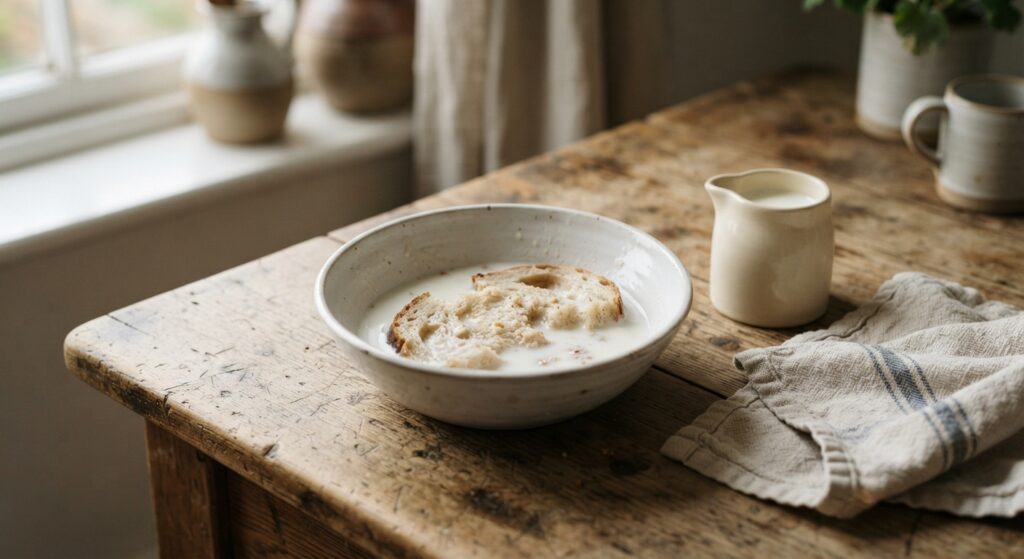
I still keep a bit of bread and milk on hand for this now and then, mostly for a stubborn splinter my kids won’t sit still long enough for me to dig out with a needle. It buys me a little time and a little cooperation, and that’s really all I ask of it. It was never going to replace an antibiotic or a doctor’s opinion, and it isn’t pretending to.
This article is for general educational purposes only and is not medical advice. Traditional remedies are not a substitute for professional care. If your symptoms are severe, persistent, or getting worse, please consult a qualified healthcare provider.
Health disclaimer: This article describes a traditional folk remedy for general information only. It is not medical advice and is not a substitute for professional diagnosis or treatment. Some remedies can cause irritation, allergic reactions, or interact with medications. Consult a qualified healthcare professional before trying any remedy, patch-test anything applied to skin, and seek prompt medical care for severe, worsening, or persistent symptoms. See our full Medical Disclaimer.