The Mustard Foot Soak: A Cozy Cold-Weather Ritual
A mustard foot soak is a warm folk ritual for head colds and chills. Learn what it may do, what the evidence shows, and important foot-soak safety tips.

A quick note: this is a traditional home remedy shared for general interest — not medical advice. See our medical disclaimer, and please see a doctor for severe, worsening, or persistent symptoms.
It sounds almost too humble to bother with: hot water, a spoonful of mustard powder, and your two feet. Yet the mustard foot soak was a fixture of old European home care and household nursing guides, a simple evening ritual for when a head cold, the chills, or bone-deep tiredness had you dragging. People kept doing it for one unglamorous reason, which is that a warm soak at the end of a rough day genuinely feels good, and that comfort was worth passing down.
The idea behind the soak
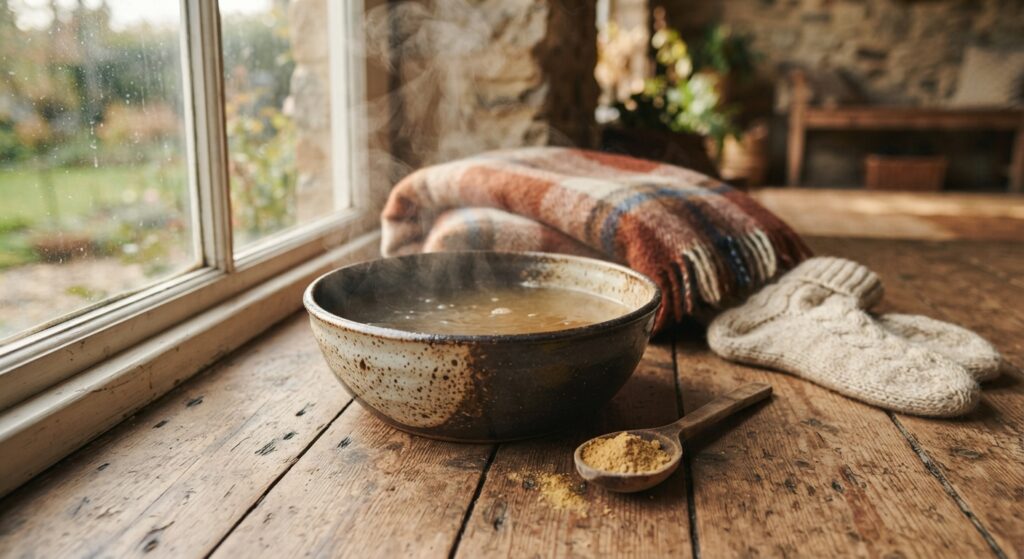
The tradition rests on warmth and a gentle tingle. Mustard powder in hot water creates a mild warming sensation on the skin of the feet, and the old idea was that this drew blood downward, away from a congested, aching head, while the heat encouraged a light sweat that supposedly helped you work through a cold. Whether or not that mechanism holds up, the lived experience of warm feet, a cozy blanket, a hot drink, and a few quiet minutes is soothing in a way most people recognize immediately.
What the evidence actually says
Mustard seeds contain isothiocyanates, the sharp compounds released when ground mustard meets water, and these are known skin irritants that create a warming, reddening effect by drawing blood toward the surface. That part is real chemistry. What is not established is the leap from warm feet to a shorter or milder cold. There is little to no formal human research on mustard foot soaks, and no good evidence that they resolve an infection, break a fever, or clear congestion beyond the temporary, pleasant effect of warmth.
In other words, a mustard foot soak is best understood as a comforting form of warm-water therapy. A plain warm foot bath offers much of the same relaxation, and the mustard mainly adds a gentle heat sensation and the sense of ritual. That is a perfectly good reason to enjoy one; it is simply not a reason to rely on it as a treatment.
How it is traditionally used
This is strictly an external soak. Mustard is not taken by mouth as a cold remedy, and the water should be comfortably warm, never scalding.
- Stir one to two tablespoons of dry mustard powder into a basin of comfortably warm water, and test the temperature with your hand first.
- Soak your feet for around 10 to 15 minutes, wrapped in a blanket, with a warm drink nearby.
- If your skin starts to sting, burn, or redden uncomfortably, lift your feet out and rinse with cool water right away.
- Rinse and gently pat your feet dry afterward, and moisturize if the skin feels tight.
Safety and when to see a doctor
Mustard is a potent skin irritant, so keep the soak short and the concentration modest, since leaving feet in too long or using too much powder can cause redness, stinging, or even a mild burn. Do a small patch test first if your skin is sensitive. This soak is not appropriate for people with diabetes, neuropathy, or any condition that reduces sensation or circulation in the feet, because they may not feel overheating or irritation and are more prone to skin injury. Avoid it on broken, inflamed, or infected skin, use only lukewarm water and extra caution with children (or skip it for young ones), and check with a doctor first if you are pregnant.
A foot soak soothes; it does not treat the illness underneath. Seek medical attention for a high fever, a fever that will not come down or lasts more than a few days, a stiff neck, confusion, trouble breathing, chest pain, or symptoms that keep getting worse. Fever in infants and anyone who is very unwell should be assessed by a professional promptly.
The bottom line
A mustard foot soak is a cozy, low-cost comfort for the tired, chilled feeling of a head cold, essentially a warm foot bath with a pleasant tingle. The warmth is genuinely relaxing, but there is no solid evidence it does anything to the cold itself, and it carries real cautions for anyone with reduced foot sensation. Enjoy it for what it is: a soothing evening ritual, not a remedy.
This article is for general educational purposes only and is not medical advice. Traditional remedies are not a substitute for professional care. If your symptoms are severe, persistent, or getting worse, please consult a qualified healthcare provider.
Health disclaimer: This article describes a traditional folk remedy for general information only. It is not medical advice and is not a substitute for professional diagnosis or treatment. Some remedies can cause irritation, allergic reactions, or interact with medications. Consult a qualified healthcare professional before trying any remedy, patch-test anything applied to skin, and seek prompt medical care for severe, worsening, or persistent symptoms. See our full Medical Disclaimer.
The information on Kepoli is provided for general informational purposes only and is not professional medical, health, nutritional, or safety advice. Always use your own judgment and consult a qualified professional before acting on it.