Coconut Water: Benefits and What to Expect
Coconut water shows up everywhere now: gym bags, smoothie bars, glossy ads promising it will "flush your system" or fix half a dozen problems at once…

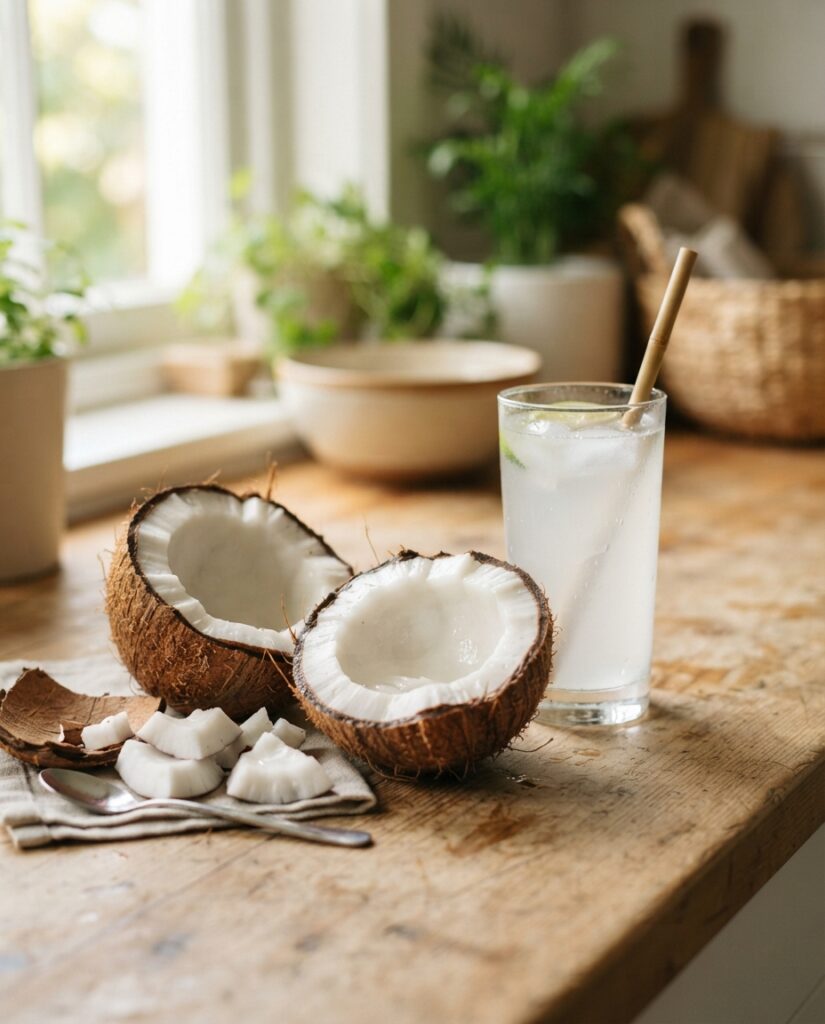
My gym bag has had a carton of coconut water rattling around in it for years, ever since a trainer told me it would fix my leg cramps. It didn’t, particularly, but I kept buying it anyway because I liked the taste. Coconut water gets sold as a cure for everything from sluggishness to a bad diet, and most of that is marketing talking. What it actually does, used daily, is smaller and more useful than the ads suggest.
Jump to section
What’s actually in the bottle
Mostly, coconut water is water, which is why it feels so hydrating. On top of that it carries a modest mix of natural electrolytes, mainly potassium, with smaller amounts of sodium, magnesium, and a little natural sugar. A cup runs around 45 to 60 calories and roughly 6 grams of naturally occurring sugar, depending on the brand and whether anything’s been added.
That’s the whole story, really. It’s not a vitamin bomb or a secret superfood. It’s a light, refreshing drink with a bit of natural mineral content, and understanding it that way makes it much easier to use well.
What it’s genuinely good for
The clear win is hydration. If plain water bores you and coconut water gets you drinking more fluid through the day, that’s a real, everyday benefit. The mild flavor and natural electrolytes also make it a decent pick after light to moderate sweating, a warm walk, an easy workout, where you’ve lost a little fluid and want something more interesting than tap water.
It also works as a lighter swap. Next to soda, sweet iced tea, or energy drinks, unsweetened coconut water usually carries less sugar and fewer additives. Trade it in for a daily can of something sweeter and that’s a small, sensible upgrade. It’s naturally low in fat and skips the heavy sugar loads in a lot of sports drinks, so it’s a reasonable choice for casual, everyday hydration.
Where the marketing gets ahead of the science
Coconut water won’t detox your body, melt fat, cure disease, or supercharge your immune system. Your kidneys and liver already handle detoxification; no drink shortcuts that. The dramatic claims tend to stretch small, ordinary facts into promises the drink can’t keep.
It’s also still calories and sugar, even though it feels virtuous. A few servings a day, or the sweetened flavored versions, add up fast. If you’re watching your intake, treat it like any other beverage with calories, not a free pass. For plain daily hydration, water is still cheaper, simpler, and completely sufficient.
One real caution
For most healthy people, a serving of coconut water is harmless. The group that needs to actually be careful is anyone with kidney problems or on a potassium-restricted diet: coconut water runs relatively high in potassium, and that’s a genuine concern when your body can’t clear it normally, so check with a doctor first. Same goes if you’re managing a health condition, watching sugar closely, or drinking a lot of it daily. When in doubt, a quick conversation with a healthcare professional beats guessing.
Coconut water is a nice drink, not a health revolution. Have it unsweetened, in normal amounts, and it’ll help you stay hydrated with a lighter footprint than a sugary drink. Keep your expectations sized to that: hydration with a bit of flavor and some natural electrolytes, nothing more dramatic. If you like the taste and it fits your health situation, pour a glass and enjoy it for what it actually is.
This article is for general information only and is not medical advice. If you have a health condition, take medication, or have concerns, please consult a qualified healthcare professional. See our medical disclaimer.