Ginger Compress: Is It the Ginger or Just the Heat?
A warm ginger compress is a soothing folk remedy for stiff joints and sore muscles. Learn what the warmth really does, how to use it, and key safety tips.

A quick note: this is a traditional home remedy shared for general interest — not medical advice. See our medical disclaimer, and please see a doctor for severe, worsening, or persistent symptoms.
A ginger compress is about as simple as home remedies get: a cloth soaked in hot, ginger-infused water, laid over a sore, stiff spot. In Japanese kampo and traditional Chinese practice, this warm wrap was a familiar comfort for aching joints, tired muscles, and the stiffness that settles in with age or cold weather. I think of it as a pleasant, warming form of self-care, not a treatment that changes the course of anything.
What’s actually going on
Ginger gets its kick from two families of compounds, gingerols and shogaols, which show some of the better-documented anti-inflammatory activity among common kitchen plants in lab studies. The traditional thinking is that pairing ginger’s warmth with moist heat on the skin comforts a tense joint or muscle. Honestly, though, a lot of what a warm ginger compress does is just what any warm compress does.
Heat versus ginger
The most reliable part of this remedy is the heat itself. Applying gentle warmth to a stiff joint or a knotted muscle is a well-established way to ease discomfort — warmth widens local blood vessels, increases circulation to the area, helps muscles relax, and can make stiffness feel looser. That much is solid. What ginger itself contributes through the skin is far less certain. Ginger taken by mouth has been studied for things like osteoarthritis discomfort, with mixed but occasionally modest results, but good human evidence for ginger absorbed through the skin from a compress is thin. People find it soothing, and the warmth plainly helps — I just wouldn’t claim the ginger is doing something dramatic on top of the heat.
How to make one
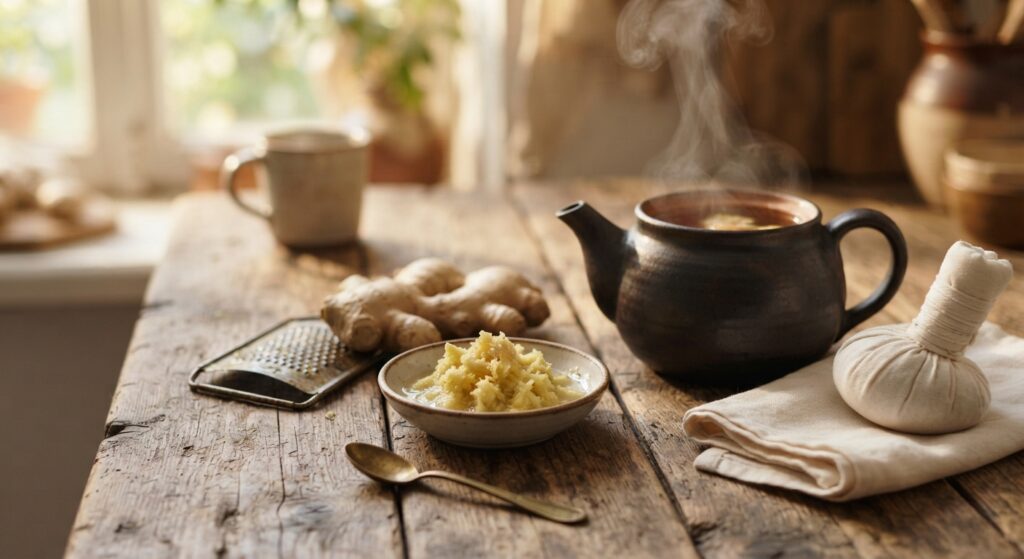
Grate or thinly slice a good-sized piece of fresh ginger and simmer it gently in water for about ten minutes, keeping it just below a boil. Soak a cloth in the warm ginger water, wring it out so it’s damp but not dripping, and lay it over the sore area at a temperature that feels comfortably warm, never hot. Cover it with a dry towel to hold the heat, and refresh the cloth every few minutes over a session of around twenty minutes. It works best when you can actually sit or lie down and rest while it works.
Where to be careful
Test the cloth against your inner wrist first so you never risk a burn, and take particular care if you have any condition that reduces sensitivity to temperature — nerve damage from diabetes, or a circulation problem — because you may not feel heat that’s high enough to injure the skin. Keep the warmth moderate for older adults for the same reason, and use extra caution over any area where temperature isn’t easy to feel. Ginger can make sensitive skin tingle, redden, or itch, so patch-test a small area first and start gently. Keep the compress off broken, cracked, or irritated skin, and well away from the eyes. Skip heat on a fresh injury that’s swollen and hot — cooling is usually the better call in the first day or two. See a doctor if a joint or muscle is severely painful, if there’s significant swelling, redness, or warmth that could mean infection or a serious injury, or if the ache persists or worsens despite home care.
A ginger compress is a comforting, low-cost way to bring warmth to everyday aches and stiffness. The heat is the part you can count on; the ginger adds aroma and a warming tingle a lot of people enjoy. Used carefully, with a patch test and a sensible temperature, it’s a gentle companion to rest — not a stand-in for care when something more serious is going on.
This article is for general educational purposes only and is not medical advice. Traditional remedies are not a substitute for professional care. If your symptoms are severe, persistent, or getting worse, please consult a qualified healthcare provider.
Health disclaimer: This article describes a traditional folk remedy for general information only. It is not medical advice and is not a substitute for professional diagnosis or treatment. Some remedies can cause irritation, allergic reactions, or interact with medications. Consult a qualified healthcare professional before trying any remedy, patch-test anything applied to skin, and seek prompt medical care for severe, worsening, or persistent symptoms. See our full Medical Disclaimer.