The Vinegar Compress: What It Can (and Can’t) Do
A diluted vinegar compress is a gentle, external comfort measure for mild fever. Learn how to use it safely, who should avoid it, and when to call a doctor.

A quick note: this is a traditional home remedy shared for general interest — not medical advice. See our medical disclaimer, and please see a doctor for severe, worsening, or persistent symptoms.
Jump to section
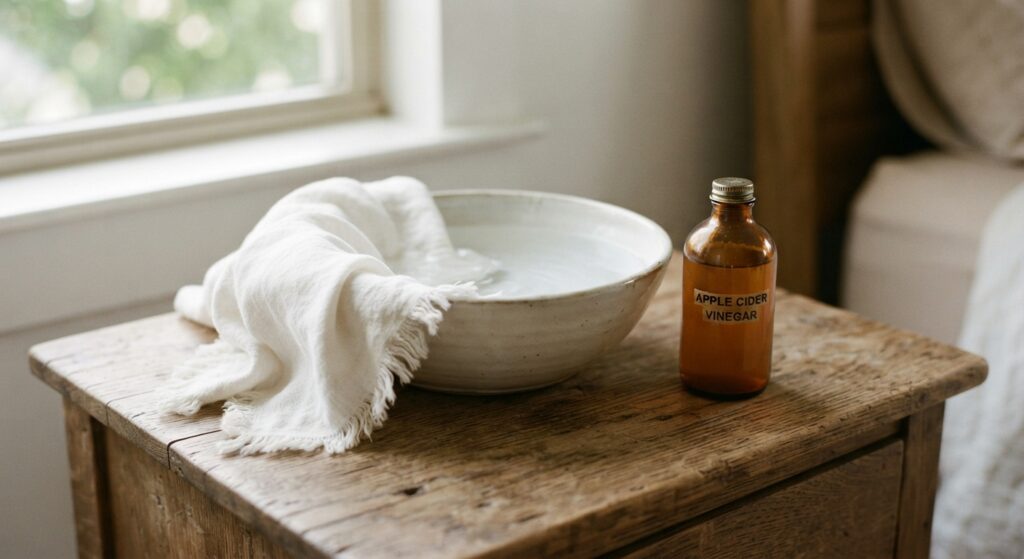
A cool, damp cloth on your forehead makes a fever feel more bearable. Adding vinegar doesn’t do much beyond what plain water already does, and I’d rather say that up front than bury it. Still, the ritual itself has stuck around for good reason: long before drugstore fever reducers, households kept a bowl of watered-down vinegar and a soft cloth on hand, laid across the forehead, the back of the neck, or the wrists, for a body that felt too warm.
Why it seems to work
The mechanism is mostly evaporation. As liquid on your skin evaporates, it carries a little heat away with it, the same cooling you feel when sweat dries or you step out of a pool. Vinegar got added over generations partly for its sharp, cooling smell and partly out of habit. Some people still rest a cool vinegar cloth on their temples for a tension headache, or lay one over mild sunburn for a moment of relief.
What the evidence actually says
A cool, damp compress genuinely helps a feverish person feel more comfortable, and that comfort matters. But there’s little good human evidence that vinegar specifically adds anything to what plain cool water does, and no compress brings a fever down in a lasting way the way rest, fluids, and, when appropriate, medication can. Most of vinegar’s antimicrobial reputation comes from lab work, not from studies of cloths on actual people. Treat this as a comfort measure. It doesn’t change the illness underneath it.
One safety point matters more than the tradition: don’t use vinegar on the skin of babies or very young children as a fever remedy, and never use rubbing alcohol this way at all, since young skin can absorb both. For kids, plain lukewarm water is the safer choice, alongside a doctor’s guidance.
How to make one
- Mix roughly one part vinegar to two or more parts cool, not ice-cold, water.
- Soak a soft cloth, then wring it out until it’s damp but not dripping.
- Lay it across the forehead, the back of the neck, or the wrists.
- Refresh it every 10 minutes or so as it warms to body temperature.
Keep the water cool rather than icy. A very cold compress can trigger shivering, which works against you when someone’s already feverish.
Safety and when to see a doctor
This is strictly for external use. Always dilute the vinegar well, keep it far from the eyes, and never apply it to broken, blistered, or peeling skin, where it will sting. Patch-test first if you have sensitive skin, and stop if you see redness or itching. Skip vinegar entirely for infants and small children.
And remember what a fever can mean. Get medical care for a very high fever, a fever in a young infant, one that keeps climbing or lasts more than a couple of days, or a fever that comes with a stiff neck, confusion, a rash that doesn’t fade under gentle pressure, trouble breathing, or severe pain. A cloth on the forehead can’t address any of that.
Used sensibly, a diluted vinegar compress is a cheap, gentle way to feel a bit cooler during a mild fever or a hot afternoon. It soothes. It doesn’t treat, and it’s not a stand-in for real care when a fever is high, persistent, or worrying, especially in someone very young.
This article is for general educational purposes only and is not medical advice. Traditional remedies are not a substitute for professional care. If your symptoms are severe, persistent, or getting worse, please consult a qualified healthcare provider.
Health disclaimer: This article describes a traditional folk remedy for general information only. It is not medical advice and is not a substitute for professional diagnosis or treatment. Some remedies can cause irritation, allergic reactions, or interact with medications. Consult a qualified healthcare professional before trying any remedy, patch-test anything applied to skin, and seek prompt medical care for severe, worsening, or persistent symptoms. See our full Medical Disclaimer.