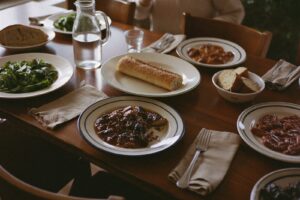
Cooking Well in a Very Small Kitchen
A personal food essay on cooking well in a small kitchen: how one counter, two burners, and a few good tools can make you a calmer, more attentive cook.

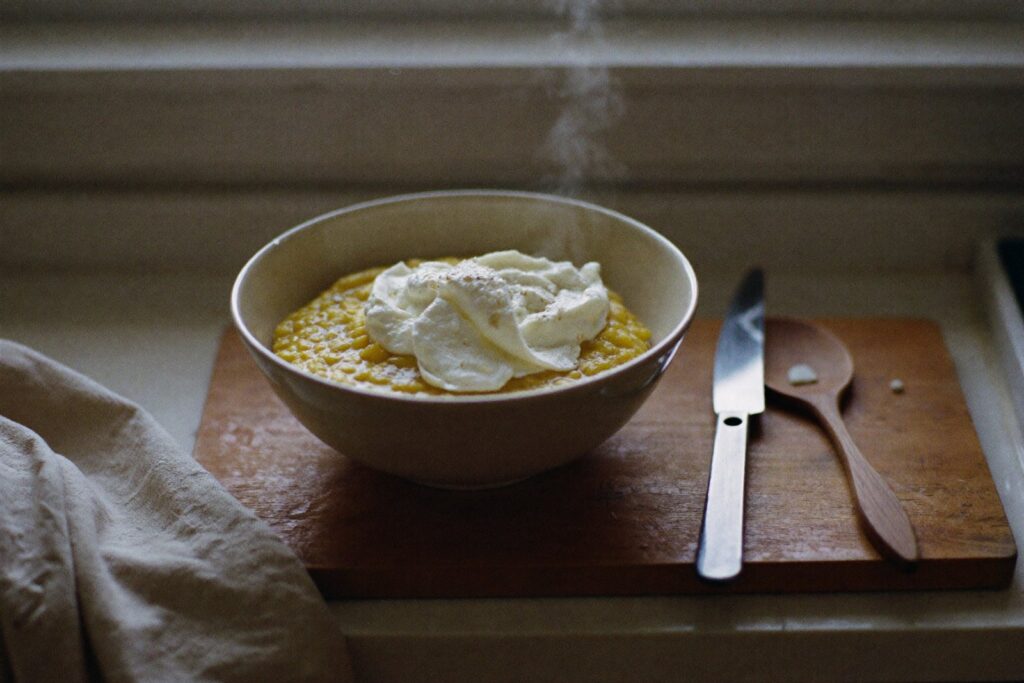
My first real kitchen was one narrow counter and two burners, in an apartment where the oven door, opened all the way, knocked into the cabinet on the far wall. There was nowhere to set a hot pan down without shifting something else first, so I chopped on a board wedged over half the sink. I spent most of that first year annoyed at it. Looking back, it taught me more about cooking than any kitchen I’ve had since.
Jump to section
I won’t pretend I miss it. Some nights that counter made me want to give up and eat cereal standing at the sink. But I learned more in that cramped galley than in any roomy kitchen since, and the lessons stuck. When you can’t solve a problem by buying a gadget or spreading out, you’re forced to solve it by getting better. Nobody hands you a syllabus for that. You just run out of other options.
Why a bigger kitchen won’t make you a better cook
It’s easy to believe better cooking is waiting on the other side of more space: an island, a second oven, a wall of hanging pans. I believed it for years. But watch anyone who genuinely cooks well and notice how little of the kitchen they use at any one moment. They work a small square of counter. They reach for the same two or three pans, over and over. The big kitchen is mostly storage and stage.
Space is a convenience, not a skill. It lets you be messier and own more, which isn’t remotely the same as cooking better. Plenty of extraordinary food comes out of kitchens the size of a closet, cooked by people who never had the option to spread out. The limit didn’t hold them back. It sharpened them.
Fewer tools, sharper habits
With no room for gadgets, I leaned on almost nothing: one sharp knife, one heavy pan, a wooden spoon, a single pot. That’s close to the entire list. Here’s what I didn’t expect: cooking got clearer, not harder. Own only a few tools and you learn what each one can actually do. The knife does the work of a food processor once your hands know how to use it. The one pan, you come to understand completely, hot spots and all.
The other habit that kitchen forced on me was cleaning as I went, because there was no spare counter to abandon a dirty bowl on. Wash the board while the onions soften. Wipe the surface before the next step starts. It felt like a chore at first. Then it became the thing that keeps cooking calm: no leaning tower of dishes at the end of the night, no knife lost under the wreckage. I cook in bigger kitchens now and I still clean as I go. The small one trained my hands to do it without being asked.
- A sharp chef’s knife is the single most useful object in a small kitchen, and it takes up no room at all.
- One heavy pan you know well beats three you barely understand.
- Clean as you go. The habit a small counter forces on you, and every kitchen quietly rewards.
Cooking in sequence, not all at once
Two burners teach you to think in order instead of all at once. You can’t run five pans at the same time, so you stop trying. You start asking a better question: what has to be hot at the very end? Then you work backward from there.
Whatever holds heat well gets cooked first and set aside: a grain, a braise, roasted vegetables, anything content to sit warm rather than scorching. Whatever has to arrive fresh and hot goes last, in the pan you’ve just freed up. A little planning at the start, and a two-burner stove will put out a full meal without any drama. That habit of sequencing, cooking in a deliberate order instead of a panic of simultaneous pots, is one I’d never have learned with six burners and room to sprawl.
Simple food, done with care
A small kitchen steers you, gently and constantly, toward dishes with short ingredient lists and few pans. For a while I treated that as a compromise, the food I’d make only until I had a real kitchen. I don’t think that anymore.
The best home cooking I know doesn’t need a big kitchen at all. It’s a handful of things treated well: pasta with garlic and good oil, eggs cooked low and slow until they’re soft, a piece of fish laid into a hot pan, beans simmered with an onion and given time. None of it needs space or equipment. It needs attention, and attention is exactly what a small kitchen hands you, because there’s nothing else to fuss with and nowhere to hide a shortcut. The constraint I used to curse turned out to be pointing me straight at the kind of cooking I actually love.
One dinner from that apartment still sits sharper in my memory than meals I’ve cooked in far better kitchens since: spaghetti with garlic, chili, and parsley, made for someone I wanted to impress, on two burners with a knife and a single pan. There was nowhere for either of us to sit but the edge of the bed with the plates balanced on our knees. I haven’t topped it since, honestly. The kitchen had nothing to do with why it worked. It had everything to do with how little I needed to pull it off.
Questions about small-kitchen cooking
What’s the one tool worth buying? A good, sharp chef’s knife, without hesitation. It does the work of several gadgets, replaces most of them outright, and takes up the space of a spoon. If you’re going to spend money anywhere, spend it there, then learn to keep it sharp, which matters more than what you paid for it.
How do you cook a full meal on two burners? In order, not all at once. Start with whatever holds heat: a grain, a braise, roasted vegetables if you’ve got an oven. Get it done and covered. Keep it warm off the heat while the free burners handle whatever needs to land fresh and hot. Sequence is the whole trick.
I have more counter now, and more burners, and I’m grateful for both. But I don’t cook any better than I did the day I finally figured out that little galley. I just cook more comfortably. If you’re staring at a narrow strip of counter tonight, wondering what you could possibly make on it: almost anything at all. The space was never the real problem. It was just the easiest thing to blame.