Classic Cabbage Rolls
Cabbage rolls made the slow way: tender leaves around a savory pork-and-rice filling, simmered in tomato until soft. Tips, fixes, and make-ahead notes.

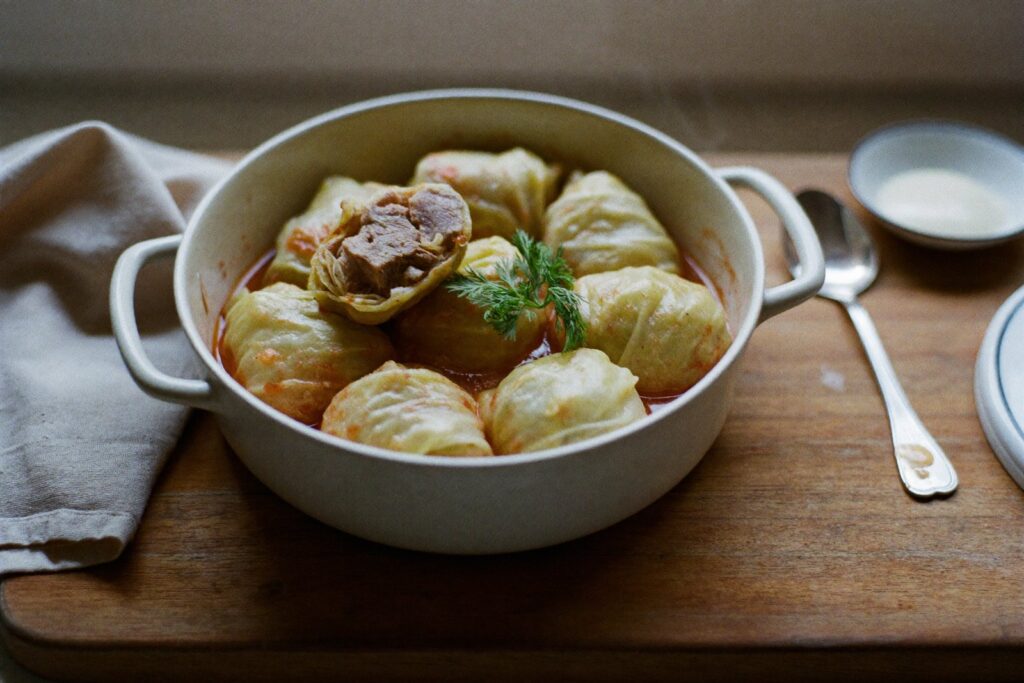
The first batch of cabbage rolls I ever made fell apart in the pot. I’d rushed the leaves, stuffed the filling in too tight, and cranked the heat to speed things along. That disaster taught me the whole secret: cabbage rolls are a patience dish, full stop, and nearly everything that goes wrong with them comes from trying to rush. Give them a low flame and a couple of unhurried hours, and a pot of plain leaves and rice turns into something you’ll want to make all winter.
Jump to section
Why cabbage rolls reward a slow simmer
A cabbage roll is really three things cooking at once: the leaf, the meat, and the rice. Each one wants something different, and a slow simmer is the only method that keeps all three happy at once. The leaf needs time to go tender. The rice, tucked in raw, needs liquid and gentle heat to swell without turning to paste. And the pork wants low, steady warmth so it stays juicy instead of seizing up into tight little pebbles. There’s a bonus built in, too: packed together under the tomato, the rolls end up basting each other as they cook.
Softening the cabbage without tearing it
This part’s fussy, but it has a rhythm once you find it. Cut a deep cone around the core and pull it out first, so hot water can get all the way to the center of the head. Lower the whole cabbage into a big pot of simmering water. Every couple of minutes a few outer leaves go slack, and you lift them off with tongs as they loosen. Each leaf has a thick rib at the base that refuses to bend, so lay it flat and shave the rib down with a paring knife held almost flat against the board, thinning it out without cutting through. Short on time? Freeze the whole head a day ahead and thaw it before you start. Freezing breaks down the cell walls, so the leaves peel off soft and bendable with no boiling required.
The filling: keep it loose
The filling stays deliberately plain: ground pork, or a pork-and-beef mix, rinsed rice, softened onions, sweet paprika, and half the tomato paste. Two things make or break it. First, the rice goes in raw. It cooks inside the roll, drinking up the meat’s fat and the tomato around it, which is exactly where the flavor comes from. Second, mix everything gently and only until combined, because overworking ground meat turns it dense and springy. When you roll, fight the urge to pack them tight: raw rice roughly doubles as it cooks, so a modest spoonful of filling and a snug, not stuffed, parcel leaves room for that swell. Set the filling near the cut rib end, fold the sides in like an envelope, then roll away from you and set it down seam-side down.
Building the pot so nothing falls apart
Line the bottom of a heavy pot with any torn or spare leaves. They cushion that first layer so it doesn’t scorch. Pack the rolls in seam-side down, close together, so they hold each other shut, and tuck the bay leaves in between. Stir the remaining tomato paste into the passata, pour it over the rolls, and add just enough water to barely cover them. One trick pays off out of all proportion to the effort: set a heatproof plate upside down on top of the rolls before the lid goes on, to keep them submerged and stop them bobbing loose.
Heat and timing that actually matter
Heat is the whole game here. You want the gentlest simmer you can manage: a lazy bubble breaking the surface every second or two, not a rolling boil. Go too hot and the leaves shred while the meat toughens before the rice is even done. On the stovetop, that’s about two hours on low with the lid on. You’ll know they’re ready when a leaf gives with zero resistance and a roll cut in half shows fully tender rice. Let the pot rest 15 minutes off the heat afterward, so the rolls firm up enough to lift out whole.
Common cabbage roll mistakes, and easy fixes
- Rolls unravel: the heat ran too high, or they went into the pot seam-side up. Keep the simmer gentle, pack them seam-down and snug, and use the plate trick on top.
- Rice stays crunchy: not enough liquid, or it cooked too fast. Top up the water to cover and give it more time.
- Filling turns rubbery: the meat got overmixed. Next time, fold it together just until the rice and seasoning are even, then stop.
- Tastes flat: season the filling assertively before rolling, and don’t go easy on the salt in the sauce.
- Bottom scorches: line the pot with spare leaves, use your lowest heat setting, and reach for a heavy-based pot if you own one.
Ways to change it up
This base recipe takes well to changes. Swap the pork for all beef, ground turkey, or a mushroom-and-rice filling if you want a meatless pot. For a smoky version, stir smoked paprika into the sauce, or bury a smoked pork rib among the rolls as they cook. For a tangier, sauerkraut-style result, tuck drained sauerkraut between the layers with a splash of vinegar. A spoonful of sour cream stirred in at the end pushes the whole thing toward the rich, sweet-sour style a lot of people grew up eating.
What to serve with cabbage rolls
They don’t need much alongside. A spoonful of cold sour cream on each hot roll is the classic move, and it cuts the richness nicely. Add crusty bread or a dark rye for mopping up the sauce. A sharp, vinegary salad makes a good counterweight to all that softness.
Make-ahead and storage
Like most braises, these taste better the next day, once the flavors have settled, and they keep three to four days in the fridge in their sauce. You can also assemble the rolls raw and refrigerate them overnight, then simmer on the day you actually want them. To freeze, cool everything completely and pack the cooked rolls with plenty of sauce. Reheat gently, covered, with a splash of water so they steam back to soft.
Cabbage rolls FAQ
Do I have to precook the rice?
No, and honestly you shouldn’t. Raw rice cooks inside the rolls and soaks up flavor as it goes. Precooked rice tends to turn to mush over a two-hour simmer.
Can I make cabbage rolls in the oven or a slow cooker?
Both work well. In the oven, bake them covered at 160°C (325°F) for about two hours. In a slow cooker, go low for 6 to 8 hours. The rules stay the same either way: keep them covered in liquid, keep the heat gentle, and don’t rush it.
Why did my cabbage rolls turn out tough?
Almost always heat, or not enough time. A hard boil toughens the meat and shreds the leaves. Drop it down to a bare simmer and let the rolls go until a leaf offers no resistance at all.
Classic Cabbage Rolls
Ingredients
- 1 large head green cabbage
- 500 g (about 1 lb) ground pork, or a pork-and-beef mix
- 150 g (about 3/4 cup) rice, rinsed
- 2 onions, finely chopped
- 3 tbsp tomato paste, divided
- 1 tsp sweet paprika
- Salt and pepper, to taste
- 2 bay leaves
- 500 ml (about 2 cups) passata or crushed tomatoes
Instructions
- Cut a deep cone around the core and remove it, then lower the whole head into a large pot of simmering water. Peel off the leaves with tongs as they loosen and soften, and shave down the thick rib on each leaf so it lies flat.
- Cook the chopped onions gently in a little oil until soft, then let cool slightly. Mix with the ground meat, raw rice, paprika, half the tomato paste, salt, and pepper, folding together just until even.
- Place a spoonful of filling near the rib end of each leaf, fold in the sides, and roll into a snug parcel, leaving a little room for the rice to expand.
- Line the bottom of a heavy pot with any torn leaves, then pack the rolls in seam-side down in snug layers, tucking in the bay leaves.
- Stir the remaining tomato paste into the passata, pour it over the rolls, and add water to just cover. Set an upside-down heatproof plate on top to keep them submerged.
- Cover and simmer on low for about 2 hours, until the leaves are very tender and the rice is cooked through.
- Rest the pot off the heat for 15 minutes before serving, so the rolls firm up and lift out whole.