Homestyle Apple Pie
A flaky, buttery double-crust apple pie with a soft, lightly spiced filling that lets the fruit lead. Simple enough for a weekend afternoon, good enough for company.

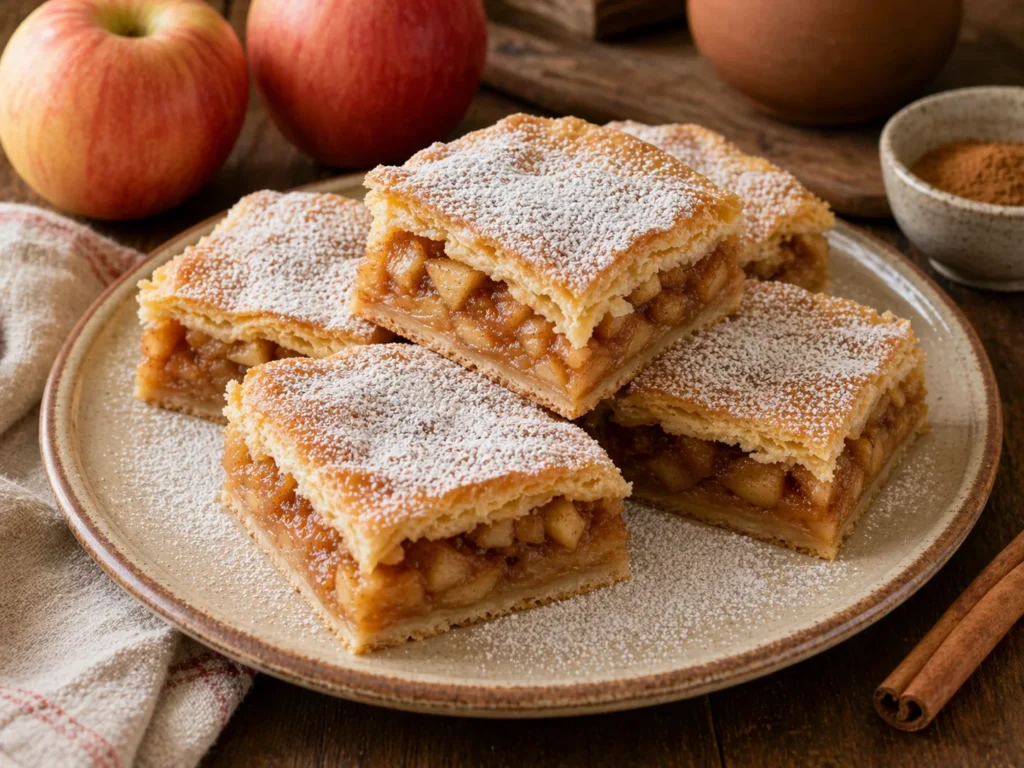
A good apple pie isn’t about a long ingredient list. It comes down to two textures done right: a crust that shatters into tender flakes, and apples that go soft and spiced without collapsing into sauce. Get those, and the barely-sweet filling in this homestyle version lets the fruit taste like fruit. I make this one most in the fall, when the kitchen could use the smell of butter and cinnamon and the counter is crowded with apples nobody’s eaten raw.
The two problems every apple pie has to solve
Nearly every apple pie failure is one of two things: the crust turns tough, or the bottom turns soggy. A tough crust comes from warm butter, too much water, or too much handling, all of which build gluten and melt the fat before it can do its job. A soggy bottom comes from apple juice pooling under a crust that never got the chance to crisp. Almost every decision below is aimed at one of those two problems.
A tender, flaky crust starts cold
Flake is built before the pie ever sees the oven. Rub cold, cubed butter into the flour and sugar until the mix looks crumbly but still holds some pea-sized pieces of butter; in the heat those pieces melt and steam, prying the dough into layers. Bind it with the egg and just a splash of cold water, working only until it holds together in a shaggy mass. Then rest the dough in the fridge for 30 minutes. Resting does two jobs at once: it relaxes the gluten so the dough rolls out without snapping back, and it re-chills the butter you warmed with your hands. If your kitchen is hot, give it longer.
Rolling and lining without stretching
Roll on a lightly floured surface, turning the dough a quarter-turn now and then, until it’s an even thickness all over. Drape it into the tin by rolling it around the pin and unrolling it over the top, then ease it gently into the corners. The one thing not to do is stretch it to fit; stretched dough remembers, and it shrinks back down the sides as it bakes.
Choosing apples that hold their shape
The apple you pick decides whether you get tender slices or applesauce. You want firm, tart varieties that keep their structure in the heat: Granny Smith, Braeburn, Jonagold, or Honeycrisp for a sweeter tart. Steer clear of soft, mealy apples like Red Delicious, which break down into mush. Better still, mix two kinds; a little variety in tartness and texture makes the filling taste like more than one note. Slice them evenly, around a quarter-inch thick, so they cook at the same rate.
The filling: let the apples lead
Toss the sliced apples with cinnamon, a tablespoon of lemon juice, and the filling sugar. The lemon does more than season; it brightens the apples and slows their browning while you work. The sugar here is restrained on purpose, seasoning the fruit rather than burying it. The one move that saves the bottom crust is easy to overlook: scatter a spoonful of semolina or fine breadcrumbs across the base before the apples go in. It soaks up the juices the apples release as they bake, so the bottom stays crisp instead of turning to paste. Mound the apples a little higher than looks right, since they shrink as they soften.
Baking: heat, time, and knowing when it’s done
Cut a few vent slits in the top crust so steam can escape. Bake at 180°C (350°F) for about 45 minutes, until the crust is evenly golden and juices bubble thickly at the vents; thick, slow bubbles mean the starches have cooked and the filling will set rather than run. Baking on a preheated tray or a lower rack gives the bottom extra direct heat, cheap insurance against sogginess. Then the hardest step: let it cool completely before slicing. A hot pie has a loose, molten filling that floods the plate the moment you cut it; as it cools, the juices thicken and set.
Fixes for common apple pie problems
- Soggy bottom: don’t skip the semolina layer, use firm apples, and bake on a preheated tray or lower rack.
- Tough crust: the butter got warm or the dough was overworked. Keep everything cold, use a light hand, and rest the dough.
- Crust shrinks down the sides: it was stretched into the tin or skipped its rest. Ease it in slack and always chill before baking.
- Gap under the top crust: the apples shrank away. Mound them high and pack them in, or precook them briefly before assembly.
- Runny filling: almost always cut too soon. Let the pie cool fully so the juices set.
Variations to make it yours
The spice is the easiest thing to play with: a pinch of nutmeg, cardamom, or clove alongside the cinnamon, or a splash of vanilla with the apples. A handful of raisins, dried cranberries, or toasted walnuts adds texture, and a little orange zest brightens the whole thing. If a full top crust feels like too much, swap it for a crumble lid of flour, butter, sugar, and oats, or cut the top into strips for a lattice that browns beautifully.
Serving and storing
Warm slices with vanilla ice cream or softly whipped cream are the obvious pleasure, and a dusting of powdered sugar makes it look finished. The pie is fine at room temperature, loosely covered, for a day or two; after that, move it to the fridge, where it keeps four to five days. Warm leftover slices in a low oven rather than the microwave to bring the crust back to crisp. A fully baked pie freezes well for up to three months.
Apple pie FAQ
Do I need to precook the apple filling?
Not for this style. Raw apples bake down just fine in the time the crust needs. Precook them only if you want a tightly packed, gap-free filling with no shrink.
How do I stop a soggy bottom crust?
Three things together: the semolina or breadcrumb layer to absorb juice, firm apples that release less liquid, and direct bottom heat from a preheated tray or lower rack.
Can I make apple pie ahead?
Yes. The dough keeps in the fridge for a couple of days or the freezer for longer. Assemble and bake the day you want it, or bake it a day early and rewarm slices to serve.
Homestyle Apple Pie
Ingredients
- 300 g (about 2 1/3 cups) all-purpose flour
- 200 g (about 1 3/4 sticks) cold butter, cubed
- 3 tbsp sugar for the dough, plus 4 tbsp for the filling
- 1 egg
- 6 apples (firm and tart), peeled and sliced
- 1 tsp ground cinnamon
- 1 tbsp lemon juice
- 1 tbsp semolina or fine breadcrumbs
Instructions
- Rub the cold cubed butter into the flour and 3 tbsp sugar until crumbly, leaving some pea-sized pieces of butter, then bind with the egg and a splash of cold water, working just until the dough holds together.
- Divide the dough into two portions, about two-thirds and one-third, flatten into discs, wrap, and rest in the fridge for 30 minutes.
- Toss the sliced apples with the cinnamon, lemon juice, and the 4 tbsp filling sugar.
- Roll out the larger (two-thirds) piece and line a tin, easing it in without stretching, then scatter the semolina over the base to soak up juices.
- Add the apples, mounding them slightly. Roll out the remaining dough, lay it over the top, seal and crimp the edges, and cut a few vent slits.
- Bake at 180°C (350°F) for about 45 minutes, until the crust is golden and the juices bubble.
- Cool completely before slicing so the filling sets.
The information on Kepoli is provided for general informational purposes only and is not professional medical, health, nutritional, or safety advice. Always use your own judgment and consult a qualified professional before acting on it.