Rice Water for Skin and Hair: A Simple Kitchen Habit
If you rinse your rice before cooking, you have probably watched that cloudy, milky water swirl down the drain without a second thought. For most of us…

If you rinse your rice before cooking, you have probably watched that cloudy, milky water swirl down the drain without a second thought. For most of us it is just one more step on the way to dinner. Yet in kitchens across Japan, Korea, China and parts of Southeast Asia, that same starchy water has long been saved and used as a gentle rinse for skin and hair. It costs nothing, takes only a few minutes to prepare, and uses something you almost certainly already have in the cupboard. Here is a practical, down-to-earth look at what rice water is and how people actually use it.
What Rice Water Actually Is
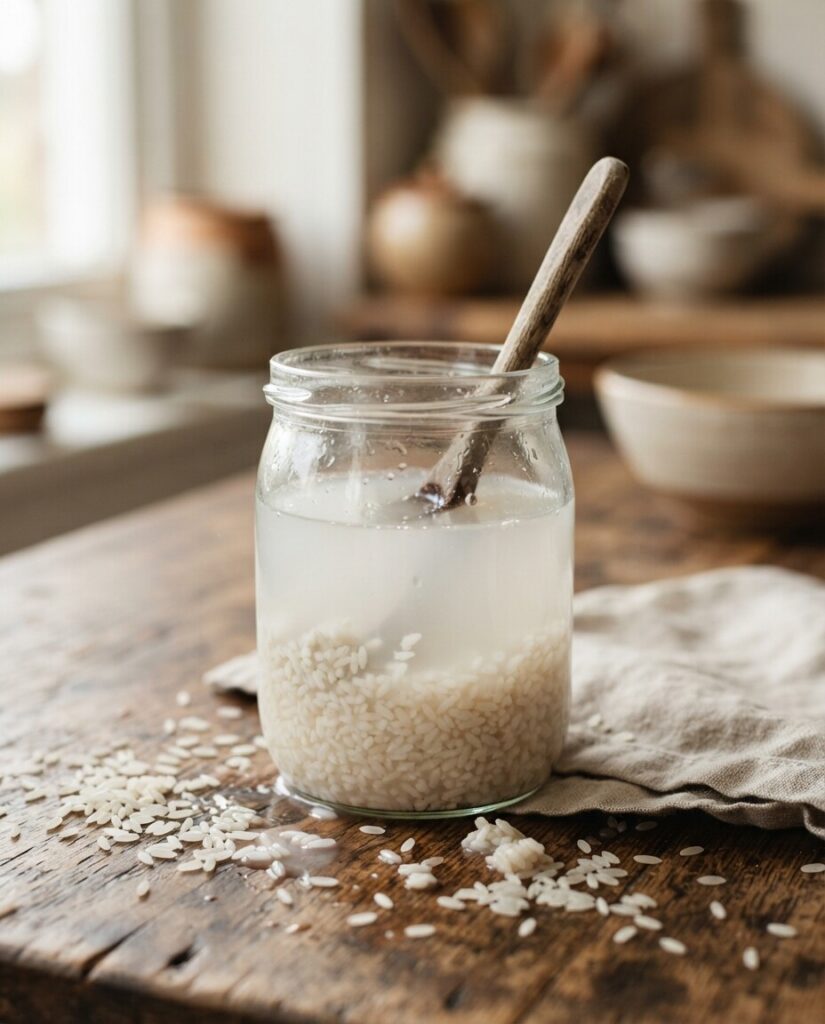
Rice water is simply the liquid left behind after you rinse or soak uncooked rice. As the grains sit in water, a little of their starch and some water-soluble compounds pass into the liquid, giving it that pale, cloudy look. There is nothing exotic or complicated about it. Depending on how you prepare it, you end up with either a mild, fresh rinse or a stronger, slightly fermented one, and each tends to be used for slightly different things.
What Is In That Cloudy Water
Rice water carries small amounts of starch along with trace compounds naturally found in the grain, such as inositol, a handful of amino acids, and B vitamins. Fans often point to these as the reason it can feel conditioning on hair and soft on skin. It is worth being honest, though: most of the enthusiasm comes from long-standing tradition and personal experience rather than large, definitive studies. A few small studies have looked at rice-derived ingredients, but the research is limited. Think of rice water as a pleasant, low-cost addition to a routine rather than a proven treatment.
- Starches that give the water its silky, slightly slippery feel
- Inositol, a compound often linked with a smoother feel on hair strands
- Amino acids, the small building blocks that make up protein
- B vitamins and traces of antioxidants naturally present in grains
How to Make Rice Water at Home
There are two easy ways to prepare it. The quick soaked version is mild and popular for skin, while the fermented version is stronger and often chosen for hair.
Method 1: Quick Soak
- Rinse half a cup of rice once to remove surface dust, then pour off that first rinse.
- Add the rinsed rice to a bowl with two cups of clean water.
- Let it soak for about 20 to 30 minutes, swirling once or twice.
- Strain the cloudy water into a clean jar and keep it in the fridge.
Method 2: Fermented
- Start with the soaked version above, but leave the strained water in a loosely covered jar at room temperature.
- Let it sit for 24 to 48 hours, until it smells faintly sour.
- Move it to the fridge to slow things down, then dilute it with an equal amount of plain water before use.
Fermented rice water is more concentrated, so most people water it down and use it less often than the fresh kind.
Ways People Use Rice Water
As a gentle facial toner
Once cooled, plain soaked rice water can double as a simple, no-frills toner. Dip a cotton pad, sweep it gently over freshly cleansed skin, and follow with your usual moisturizer. Some people like to pour a little into a small spray bottle and keep it chilled for a refreshing midday mist. If your skin is dry or easily irritated, start with a couple of times a week and see how it feels before using it daily.
As a hair rinse
As a hair rinse, rice water is usually used after shampooing. Work a cup or two through your hair and over your scalp, let it sit for a few minutes, then rinse thoroughly with cool water. Many people say their hair feels smoother and looks shinier afterward, though results vary from person to person. Once a week is plenty to start. If your hair ever feels stiff or straw-like, that is a signal to dilute it more or use it less often.
In a calming soak
Because it is mild, some people add a cup or two of plain rice water to a warm bath as a soothing soak, especially after a day in the sun. Swirl it into the water, relax for 15 minutes or so, and pat dry. As with anything new, it is smart to try a small patch first if your skin tends to react to unfamiliar products.
Simple Safety and Storage Tips
- Do a small patch test on your inner arm before using it on your face or scalp.
- Keep it refrigerated and give the jar a gentle shake before each use.
- Use plain soaked rice water within about four to five days.
- Throw it out right away if it smells off or you notice anything growing in it.
- Rice water here is a cosmetic rinse only; there is no need to drink it for these uses.
Frequently Asked Questions
Can I use rice water on my face every day?
Many people with normal or oily skin use it daily without trouble. If your skin is dry or sensitive, start two or three times a week and adjust based on how it responds.
Is white or brown rice better for this?
Both work. Brown rice carries a bit more of the grain’s natural compounds, while white rice makes a lighter rinse. Use whichever you already have, ideally rinsed once beforehand.
How soon might I notice a difference?
Some people feel a smoother, shinier finish after the first hair rinse. Any change in the look or feel of skin tends to be subtle and shows up gradually with consistent, gentle use.
Disclaimer: Rice water is a traditional, low-cost beauty rinse, and individual results vary. This article is for general information only and is not a substitute for professional advice. If you have a persistent skin or scalp concern, check with a qualified professional.
The information on Kepoli is provided for general informational purposes only and is not professional medical, health, nutritional, or safety advice. Always use your own judgment and consult a qualified professional before acting on it.