Depression-Era Bread and Butter Pickles Recipe
An original depression era bread and butter pickles recipe with sweet-tangy brine, plus canning and quick refrigerator options and practical food-safety tips.

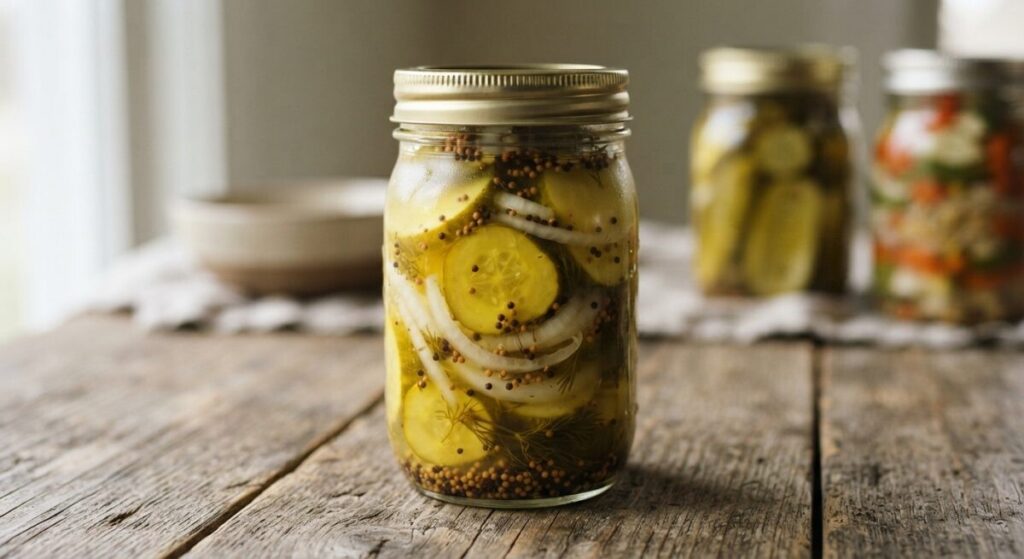
By late summer, my cucumber vines always give more than I could eat fresh in a month, and letting that much food go soft and wasted on the counter isn’t something I can bring myself to do — it wasn’t something a Depression-era household would allow either. So out come the crocks and the big canning kettle, the mason jars get scrubbed and lined up on the counter, and cucumbers that would otherwise go soft and wasted in a week become something that can sit on a shelf and feed the family clear through winter.
Jump to section
Bread and butter pickles — sweet, tangy, faintly golden with turmeric and flecked with mustard seed — were one of the simplest, most satisfying ways to do it, turning a garden glut into a condiment that could dress up even the plainest meal.
The Story Behind It
Canning wasn’t a hobby in the 1930s; it was how a family ate vegetables in February that had grown in July. Cucumbers were cheap and often overabundant from a home garden, and pickling them in vinegar, sugar, and spices meant almost nothing went to waste and nothing needed refrigeration, which many households didn’t reliably have. The name “bread and butter” is often said to come from the idea that a jar of these pickles, spread alongside just bread and butter, could turn the plainest meal into something that felt like enough — a small comfort in tight times. Sugar was dear, but it went a long way in a pickle brine, and the payoff was months of flavor from a crop that would otherwise have rotted in a single overwhelming week.
Ingredients
- 2 lbs pickling cucumbers, sliced into thin rounds
- 1 large yellow onion, thinly sliced
- 3 tablespoons pickling or kosher salt
- 1 1/2 cups cider vinegar
- 1 1/2 cups sugar
- 1 tablespoon mustard seed
- 1 teaspoon celery seed
- 1/2 teaspoon ground turmeric
- 1/4 teaspoon whole cloves (optional)
How to Make It
- Combine the sliced cucumbers and onion in a large bowl. Sprinkle with the salt and toss well to coat.
- Cover with a layer of ice on top if you have it, or simply cover the bowl, and let it sit for 1–2 hours. This draws out excess water and keeps the pickles crisp.
- Drain the cucumbers and onions in a colander and rinse briefly under cool water, then let them drain well.
- In a large pot, combine the vinegar, sugar, mustard seed, celery seed, turmeric, and cloves. Bring to a boil, stirring until the sugar dissolves.
- Add the drained cucumbers and onions to the hot brine and bring it back to a gentle simmer for 2–3 minutes, just until the vegetables turn slightly translucent at the edges.
- For a quick refrigerator version: pack the pickles and brine into clean jars, let cool, then cover and refrigerate.
- For shelf-stable jars: ladle the hot pickles and brine into clean, sterilized jars, leaving 1/2-inch headspace, wipe the rims, seal with lids, and process in a boiling water bath for 10 minutes (adjust for altitude).
- Let processed jars cool undisturbed for 12–24 hours and check that lids have sealed (they should not flex when pressed) before storing.
Tips, Swaps & Notes
Don’t skip the salting step — it’s what keeps the finished pickles crisp instead of limp, and I learned that the slow way after one soggy batch. If you like more heat, a sliced fresh chili or a pinch of red pepper flakes in the brine is a nice modern addition. A food safety note worth taking seriously: always use clean, sterilized jars and proper canning lids, and follow a full water-bath processing time if you intend to store jars on a shelf at room temperature for months — this is what makes them safe to keep unrefrigerated. If you’d rather skip processing altogether, the quick refrigerator version above is perfectly safe and keeps well in the fridge for several weeks, which is the easiest route for a first try. Either way, use firm, fresh cucumbers for the best crunch.
Why It Still Matters
A jar of bread and butter pickles is preserved sunshine — proof that a little vinegar, sugar, and patience can turn a garden’s overflow into something that lasts long after the season’s gone. That’s a lesson worth keeping on the shelf.
Every ping of a sealed lid was once a small, quiet celebration — and it still is.
Depression-Era Bread and Butter Pickles Recipe
Ingredients
- 6 cups thinly sliced pickling cucumbers
- 1 large onion, thinly sliced
- 1/4 cup pickling or kosher salt
- 1 1/2 cups white vinegar
- 1 1/2 cups granulated sugar
- 1 1/2 teaspoons mustard seed
- 1/2 teaspoon celery seed
- 1/2 teaspoon ground turmeric
- 1/4 teaspoon whole cloves (optional)
Instructions
- Combine the cucumbers and onion in a large bowl, sprinkle with the salt, and toss to coat. Cover with ice and let stand 2-3 hours, then drain and rinse well.
- In a large pot, combine the vinegar, sugar, mustard seed, celery seed, turmeric, and cloves. Bring to a boil, stirring until the sugar dissolves.
- Add the drained cucumbers and onion to the brine and return to a simmer for 2-3 minutes, until just heated through.
- For refrigerator pickles: ladle into clean jars, cool, and refrigerate; ready to eat within 24 hours and keeps for several weeks.
- For shelf-stable pickles: pack the hot pickles and brine into sterilized jars leaving 1/2-inch headspace, wipe the rims, seal with lids, and process in a boiling water bath for 10 minutes.
- Let processed jars cool completely and confirm the lids have sealed before storing in a cool, dark place.