Why Cutting Onions Makes You Cry – and the Trick That Helps
There's real chemistry behind onion tears, and a few simple tricks actually help. Here's why it happens and what genuinely cuts down on the crying.

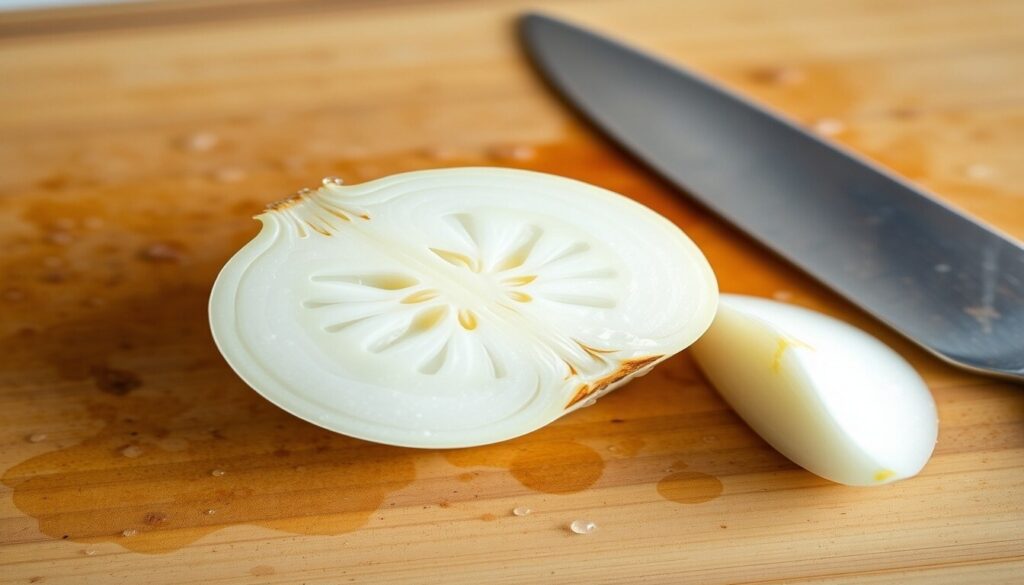
There’s a reason almost everyone has a story about crying over a cutting board. It’s not that onions are trying to get to you emotionally – it’s basic chemistry, and once you understand it, the fix makes a lot more sense.
Jump to section
What’s Actually Happening
Onions store sulfur compounds in their cells, pulled up from sulfur in the soil. As long as the onion stays whole, those compounds sit harmlessly separated from an enzyme called alliinase. The moment you slice through the cell walls, the two mix. That reaction produces a volatile gas called syn-propanethial-S-oxide – a mouthful of a name for something with a simple job: it drifts up into the air, reaches your eyes, and irritates them enough that your tear ducts kick in to flush it out.
It’s a defense mechanism, evolved to make animals think twice about eating the plant. It has nothing to do with sadness and everything to do with your eyes protecting themselves from a mild chemical irritant.
Why Some Onions Are Worse Than Others
Not every onion hits the same. Yellow and white onions tend to be the worst offenders because they’re higher in sulfur compounds, which is also part of why they taste sharper raw. Sweet onions like Vidalias have less sulfur, so they’re milder to both your eyes and your tongue. Freshness matters too – an onion that’s been sitting a while can actually release more of the irritating compound once cut.
What Actually Helps
There’s no shortage of folk remedies out there, but only a handful hold up. Here’s what genuinely makes a difference:
- Chill the onion first. Popping it in the fridge for 15-20 minutes before cutting slows the chemical reaction, so less gas escapes into the air.
- Use a sharp knife. A dull blade crushes more cells than it cleanly cuts, releasing more of the irritating compound. A sharp knife slices through with minimal cell damage.
- Cut near airflow. Working near an open window, a running range hood, or even a small fan pointed away from your face helps carry the gas away before it reaches your eyes.
- Leave the root end for last. The root holds the highest concentration of sulfur compounds. Cutting it last, or trimming it right before you’re done, limits your exposure.
- Wet the cutting board or your hands slightly. Some people find that a damp board helps trap some of the compound before it becomes airborne, though this one is more modest in effect than the others.
Goggles and contact lenses genuinely work too, for what it’s worth – they physically block the gas from reaching your eyes, even if they’re not exactly practical for a quick weeknight dinner.
The Takeaway
None of these tricks make onions completely tear-free, and that’s fine – a little watering is normal and harmless. But combining a sharp knife, a chilled onion, and decent airflow will take the edge off most of the discomfort, which is really all you need to get dinner on the table without reaching for a tissue.