Mock Apple Pie: The Depression-Era Dessert With No Apples
Discover the classic mock apple pie recipe from the Great Depression, made with crackers, cinnamon, and a tangy sugar syrup that tastes just like real apples.

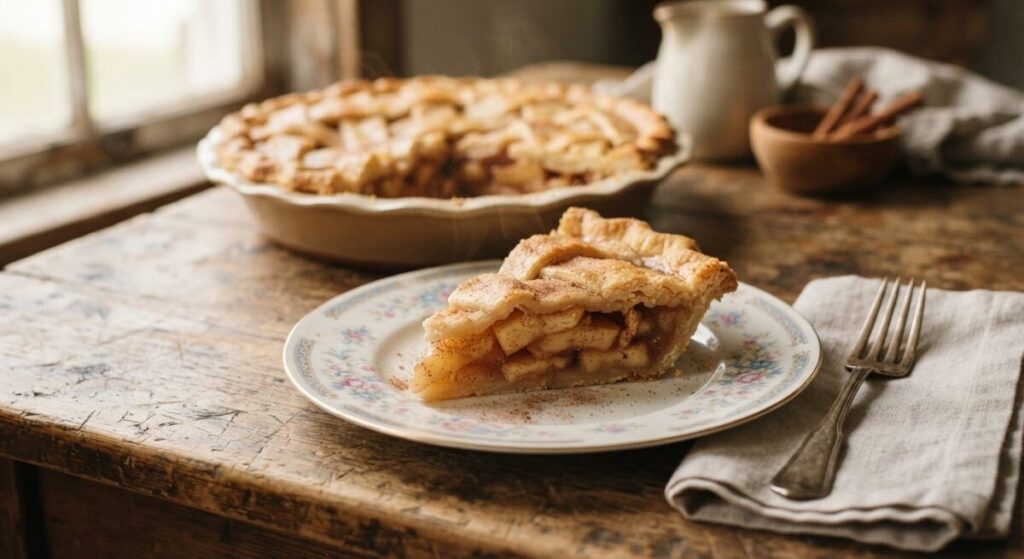
There’s a particular kind of kitchen magic in a pie that tastes like apples but never saw an orchard. During the hardest years of the Great Depression, a home cook could crumble a sleeve of crackers into a buttered crust, spoon over a cinnamon-sugar syrup, and pull from the oven something that fooled a hungry family into believing dessert hadn’t been sacrificed. The crust browns the same, the kitchen smells the same, and for a few minutes at the supper table, hard times feel a little further away.
Jump to section
I was skeptical the first time I made this — crackers standing in for apples sounded like a gimmick — but it won me over. It wasn’t an act of desperation so much as an act of resourcefulness. Crackers were cheap and always on the shelf, sugar and lemon were pantry basics, and a cook who couldn’t spare the money for apples — or simply couldn’t find good ones out of season — could still put a warm pie on the table on a Sunday afternoon. It became one of the small, quiet triumphs of Depression-era cooking: turning almost nothing into something that felt like plenty.
The Story Behind It
Mock apple pie began showing up in American kitchens in the early 1930s, right as families were learning to stretch every dollar and every pantry shelf as far as it would go. Butter crackers, cream of tartar, and lemon juice were common staples, and a clever cook discovered that simmered together with sugar and cinnamon, they created a filling with the same soft bite and tart-sweet flavor as cooked apples. Cracker companies caught on quickly and began printing the recipe right on their boxes, turning a thrifty improvisation into a genuine kitchen trend. It didn’t matter that there wasn’t a single apple in the filling — what mattered was that a family gathered around a pie that looked, smelled, and tasted like a treat, made from what was already in the cupboard.
Ingredients
- 1 sleeve (about 35 to 40) buttery round crackers, broken into large pieces
- 1 3/4 cups water
- 1 1/2 cups granulated sugar
- 2 teaspoons cream of tartar
- 1 tablespoon fresh lemon juice
- 1 teaspoon grated lemon zest
- 1 1/2 teaspoons ground cinnamon
- Pinch of salt
- 2 tablespoons butter, cut into small pieces
- Pastry for a double-crust 9-inch pie, homemade or store-bought
How to Make It
- Preheat the oven to 425°F and fit the bottom crust into a 9-inch pie plate.
- In a saucepan, combine the water, sugar, cream of tartar, and salt. Bring to a boil, stirring until the sugar dissolves, then let simmer for about 5 minutes to form a light syrup.
- Remove the syrup from the heat and stir in the lemon juice and zest. Let it cool for a few minutes.
- Scatter the broken crackers evenly over the bottom crust.
- Sprinkle the cinnamon over the crackers, then slowly pour the warm syrup over the top, letting it soak into the crackers.
- Dot the filling with the small pieces of butter.
- Cover with the top crust, seal and crimp the edges, and cut several slits so steam can escape.
- Bake for 30 to 35 minutes, until the crust is golden brown. Cool for at least 2 hours before slicing so the filling has time to set.
Tips, Swaps & Notes
If you don’t have cream of tartar on hand, a splash of cider vinegar in the syrup gives a similar tang. Some old recipes call for a pinch of nutmeg alongside the cinnamon, or a few extra minutes of simmering for a darker, richer syrup — I usually let mine go the extra few minutes because I like the deeper color. For an old-fashioned finish, serve slices with a thin piece of sharp cheddar on top, the way many Depression-era families did with any fruit pie. Once baked, keep the pie loosely covered at room temperature for a day, or refrigerate for up to 3 days for the best texture.
Why It Still Matters
Mock apple pie endures because it’s a lesson in resourcefulness wrapped in a flaky crust. It reminds us that a good dessert was never really about the apples — it was about the care taken to make something out of very little, and the comfort that came from gathering around a table with a warm pie between you. Bakers today make it as a curiosity, a party trick, or a genuine link to a grandmother’s kitchen, but the appeal hasn’t changed: it still tastes like something worth savoring, and it still tells a story worth remembering.
Some pies are about the fruit. This one was always about the trick — and the quiet ingenuity baked into figuring it out.
Mock Apple Pie: The Depression-Era Dessert With No Apples
Ingredients
- Pastry for a double-crust 9-inch pie
- 36 buttery round crackers (such as Ritz), coarsely broken
- 1 3/4 cups water
- 2 cups granulated sugar
- 2 teaspoons cream of tartar
- 2 tablespoons lemon juice
- 1 teaspoon grated lemon zest
- 1 1/2 teaspoons ground cinnamon
- 2 tablespoons unsalted butter, cut into small pieces
Instructions
- Preheat oven to 425°F. Fit the bottom crust into a 9-inch pie plate.
- In a saucepan, combine the water, sugar, and cream of tartar; bring to a boil, stirring until the sugar dissolves, then simmer 10 minutes to form a syrup. Cool slightly.
- Stir the lemon juice and zest into the syrup.
- Scatter the broken crackers evenly into the bottom crust.
- Pour the warm syrup evenly over the crackers and let stand a few minutes to soften.
- Sprinkle with cinnamon and dot with the butter.
- Cover with the top crust, seal and crimp the edges, and cut several slits for steam to escape.
- Bake 15 minutes at 425°F, then reduce heat to 350°F and bake another 30-35 minutes, until the crust is golden brown.
- Cool at least 2 hours before slicing to let the filling set.