Vinegar Pie: The Depression Dessert That Tastes Like Lemon
Vinegar pie is a Depression-era dessert with a silky, tangy custard that tastes surprisingly like lemon — all from simple pantry staples. Here is the recipe.

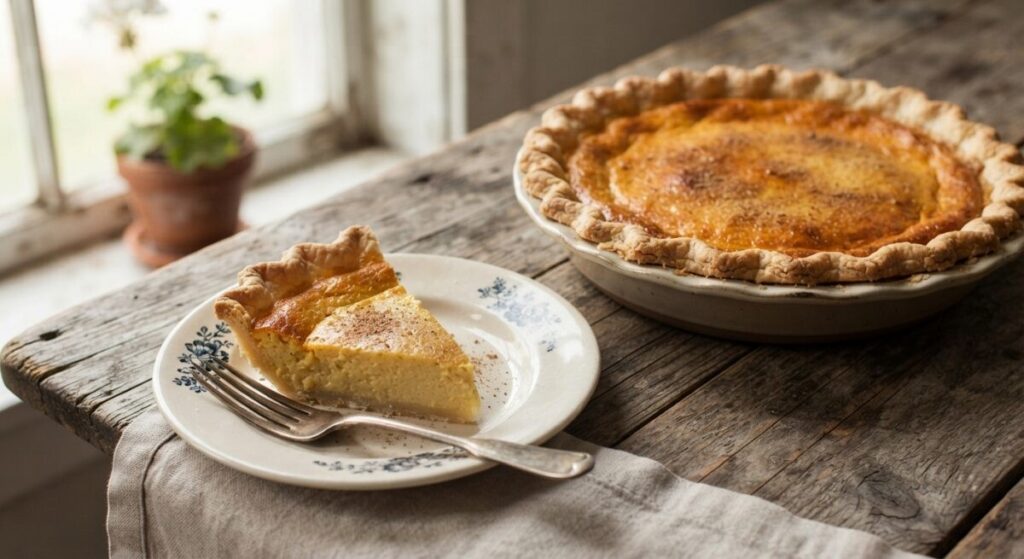
There is a small kind of magic in a pie that tastes of lemon when there was not a lemon in the house — sometimes not in the whole town. That was vinegar pie: a silky, tangy custard baked into a plain crust, sweet and bright and comforting, conjured from the few things a 1930s pantry could always spare. I was skeptical the first time someone described it to me, too — vinegar, in a pie? — but one bite settled it. To anyone who grew up on it, a slice still tastes a little like a grandmother saying, we’ll manage.
Jump to section
The Story Behind It
During the Great Depression — and long before it, on frontier tables — fresh citrus was a luxury many families simply could not get. Lemons were expensive, seasonal, and often nowhere to be found in rural America. But a bottle of apple cider vinegar sat in nearly every kitchen. Cooks discovered that a spoonful or two of vinegar, balanced with plenty of sugar, gave a custard the same mouth-watering tartness a lemon would — for pennies. Vinegar pie became one of those quiet triumphs of hard-times cooking: not an imitation to apologize for, but a genuinely good dessert that happened to cost almost nothing.
Ingredients
- 1 unbaked 9-inch pie crust (homemade or store-bought)
- 1 cup granulated sugar
- 3 tablespoons all-purpose flour
- 2 large eggs
- 2 tablespoons apple cider vinegar (plain white vinegar works too)
- 3 tablespoons butter, melted
- 1 cup water
- 1 teaspoon vanilla extract
- A pinch of salt, plus a little grated nutmeg or cinnamon (optional)
How to Make It
- Heat the oven to 350°F (175°C) and fit your crust into a pie plate.
- In a bowl, whisk the sugar and flour together, then beat in the eggs until smooth.
- Stir in the vinegar, melted butter, water, vanilla, and salt until well combined — the mixture will look thin, and that is exactly right, so don’t panic.
- Pour the filling into the crust and dust the top with a little nutmeg if you like.
- Bake for 40 to 50 minutes, until the edges are set and the center is just barely jiggly. It keeps firming as it cools.
- Let the pie cool completely on a rack before slicing, so the custard has time to set.
Tips, Swaps & Notes
Do not be alarmed by the smell of vinegar while it bakes — my kitchen always smells faintly like a salad for the first twenty minutes, and it mellows completely, leaving only a clean, lemony brightness. A few small things help it along:
- Balance is everything. The sugar is what turns sharp vinegar into bright, citrusy flavor, so measure it fully.
- Whisk well before pouring. The flour likes to settle; a good stir keeps the custard even.
- For a richer pie, swap the water for milk, or beat in an extra egg yolk.
- Make it ahead. Vinegar pie is happiest after a few hours in the fridge to set fully.
Because it is an egg-and-butter custard, treat it like any custard pie: once it has cooled, keep leftovers covered in the refrigerator (two to three days) rather than out on the counter.
Why It Still Matters
Vinegar pie endures because it tells the truth about its era without a trace of self-pity. It took the humblest bottle on the shelf and made something worth setting on the good plate come Sunday. Bake one today and you get a genuinely lovely dessert — but you also get a small, edible reminder of how much comfort our grandparents coaxed out of so little.
Some recipes just feed you; the old ones remind you where you came from.
Vinegar Pie: The Depression Dessert That Tastes Like Lemon
Ingredients
- 1 unbaked 9-inch pie crust
- 1 cup granulated sugar
- 3 tablespoons all-purpose flour
- 1/4 teaspoon salt
- 3 large eggs
- 1/4 cup apple cider vinegar
- 1/2 cup water (or milk for a richer pie)
- 1/4 cup unsalted butter, melted
- 1 teaspoon vanilla extract
Instructions
- Preheat oven to 350°F. Fit the pie crust into a 9-inch pie plate and crimp the edges.
- In a bowl, whisk together the sugar, flour, and salt.
- Add the eggs and whisk until smooth.
- Whisk in the vinegar, water, melted butter, and vanilla until fully combined.
- Pour the filling into the prepared crust.
- Bake 40-45 minutes, until the center is just set and no longer jiggles and the top is golden.
- Cool completely on a wire rack, then chill at least 2 hours before slicing.