Bay Leaf Tea: A Cozy, Caffeine-Free Herbal Infusion
A warm, homemade cup of tea has a way of slowing the whole day down, and it is even more satisfying when the main ingredient has been sitting quietly in…

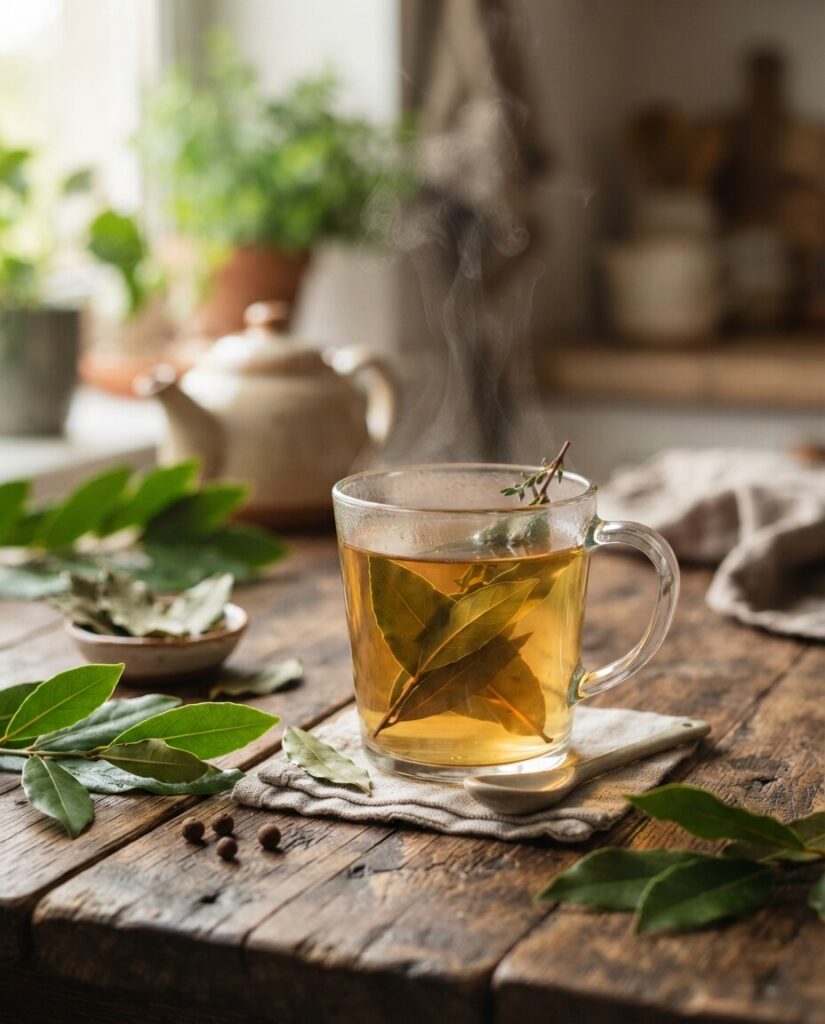
I kept a jar of bay leaves in the cupboard for years and used them for exactly one thing: dropping into soup, then fishing them back out before anyone ate one by accident. Brewing them into tea felt almost wasteful the first time I tried it. It isn’t. The bay leaves already sitting in your pantry make a genuinely good, caffeine-free cup, and the homemade version costs you nothing you don’t already own.
Jump to section
The scent hits first, earthy, herbal, faintly like a kitchen mid-simmer. Calming in a very ordinary way, not a dramatic one.
What it actually is
Bay leaf tea is culinary bay leaves (Laurus nobilis) steeped in hot water. Nothing more. Bay leaves contain plant compounds such as polyphenols and aromatic oils, and lab studies have looked at their antioxidant activity. But test-tube findings don’t prove a mug of this tea does anything for the person drinking it. I think of it as a pleasant, warming beverage, not a remedy, and that’s the honest way to frame it.
One real caution: use food-grade Laurus nobilis leaves only. Don’t brew leaves from an unidentified ornamental shrub sometimes casually called “bay,” since some look-alikes aren’t safe to consume.
Ingredients
Makes 1 to 2 cups.
- 3 to 4 dried culinary bay leaves
- 2 cups (about 475 ml) water
- 1 to 2 teaspoons fresh lemon juice, optional
- Half to 1 teaspoon honey, optional
- A quarter teaspoon ground cinnamon, optional
- 2 to 3 thin slices of fresh ginger, optional
How to brew it
- Rinse the bay leaves briefly under cool water.
- Bring the water to a gentle boil.
- Add the leaves, lower the heat, cover, and simmer 5 to 10 minutes.
- Turn off the heat and let it steep another 5 minutes.
- Strain out the leaves and discard them.
- Stir in lemon, ginger, cinnamon, or a little honey if you want.
- Serve warm.
What it tastes like
Herbal, gently peppery, with a cooling edge that reminds me of eucalyptus more than anything in the tea aisle. Lemon brightens it, ginger warms it up, and a pinch of cinnamon nudges it toward something closer to dessert than herbal tea.
Ways to drink it
- Morning: warm, with a little lemon, as a caffeine-free start.
- After dinner: unsweetened, as a light, soothing wind-down.
- Iced: cooled, chilled, poured over ice with lemon.
- Spiced: ginger or cinnamon on the cozier days.
The claims, kept honest
You’ll find plenty of pages online claiming bay leaf tea lowers blood sugar or cholesterol, or eases joint pain. Most of that traces back to research on concentrated bay leaf, not the tea. In one small 2009 study, people with type 2 diabetes were given ground bay leaf in capsules, and researchers noted changes in glucose and lipid readings. Capsules of ground leaf are not a mug of tea, so the results don’t transfer over. Human evidence for the tea itself stays limited, which is why I’d rather call this an enjoyable herbal drink with some interesting research behind the plant, and leave the sweeping promises out of it.
Safety notes
In normal culinary amounts, bay leaves are widely considered safe. A few cautions still apply:
- Never swallow a whole bay leaf. They stay stiff and can be a choking or digestive hazard. Always strain them out.
- If you take diabetes medication, know that concentrated bay leaf may affect blood-glucose control. Talk to your doctor before making it a daily habit.
- Reliable safety information for medicinal amounts during pregnancy or breastfeeding is limited.
- If you have surgery coming up, some guidance suggests avoiding concentrated herbal use beforehand, because of possible interactions.
Common questions
Can I drink it every day?
An occasional culinary-strength cup is very different from a concentrated extract. There isn’t enough clinical evidence to recommend a daily medicinal dose.
Can I have it before bed?
Yes, if it agrees with you. Plain bay leaf tea is naturally caffeine-free, so it works as a gentle alternative to an evening coffee or black tea.
How long does it keep?
Best fresh. Refrigerate it in a covered container and use it within a couple of days.
This article is for general information only and is not medical advice. Speak with a qualified healthcare professional before trying new remedies, especially if you have a health condition or take medication.
Wellness note: This article is for general information only and is not medical advice or a substitute for professional diagnosis or treatment. Natural foods and ingredients can cause reactions or interact with medications. Consult a qualified healthcare professional before making changes — especially if you are pregnant, take medication, or have a health condition. Seek prompt medical care for severe, worsening, or persistent symptoms.
Bay Leaf Tea: A Cozy, Caffeine-Free Herbal Infusion
Ingredients
- 3 to 4 dried culinary bay leaves (Laurus nobilis)
- 2 cups (about 475 ml) water
- 1 to 2 teaspoons fresh lemon juice (optional)
- Half to 1 teaspoon honey (optional)
- Quarter teaspoon ground cinnamon (optional)
- 2 to 3 thin slices fresh ginger (optional)
Instructions
- Rinse the bay leaves briefly under cool water.
- Bring the water to a gentle boil.
- Add the leaves, lower the heat, cover, and simmer for 5 to 10 minutes.
- Turn off the heat and let it steep for another 5 minutes.
- Strain out and discard the leaves.
- Stir in lemon, ginger, cinnamon, or a little honey if you like.
- Serve warm.