Celery Benefits and an Easy Celery Juice Recipe
Celery has quietly become a fixture of morning routines, blended into juices and smoothies or eaten raw by the stalk. It is inexpensive, easy to find…

Celery has quietly become a fixture of morning routines, blended into juices and smoothies or eaten raw by the stalk. It is inexpensive, easy to find, and mild enough to add to almost anything. While it is not a magic cure for anything, celery is genuinely nutritious, and some of its natural compounds have drawn interest for the way they may gently support the body as part of a balanced diet.
What is actually in celery?
Celery is roughly 95 percent water and very low in calories, which is part of its appeal. Beyond the crunch, it supplies a useful mix of nutrients and plant compounds:
- Water — its high water content makes it an easy, low-calorie way to add to your daily fluid intake.
- Potassium — an electrolyte that helps the body maintain normal fluid balance.
- Vitamin K and vitamin C — vitamins involved in normal clotting, bone health, and antioxidant activity.
- Fiber — supports comfortable digestion and regularity.
- Apigenin and other flavonoids — plant antioxidants that researchers are still studying.
How celery may support hydration and the kidneys
The kidneys rely on adequate fluid to do their job of filtering waste, so staying well hydrated matters. Because celery is mostly water and provides potassium, it can be a helpful, hydrating addition to a day’s meals. Some early research on celery extracts has looked at markers related to kidney and metabolic health, but much of that work is preliminary or done in laboratory and animal models. In everyday terms, celery is best thought of as one hydrating, nutrient-rich food among many, not a treatment for any kidney condition.
Celery and the liver
The liver handles an enormous amount of processing work. Celery’s antioxidant compounds, especially apigenin, have been examined in laboratory and animal studies for their potential to ease oxidative stress. This is promising early science, but it does not prove that eating celery will change how anyone’s liver functions. A more realistic takeaway is that a diet rich in vegetables like celery, alongside limiting alcohol and highly processed foods, supports overall wellness that the liver benefits from too.
Other everyday benefits
- Digestive comfort — the fiber in whole celery gently supports regularity.
- A satisfying snack — its water and fiber can help you feel full, which some people find useful for managing overall intake.
- Blood pressure interest — compounds called phthalides, plus potassium, have been studied in relation to blood pressure, though results are mixed and more human research is needed.
How to add celery to your day
You do not need special equipment or a strict routine. A few easy options:
- Snack on raw stalks with hummus or nut butter.
- Chop it into soups, stews, stir-fries, and salads.
- Cut it into sticks and store them upright in water in the fridge to keep them crisp.
- Blend or juice it for a quick morning drink.
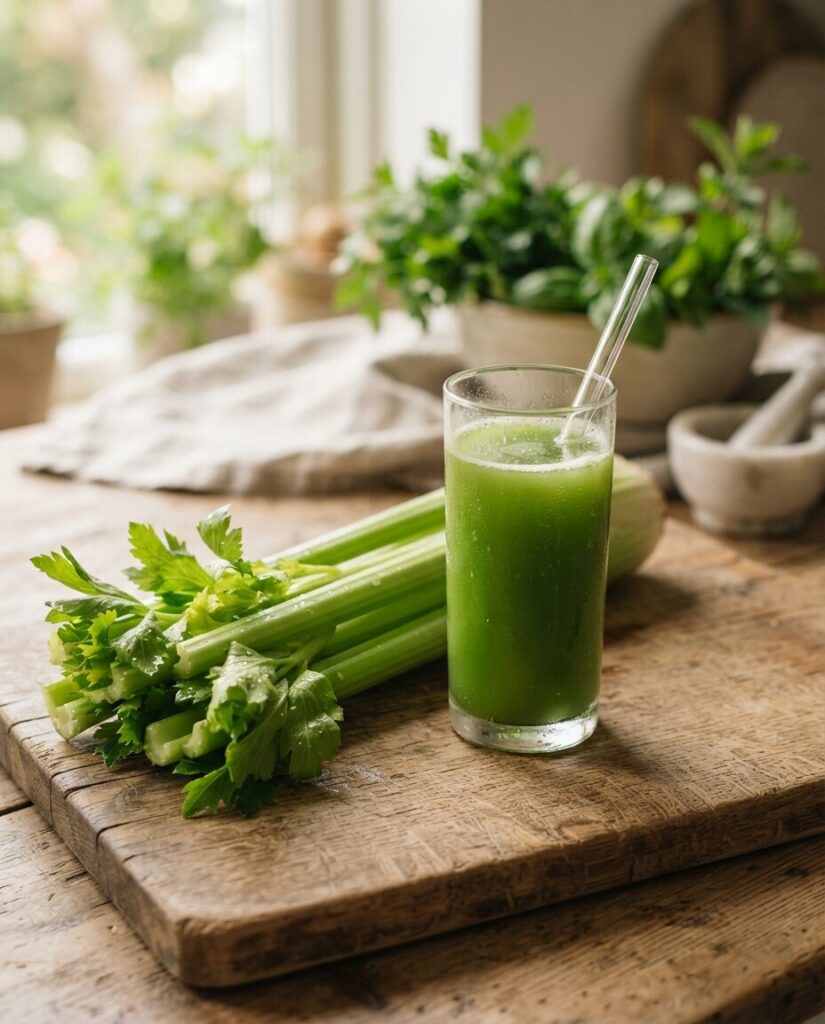
A simple celery juice
For one serving, you will need:
- 4 to 6 large celery stalks, washed well
- Optional: half a green apple or a squeeze of lemon for flavor
Run the celery, and the apple if using, through a juicer, or blend with a little water and strain. Drink it fresh, ideally within about 20 minutes. Keep portions moderate and treat it as part of a varied diet rather than a replacement for meals.
Juice or whole celery, which is better?
Both have a place. Whole celery keeps its fiber, which supports digestion and helps you feel full. Juicing concentrates the water and some antioxidants into a quick drink but removes most of the fiber. For most people, eating whole celery, with the occasional juice for variety, is the more balanced choice.
FAQ
Is it safe to have celery every day?
For most healthy adults, yes, as part of a varied diet. If you take medications or have a kidney condition, check with your healthcare provider, since celery is a source of potassium and vitamin K.
How much should I have?
There is no official target. A couple of stalks, or a modest glass of juice most days, is a reasonable amount for many people.
Will celery juice detox my body?
No single food detoxes the body; your liver and kidneys already handle that. Celery can support a healthy diet, but it is not a cleanse.
Disclaimer: This article is for general information only and is not medical advice. Celery is a food, not a treatment. Talk to a qualified healthcare professional before making significant dietary changes, especially if you have kidney or liver concerns, take medications, or manage a chronic condition.
The information on Kepoli is provided for general informational purposes only and is not professional medical, health, nutritional, or safety advice. Always use your own judgment and consult a qualified professional before acting on it.